

It is quite unbecoming to call a place “empty” — and rather too easy, as well. It is just another lazy way to label a location. That has been the case with Rub Al-Khali, the Empty Quarter, which is the largest contiguous desert, or erg, in the world.
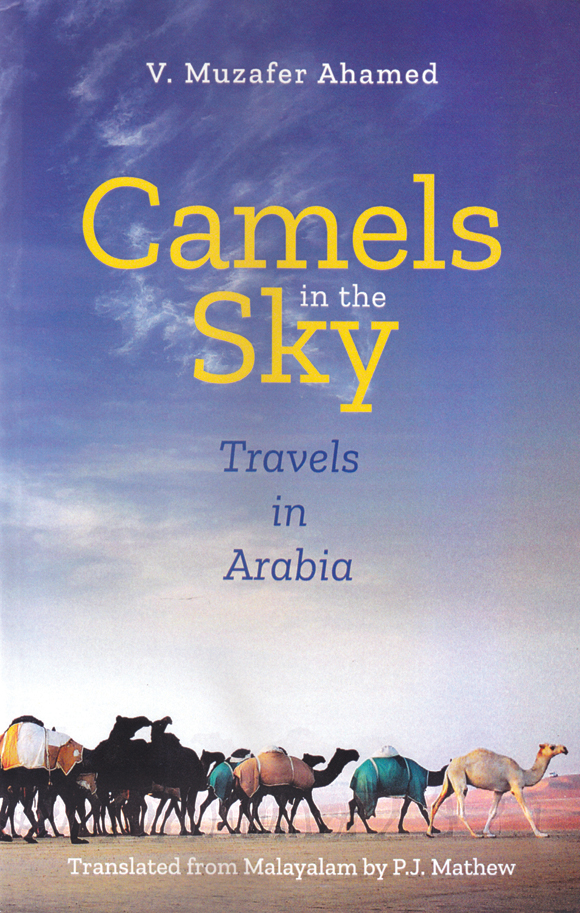
Describing this particular place as “empty” is an irony. The Empty Quarter is, in fact, so full of life that it is nearly impossible for anyone to explore and experience it completely in a lifetime. The book “Camels in the Sky: Travels in Arabia” by Indian author V. Muzafer Ahamed, does, however, reveal and describe an incredible amount of the life, in its full spectrum, to be found among the Arabian dunes.
The author’s work in Saudi Arabia as a journalist for a Malayalam-language daily newspaper led him to the desert and its inhabitants. He admits he was initially reluctant to journey into the harsh terrain, especially after an early, bitter experience during his rural reporting assignment.
He recounts how a subsequent accidental encounter with a Bedouin sowed the seeds of his desert travel adventures. Had it not been for the resultant irresistible temptation to discover the unfathomed other side of the “severity of the desert,” he would have ended up being just another migrant worker in the Saudi city of Jeddah, totally unaware of the nuances of life in the great Arabian desert.
“Camels in the Sky” is a collection of Ahamed’s travel essays, translated from Malayalam by P. J. Mathew, that record the glimpses of desert life the author was given during his adventures in Saudi Arabia over a period of 13 years. They reveal some hitherto largely unseen vistas of life in the desert villages of the Kingdom, which will come as a surprise to readers who have no clue about the variety of life to be found on this part of the planet.
The author is our guide on a deep journey through the hidden alleys of desert life, sketching a vivid and detailed picture along the way. Much like the magical vision of Garcia Marques (a comparison made by the translator in his introduction to the book), Ahamed’s unique perspective on desert life provokes in the reader a massive urge to make similar forays into the locations he describes.
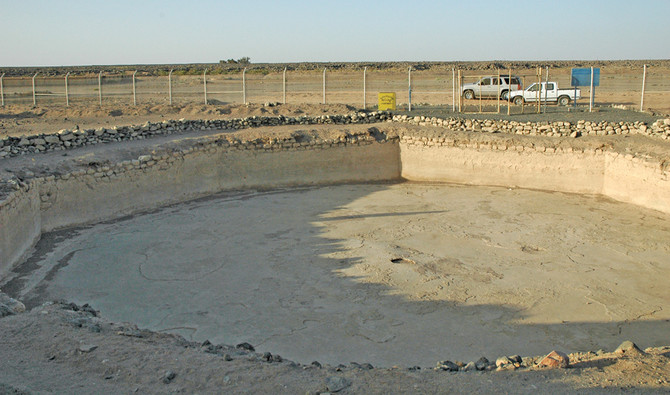
The book begins with a tale of utmost relevance in the modern world: A water war. Water has always been a valuable commodity in the desert, of course, even before it became a serious matter of discussion elsewhere. That the author’s first major encounter with Saudi life is related to this much-valued resource is more than just a coincidence; it is the light that led him toward exploring and uncovering the specificities of life in the Kingdom.
Although personal injuries he suffered in Sakaka initially threatened to extinguish the spirit of the traveler, he was inspired to carry on with his adventure by an encounter with Abd’ Rehman, a Bedouin he met in a restaurant in Jeddah. The travel bug that bit the author eventually took him to every corner of the vast country and the result is the invaluable collection of life sketches found in this book.
Ahamed leads us through a series of diverse stories and experiences to prove that the desert is teeming with life. From historical accounts of the Kinda to the perils of travel through harsh desert terrain to tales of vast civilizations and heritage, the author leaves no stone unturned along his way.
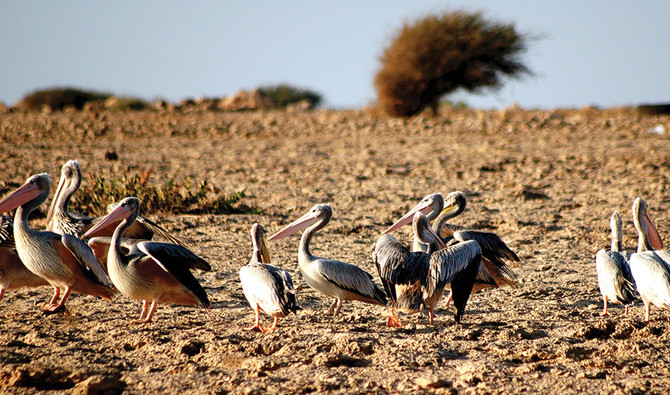
Then there is the relentless spirit of the hardy ghaf tree, which survives on the rare sprinkles of rain that come once in a decade or so; the stories of an anonymous man who rescues travelers in the desert; the adventures in the mighty sand traps; the mating of beetles; birdhouses in the desert; the different shades of sand; and camels in all their glory. Through these tales and more, Ahamed paints a vivid and complete picture of a land that is so little explored.
A unique feature of his writing style is the way he blends Arabian life with historical and literary references and analogies from elsewhere in the world, thereby drawing parallels between life in this less-navigated landscape with that in the other parts of the world.
“Camels in the Sky” offers not only a unique reading experience but also plants seeds that can grow into a love of travel and the urge to venture into the unknown corridors of life. The book is a reminder of the vast ocean of experiences that our blue planet has in store for those prepared to set sail.