



JEDDAH: Of the many Pakistanis who have contributed to the growth and development of Saudi Arabia, economist Muhammad Umer Chapra is undoubtedly one of the most significant.
Born in 1933, he arrived in the Kingdom in 1965 — one of the first Pakistani nationals to move there — and helped transform the Saudi Arabian Monetary Agency (SAMA) during its early stages.
He is now an adviser to the Islamic Research and Training Institute of the Islamic Development Bank in Jeddah. Chapra won the King Faisal International Prize for Islamic Studies in 1990. In recognition of his services to the Kingdom, he was granted Saudi citizenship.
Chapra vividly remembers the day he was offered a job at SAMA, which was in its formative stages at the time.
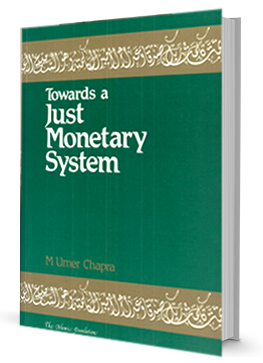
The cover of Chapra's prize-winning book.
Talking to Arab News during an exclusive interview, he said: “They needed competent people from Pakistan and other countries, and I was in the United States at that time (teaching) economics as an associate professor at the University of Wisconsin, and then the University of Kentucky.”
“My wife and I were going from Kentucky to see the New York World’s Fair and we stopped in Washington because my wife wished to visit the city. I called a friend of mine (who was working) for the International Monetary Fund and he said that the governor of SAMA was there and he would be happy to see you.”
The governor was visiting Washington to find an economic adviser.
“I went there and we talked for quite a while about different things, economic problems and what could be done to help it,” said Chapra. At the end of their conversation, he was offered the chance to join SAMA.
“I said, ‘I have no objection. If you can make me an offer I will be happy to come.’ He said, ‘When I go back, I will talk to the board of directors and send you a cable.’ Then we went ahead to New York for the purpose we had come, to see the World’s Fair.”
 After the trip, Chapra returned to work at the University of Kentucky, where the summer term was about to begin.
“I was in my office and I received a cable,” he said. “It was an offer (from SAMA), but the condition was that I must join immediately. How can this be? The summer session is starting tomorrow and I’m going to teach during it — how can I go immediately? I went to the chairman of the department and talked to him.
“He said, ‘If you want, we would like to have you even next year, not only this summer but also next year. But the problem is the summer session is starting tomorrow and you’re going to teach in it. If you can get us a substitute, we will let you go.’
“So I came out of his office and God arranges things. I met a professor who was teaching the same subjects as I was. In economics, there are a lot of things: Money and banking, public finance, economic development, all these different things. So I talked to him about it and he said, ‘Well, I kept myself free this summer for research but if you want to go, I will take over.’
“I escorted him to the chairman’s office and the whole thing was arranged. They sent us the visas and we came to Jeddah. And gradually, the problems started getting solved. This was in 1965. Now it’s 53 years we’ve been in Saudi Arabia.”
Chapra arrived in the Kingdom during the reign of King Faisal and initially worked with Finance Minister Sheikh Mohammed Abalkhail.
“He was very good,” he said. “I saw him a number of times during the preparation of the monetary policy of Saudi Arabia and economic development and so on. He was very nice and he would listen very patiently.
“Sheikh Abalkhail was prepared to listen to advice, and even King Faisal was very good in this respect. He was willing to listen to advice and also act upon it.”
Chapra is modest in describing the important role he played in the development of the finance system in the Kingdom.
“It’s not only one person who can play a really clear role,” he said.
“Sheikh Abalkhail was very competent and very good, so I helped him in developing the banking system in this country and the financial system and the government’s monetary policy and so on. These things went around very well.”
Relations between Saudi Arabia and Pakistan are consistently friendly, Chapra said.
“They have always been good, from the time when Pakistan was established in 1947,” he said. “Pakistan gets help from Saudi Arabia and Saudi Arabia gets help from Pakistan.
“Saudi Arabia was very helpful from the very beginning and it has continued to be so. And Pakistan has been able to send manpower to this country. Military manpower plus economics — there has never been any problem between the two countries,” he added.


