

Saudi Arabia lifts warning on travel to Lebanon

1 / 2
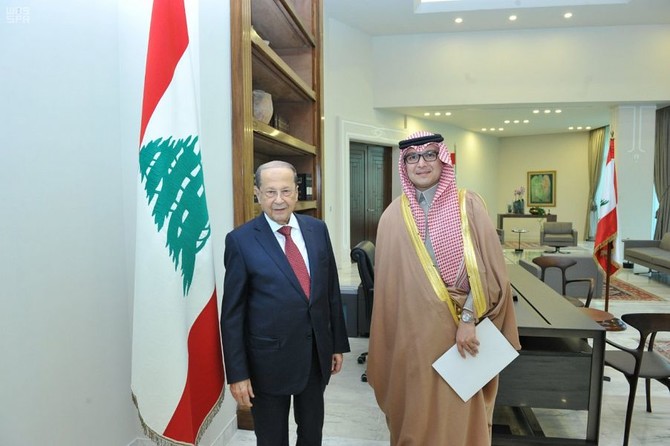
Saudi Ambassador to Lebanon Walid bin Abdullah Bukhari (R) meeting with Lebanese president Michel Aoun. (SPA)
2 / 2
Envoy Nizar Al-Aloula met President Michel Aoun in Beirut on Wednesday. (SPA)
Updated 14 February 2019
Follow

Saudi Arabia lifts warning on travel to Lebanon

  • $1 billion investment funding released in new signs of warming ties

BEIRUT: Saudi Arabia on Wednesday lifted its longstanding warning against Saudis traveling to Lebanon, and released $1 billion in funding pledged to boost the country’s struggling economy.

The announcements followed talks in Beirut on Wednesday between visiting special envoy and Saudi Royal Court adviser Nizar Al-Aloula, Saudi Ambassador Waleed Bukhari, Lebanese President Michel Aoun and Prime Minister Saad Hariri.

“Given that the previous security reasons have ended and based on reassurances from the Lebanese government to Saudi Arabia, Saudi Arabia is lifting its travel warning for its citizens,” Bukhari said.

Signs of warming ties were evident later at an anniversary event to mark the 2005 assassination of Hariri’s father, the former prime minister Rafiq Hariri; the Saudi flag was on prominent display and Aloula was a keynote speaker.

Lebanon last week formed a new coalition government after nine months of wrangling over ministerial posts, and produced a raft of proposed new economic policies to slash the country’s crippling national debt and reduce its budget deficit.

A fall in visitors from Saudi Arabia and other Gulf states has devastated Lebanon’s tourism industry, once a mainstay of an economy that Hariri’s new government has pledged to support with reforms and investment.

Aloula said the purpose of his visit was “to congratulate Lebanon on the formation of the government, which hopefully will be a good sign for the Lebanese and Arab peoples. If Lebanon prospers, we all prosper.

“We were looking forward to the formation of a Lebanese government as much as the Lebanese people. There are over 20 Lebanese-Saudi agreements that will hopefully now come into effect — the mere presence of a government in Beirut allows us to move forward.”

On the timing of his visit, a day after the departure of Iranian Foreign Minister Mohammad Javad Zarif, Aloula said: “The Iranian course is completely different from ours, and there is no competition or conflict.

“We always bet on Lebanese success. Lebanese people have capabilities that allow them to lead the Middle East region. They have everything — heritage, culture and intelligence.” 

The Saudi government had previously pledged $1 billion of investments for Lebanese projects at the Cedar Conference in Paris in April 2018, which will now be distributed among the 20 projects to which Aloula referred.

Further meetings between Prime Minister Hariri and Saudi Crown Prince Mohammed bin Salman are expected to take place before any final decisions are made.


Saudi Cabinet hopes UAE forces will withdraw within 24 hours in accordance with Yemeni request

Saudi Arabia’s King Salman chairs Tuesday’s Cabinet session. (SPA)
Updated 30 December 2025
Follow

Saudi Cabinet hopes UAE forces will withdraw within 24 hours in accordance with Yemeni request

  • Cabinet said it hoped the UAE will cease any military or financial support to the STC and any other party within Yemen

RIYADH: Saudi Arabia’s Cabinet, chaired by King Salman, on Tuesday expressed hope that Emirati forces will withdraw from Yemen within 24 hours in accordance with a Yemeni request, Saudi Press Agency reported.

The Cabinet also said it hoped the UAE will cease any military or financial support to the Southern Transitional Council and any other party within Yemen, SPA added.

The Cabinet said it also hoped that the UAE will take the necessary steps to preserve Saudi-Emirati relations which the Kingdom is keen to strengthen, and said it looks forward to working together toward everything that will enhance the prosperity and stability of countries of the region.

The Cabinet expressed its regret over the outcome of de-escalation efforts that the Kingdom has been keen to pursue, which have been met with an unjustified escalation that contradicts the principles upon which the Coalition to Support Legitimacy in Yemen was founded, undermines its efforts to achieve security and stability in Yemen, and is inconsistent with all the promises the Kingdom received from the UAE.

The Cabinet appreciates the role of the Coalition to Support Legitimacy in Yemen in protecting civilians in the governorates of Hadramaut and Al-Mahra in response to the request of the President of the Yemeni Presidential Leadership Council Rashad Al-Alimi, and in reducing escalation in order to achieve security and stability and preventing the expansion of the conflict.

The Cabinet reaffirmed that the Kingdom will not hesitate to take necessary steps and measures to confront any infringement or threat to its national security, and its commitment to the security, stability and sovereignty of Yemen, and its full support for Al-Alimi and his government.

In other regional affairs, the Cabinet reaffirmed the Kingdom’s support for the sovereignty, territorial integrity and safety of Somalia, and rejects the declaration of mutual recognition between Israel and Somaliland as it enshrines unilateral separatist measures that violate international law.