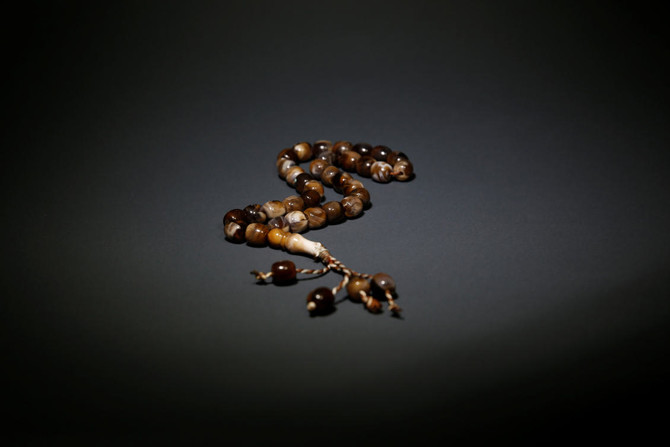
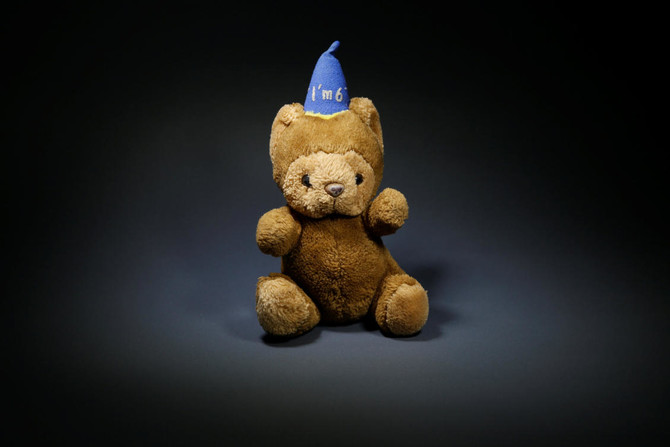
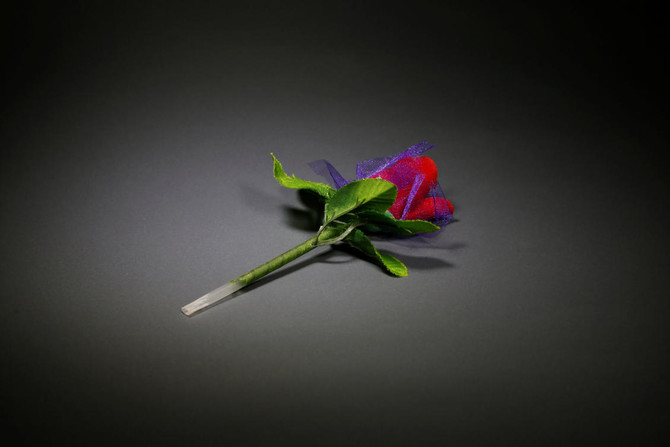
SARAJEVO: Toys, house keys and diaries hang suspended from the ceiling or sit on plain white pedestals at Sarajevo’s War Childhood Museum in a simple tribute to the children living in the shadow of the war in Syria.
Driven by memories of his own childhood during the Balkans conflict in the 1990s, founder Jasminko Halilovic has made the museum a treasure trove of personal items donated by those who were children then too.
He now wants to turn it into the world’s biggest archive on wartime childhoods. Sunday’s exhibition relied on items donated by children in Syrian refugee camps in Lebanon. A colorful keychain in the shape of sandal was given to the museum by 15-year-old Marwa.
“The keys opened the doors to the most beautiful house I have ever seen. My room had pink and green walls. Unfortunately, the house burned during the war, so we don’t have the house anymore,” she wrote.
According to UNICEF, there are 2.5 million Syrian refugee children living outside Syria and 2.6 million internally displaced.
“We want to show that war children are not only the passive victims, as we often see them, but also resilient survivors,” Halilovic said. Having amassed more than 4,000 exhibits and over 150 hours of a video archive of oral history interviews, his team started collecting personal items from children affected by other wars, such as Syria, Ukraine and Afghanistan.
The Syrian collection was assembled with the help of Abed Moubayed, 35, from Aleppo, during his two-month internship with the museum, part of his master degree program in post-war recovery at the University of York.
“This is a chance for the Syrian children to raise their voices and tell the whole world about their experience and suffering. It is really important to show that history is repeating itself and we, all of us, need to do something to stop it,” Moubayed, who left Syria in 2012, told Reuters.
“Syrian children have no idea what the future holds for them and you can see it from their stories.”
The Bosnian 1992-95 war, which claimed 100,000 lives and displaced more than 2 million people, was Europe’s bloodiest since World War Two.


Syrian children in focus at Sarajevo museum on war and childhood

Syrian children in focus at Sarajevo museum on war and childhood
- Sunday’s exhibition relied on items donated by children in Syrian refugee camps in Lebanon
- UNICEF says there are 2.5 million Syrian refugee children living outside Syria and 2.6 million internally displaced

UN rights chief Shocked by ‘unbearable’ Darfur atrocities
- Mediation efforts have failed to produce a ceasefire, even after international outrage intensified last year with reports of mass killings, rape, and abductions during the RSF’s takeover of El-Fasher in Darfur
PORT SUDAN: Nearly three years of war have put the Sudanese people through “hell,” the UN’s rights chief said on Sunday, blasting the vast sums spent on advanced weaponry at the expense of humanitarian aid and the recruitment of child soldiers.
Since April 2023, Sudan has been gripped by a conflict between the army and the paramilitary Rapid Support Forces that has left tens of thousands of people dead and around 11 million displaced.
Speaking in Port Sudan during his first wartime visit, UN Human Rights commissioner Volker Turk said the population had endured “horror and hell,” calling it “despicable” that funds that “should be used to alleviate the suffering of the population” are instead spent on advanced weapons, particularly drones.
More than 21 million people are facing acute food insecurity, and two-thirds of Sudan’s population is in urgent need of humanitarian aid, according to the UN.
In addition to the world’s largest hunger and displacement crisis, Sudan is also facing “the increasing militarization of society by all parties to the conflict, including through the arming of civilians and recruitment and use of children,” Turk added.
He said he had heard testimony of “unbearable” atrocities from survivors of attacks in Darfur, and warned of similar crimes unfolding in the Kordofan region — the current epicenter of the fighting.
Testimony of these atrocities must be heard by “the commanders of this conflict and those who are arming, funding and profiting from this war,” he said.
Mediation efforts have failed to produce a ceasefire, even after international outrage intensified last year with reports of mass killings, rape, and abductions during the RSF’s takeover of El-Fasher in Darfur.
“We must ensure that the perpetrators of these horrific violations face justice regardless of the affiliation,” Turk said on Sunday, adding that repeated attacks on civilian infrastructure could constitute “war crimes.”
He called on both sides to “cease intolerable attacks against civilian objects that are indispensable to the civilian population, including markets, health facilities, schools and shelters.”
Turk again warned on Sunday that crimes similar to those seen in El-Fasher could recur in volatile Kordofan, where the RSF has advanced, besieging and attacking several key cities.
Hundreds of thousands face starvation across the region, where more than 65,000 people have been displaced since October, according to the latest UN figures.


