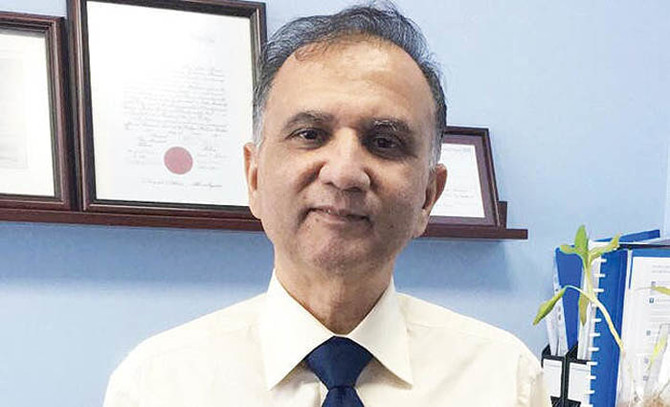
DUBAI: Dr. Farook Rasheed A Farooki was 29 years old when he left his home in Muzaffarabad- Kashmir to settle for a life as a young doctor in Jeddah, Saudi Arabia.
That was 45 years ago.
Soon, with his hardwork and excellent reputation, he became a naturalized citizen of the Kingdom. However, he says, his love for Pakistan always kept him grounded.
He finally decided to take the leap when, along with other like-minded Pakistanis, he established a charity hospital for kidney patients and named it as the Pakistan Kidney Center.
“In 1969, I came to Jeddah to look for a better life and got a job in the Ministry of Health. I worked there for eight years and then started my own clinic as a family physician. I worked very hard in my adopted country. And in return , I got a lot of respect and love. I was able to give a good life to my family,” the 76--year-old father of two said.
But that was not enough for him. “I always felt that I have a loan to pay to my motherland, where I was born and where I was educated.”
Eventually, he and his friend, Dr. Khaleelur Rehman, decided to establish two charity health projects in Pakistan — the Pakistan Kidney Center and Heath Mobile Units.
This was essential as Pakistan ranks eight in kidney diseases causing 20,000 deaths every year. Additionally, Chronic Kidney Disease (CKD) is rapidly growing in Pakistan, too.
“There are very few facilities available in our country, especially on the mountainous region. Patients have to travel a long way to major cities which add to the cost of their treatment. So we decided to build our center on the Silk Route’s main highway from Islamabad to Abbotabad, which is called Muslimabad,” he said.
The Pakistan Kidney Center was established in April 2015. With 14 machines, the facility provides 35 dialysis sessions on a daily basis.
“We successfully started our OPD with 14 dialysis machines [which works in two shifts] to take care of around 40 of patient every day. We maintain the highest standards. All machines are busy round the clock, so much so that we are now considering to start the third shift of dialysis,” Dr. Farooki said.
He added that the construction and operational costs of the facility cost him nearly Rs200 million. “Around Rs75 million was gathered through personal donations of board members and rest came from friends and philanthropists in KSA. Our current running cost is Rs2 to 2.5 million per month, out of which 25 to 30 percent is generated by center revenue. Rest comes from donations,” he said.
He has set his sights on launching a Mobile Health Unit next. “In the mountainous parts of Pakistan, there are no hospitals, no OPD facilities, or even trained medical staff. Hence, the only way to provide medical care they deserve is to reach them with Mobile OPDs on a regular basis,” he said, adding that “our mobile units travel to far-flung areas holding camps, providing medicine, and creating awareness about the prevention of diseases.”
His impending age and logistic challenges haven’t discouraged Dr. Farooki from serving his motherland. “I knew it won’t be easy. But nothing can stop me to help my people. Allah has given me the opportunity to serve my homeland. And I will do it with the best of my abilities till my last breath,” he said.
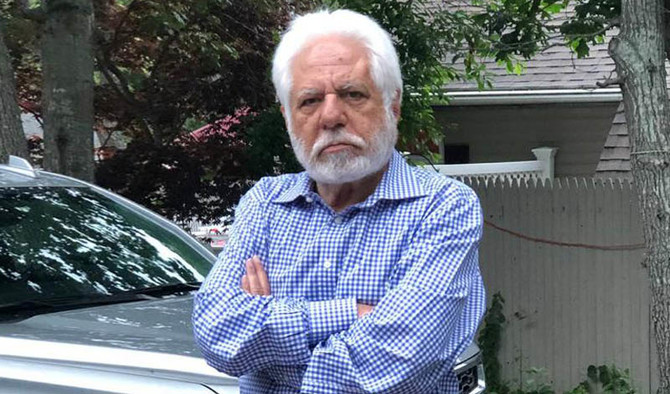
Dr. Farooki is not alone. Several other Pakistani expatriates in the Gulf voiced similar aspirations. Dr. Asjad Hameed, a famous diabetologist in the the UAE, is another such example.
Early this year, Dr. Hameed and his friends realized their six-year long dream by establishing a world-class diabetes hospital near Islamabad which they named The Diabetes Center.
Dr. Hameed, 51, has been working on curbing the nationwide epidemic of diabetes in Pakistan for more than a decade. Pakistan is one of the top ranked in the list of countries with diabetes where one out of five people suffers from the disease.
Dr. Hameed’s journey began in November 2011, when he decided to take the plunge. During a winter morning walk along the corniche, he shared his idea of establishing a hospital in Pakistan with two of his close friends.
Since then, there has been no looking back. “I initiated the project six years ago with my life’s savings of Dh300,000. We first launched a site clinic in Islamabad in 2012, where more than a 100 patients visited per day. And in April 2018, our world-class hospital became operational,” the father of three said, adding that “till date, we have spent Dhs 25 million on the hospital and are treating 200 patients per day.”
“We [Pakistani Gulf expatriates] are not only the highest in providing remittances to the country, we also serve our country in many ways. Contributing to the health sector is one such example. There are many known and many unsung heroes from the gulf countries who are serving Pakistan in several ways,” Dr. Hameed said.
“Though providing quality health services to all Pakistanis is the government’s job, we as responsible citizens cannot sit back and see our brothers and sisters suffering. We may have left our homes for the better future. But our heart and soul is still there. We will continue to do whatever we can. Keeping our people healthy is certainly one of such responsibilities that we owe to our country,” he said.
According to a report by the World Health Organization (WHO) issued in 2017, Pakistan spent 0.5 to 0.8 percent of its GDP on health care for the past 10 years while the WHO benchmark of health expenditure is at least 6 percent of the GDP to provide basic and lifesaving services.


![]()
![]()
![]()
![]()

‘We may have left our homes but our heart and soul are still in Pakistan’

‘We may have left our homes but our heart and soul are still in Pakistan’
- Expatriates residing in the GCC look to pay back by contributing to the country’s health care sector
- Have played a crucial role in promoting quality facilities over the years
Latest updates


© 2026 SAUDI RESEARCH & PUBLISHING COMPANY, All Rights Reserved And subject to Terms of Use Agreement.