


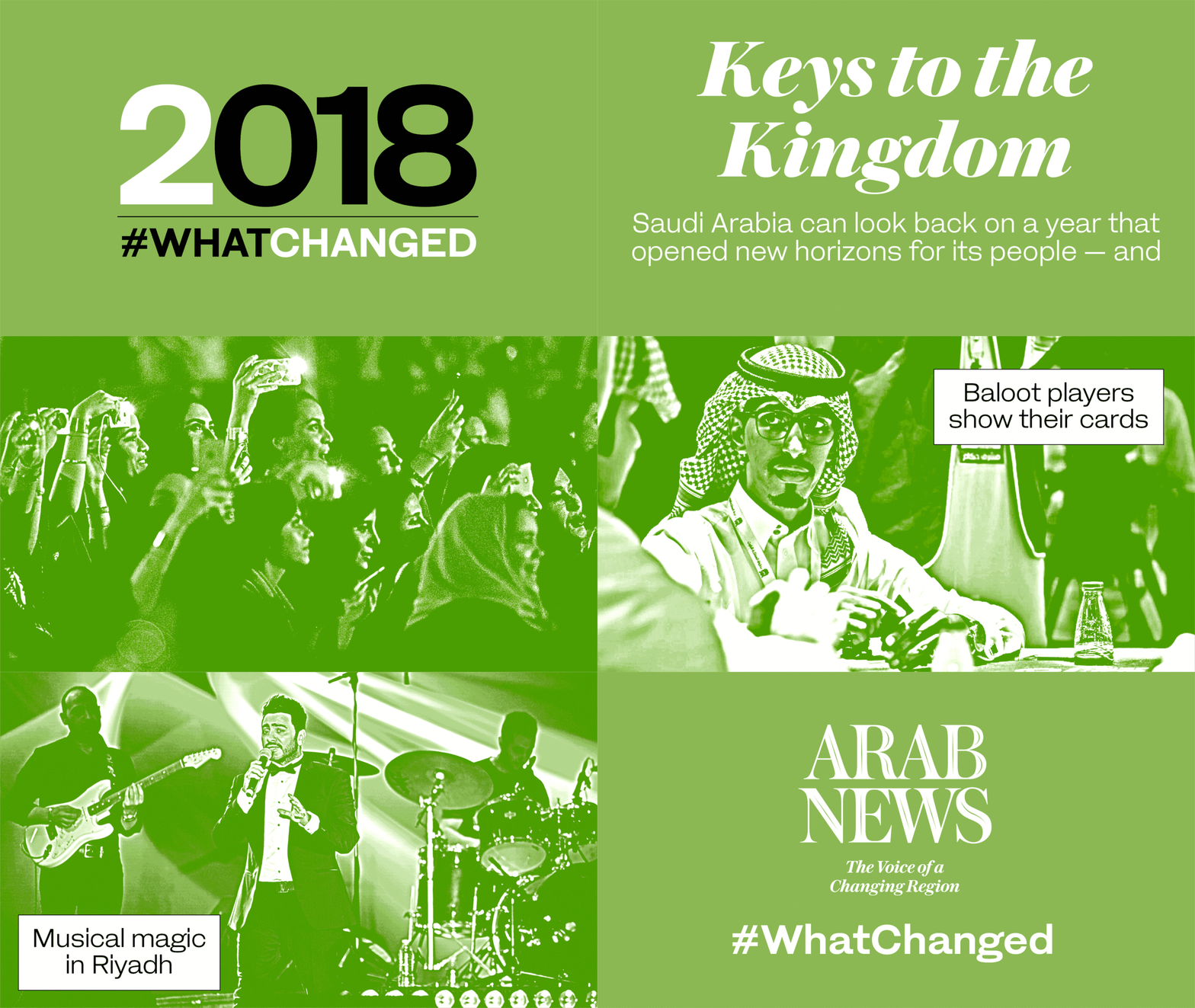
JEDDAH: If there was a coming-of-age moment for Saudi Arabia’s Vision 2030 program, it was probably this. As six of the world’s top performers took to the stage in Riyadh for the Ad Diriyah E-Prix post-race concert at the weekend, thousands of Saudis swayed and danced to the music, enjoying themselves late into the night.
With 2018 drawing to a close, the world is seeing Saudi Arabia in a new light. It has been a year of change that many skeptics believed would never happen.
"It's our moment,' says businesswoman Hind Alzahid as #Saudi Arabia lifts driving ban. https://t.co/VzMhrMeKGo #SaudiWomenDriving #WhatChanged pic.twitter.com/6hQXvznc9j
— Arab News (@arabnews) June 23, 2018
Life is changing for the people of the Kingdom in ways both big and small. The infamous ban on women driving has been lifted to wide acclaim. Mixed-gender events? Men and women can now attend music performances, professional wrestling bouts and football matches under the same roof. Public entertainment? The Kingdom has more options than could be imagined even two years ago.
Notable both for their symbolism and substance, the moves transforming the lives of Saudi citizens are drastically changing the way the world views everyday life in the Kingdom. Women are driving, entertainment venues are popping up nationwide, gender segregation in public places is fading away, and people’s social lives have widened.
One of Vision 2030’s objectives is to increase and diversify entertainment to meet the needs of the population. Of equal importance is the promotion of Saudi contributions in art and culture. Since the unveiling of Vision 2030 two years ago, the number of social and cultural events staged in the Kingdom has risen steadily — but 2018 turned out to be a bonanza.
And finally the wait is over! Cinemas in two weeks! #saudiarabia's new identity is shining on the front page of @arabnews #entertainment #cinema #sports #tourism #hospitality #law pic.twitter.com/lVkdyjS5TQ
— Banan Mujallid / بنان مجلد (@mujallidbanan) April 5, 2018
“This year has seen one unexpected joyful event after another,” Abdullah Salem, an investment banker based in Riyadh, told Arab News during a visit to the E-Prix venue. “I was never exposed to this much entertainment as a child. Now my children can see things I only got to see abroad on family vacations. They get the best of both worlds.”
“This reminds me of the old days”: Festive mood at #FormulaE fan village as weekend concert stirs nostalgic feelings. #AdDiriyahEPrix #SaudiArabia https://t.co/eyn3t4QCOL pic.twitter.com/hOE8oNRsTW
— Arab News (@arabnews) December 14, 2018
Many Saudis will remember 2018 as the year cinemas reopened after a 35-year gap. “Black Panther” became the first blockbuster film to be screened in the Kingdom in recent memory. For many, it was a time to reminisce about their childhood movie experiences. For the first-timers, it was exciting just to bear witness to a historic moment.
However, according to Faisal Bafarat, senior adviser to the chairperson of the General Entertainment Authority (GEA), changes in the Kingdom “are just the beginning of our journey.”
As the Kingdom wraps up an impressive weekend of #FormulaE, the success of the occasion underlines how serious Saudi Arabia is about hosting major world events and promoting them to domestic and international audiences. #AdDiriyahEPrix https://t.co/7F0sYFjmwP pic.twitter.com/dbTEJ83KLT
— Arab News (@arabnews) December 15, 2018
GEA events covered about 45 cities this year, with 3,200 days of activities. “This is still less than what we hope to deliver,” he said. “It is just the start. There is a long way to go.”
In 2019, the GEA aims to make an even bigger impact by expanding its reach in the Kingdom, he said.
Although many believed reforms in Saudi Arabia would happen gradually, the changes kept coming. If this shows anything, it is that the populace has embraced change wholeheartedly.
Retired psychologist Dr. Abdulrahman Al-Sobihi explains that people can find change difficult, since it comes with fear of the unknown that can cause anxiety.
Dr. Al-Sobihi believes that the Kingdom’s difficult “awakening” period after the 1979 attack on the Grand Mosque in Makkah pressured society on a both a social and psychological level. “People accepted these changes quickly not because they adapt to change in that manner, but because the ‘awakening’ period delayed many natural changes. So when change came, most were welcoming.”
Venues and institutions across Saudi Arabia have played their part as catalysts for the Kingdom’s vast talent pool. King Abdulaziz Cultural Center, Ithra’s Tanween, the Saudi Art Council, Souk Okaz, Al-Janadriyah Festival and others have helped build cultural bridges by merging traditional and global perspectives to create new experiences not only for the residents of the Kingdom, but also for visitors.
New drive to showcase the treasures of #SaudiArabia’s ancient city of Al-Ula. https://t.co/jOOwN47nik pic.twitter.com/fL9GJoDtaZ
— Arab News (@arabnews) May 3, 2018
Meanwhile, advances in the Kingdom’s national heritage sector have come with UNESCO recognition of sites overseen by the Saudi Commission for Tourism and National Heritage. Almost 20 new sites were registered this year, with plans to prepare more next year.
Travel and tourism made up 9.4 percent of Saudi GDP in 2017. With new e-visa systems allowing visitors easier entry to the Kingdom, that figure was expected to rise by almost 5 percent this year, according to the World Travel and Tourism Council.
“No longer will we be known by ‘the only nation in the world’ nonsense — we are opening up to the world more than ever,” said college student Sufana A.J., a staff organizer at the at-Turaif historical site in Ad Diriyah. “We’re welcoming our first wave of international visitors and we expect more.”
John Travolta visits #Saudi pavilion at #Cannes. #Cannes2018 #CannesFilmFestival #SaudiArabia @SFC_SAUDI @GCA_Saudi @Cinemas_KSA https://t.co/Wva9hxhbDo pic.twitter.com/ddajthkY57
— Arab News (@arabnews) May 15, 2018
Saudi Arabia has never been short of artists, but the recent transformation has brought on a new generation eager to reach their goals. Misk Art, a symbol of the Kingdom’s grassroots art scene, has been the subject of media interest since its world tour earlier this year.
“Art is a mirror to understand ourselves, and also a window through which outsiders can have a clearer view into our world,” said contemporary artist Ahmed Mater. “Saudi culture and society is in flux. During such change, it’s even more important to find a way to process, assess and document.”
In its first curated event, the Saudi Film Council launched a pavilion at the Cannes Marche du Film, with Saudi filmmakers outlining the Kingdom’s industry ambitions.
Cannes artistic director Thierry Fremaux said he was “thrilled that Saudi Arabia has ... a clear focus on nurturing its filmmaking talent and sharing its stories with the world.”
The Kingdom’s participation at Cannes was “a great way of opening up global opportunities for its creative talent,” he said.
As the year nears its end, reforms on a social scale have been intense and focused. It is clear these changes are here to stay and are welcomed by Saudis. What’s next? We’ve yet to see.


