JEDDAH: King Salman Humanitarian Aid and Relief Center’s (KSRelief) team inspected on Thursday the distribution of foodstuff for displaced people from Hodeidah to Lahj governorates in Yemen.
During the inspection tour, the head of the center’s office for aid in Aden, Saleh Al-Shabani, said that the center had distributed 926 food baskets weighing 68 tons and 524 kg for the displaced people from Hodeidah to Lahj.
The distribution comes within the framework of Saudi humanitarian projects.
On Friday, the center distributed more than 66 tons of food baskets to the displaced people from Hodeidah in the districts of Al-Maqtara and Tur Baha in Lahj governorate.
The project distributed 15,000 food baskets to the displaced people in Hodeidah.

Foodstuff handed out to displaced people in Yemen
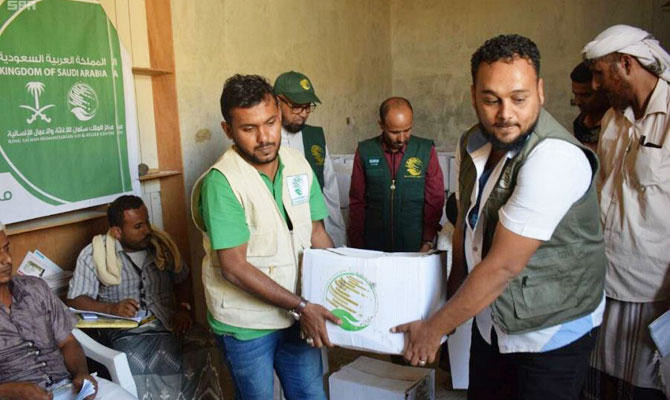
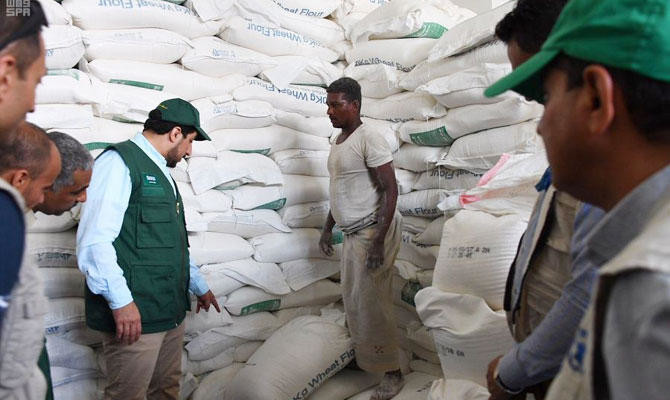
- The project distributed 15,000 food baskets to the displaced people in Hodeidah
KSrelief distributes cartons of dates in Jundiai, Brazil
- The center distributed 1,480 food baskets to the displaced and other vulnerable groups, including persons with disabilities, women, and the elderly, in Kassala State in Sudan, benefiting 10,360 individuals, representing 1,480 families
JUNDIAI: The King Salman Humanitarian Aid and Relief Center has distributed 1,600 cartons of dates in Jundiai, Sao Paulo, Brazil, benefiting 200 families, including host community members, refugees, and immigrants. This initiative is part of a project to distribute 200 tonnes of dates in Brazil in 2026.
The center also distributed 1,504 cartons of dates to the most vulnerable families in Brazil’s Mogi das Cruzes, benefiting 188 families from the host community, refugees, and migrants, as part of a project to distribute 200 tonnes of dates in the Latin American country.
This initiative is part of the many relief and humanitarian projects provided by the Kingdom through its humanitarian arm, KSrelief, to support those affected by disasters worldwide.
Elsewhere, the center distributed 1,480 food baskets to the displaced and other vulnerable groups, including persons with disabilities, women, and the elderly, in Kassala State in Sudan, benefiting 10,360 individuals, representing 1,480 families.


