MANILA: Philippines Defense Secretary Delfin Lorenzana has defended his recommendation to extend the implementation of martial law on Mindanao island for another year, saying it is the only way to quell terrorism in the country.
“National security is contingent on being able to protect people from threats,” said Lorenzana, who acknowledged that the Philippines continues to face internal security issues thanks to communist insurgencies and violent extremism.
He was speaking at a forum organized by the Filipino Stratbase ADR Institute for Strategic and International Studies in Makati on the outskirts of the Filipino capital, Manila.
On Monday, Lorenzana, a member of the Armed Forces of the Philippines (AFP) and other top security officials briefed senators in a closed-door meeting on the situation in Mindanao before putting forth the recommendation.
The lawmakers, however, are still divided on the issue.
“The Duterte administration is putting in place a comprehensive strategy to address terrorism and violent extremism,” he said, adding that the five-month armed conflict waged by security forces against ISIL last year in Marawi, the capital of one of the Philippine’s several provinces, would not happen again.
President Rodrigo Duterte first imposed martial law when the Marawi siege broke out. After a 60-day grace period, the president asked for a five-month extension, which was granted by congress.
Even after the president declared Marawi liberated from terrorists in October 2017, he had made a second request to extend martial law at the time.
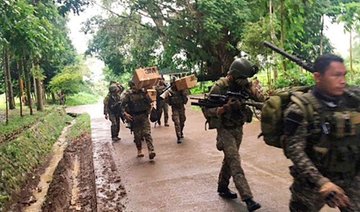
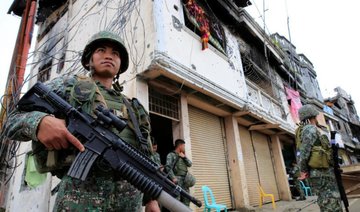
Lorenzana said the military conducted ground operations against the ISIL-affiliated Abu Sayyaf group, the Bangsamoro Islamic Freedom Fighters and pro-ISIL group Dawlah Islamiya. He went as far as saying that the “significant success” they have had countering such groups was down to declaring martial law on the island in the first place.
“The capabilities of threat groups have been significantly curtailed since there has been less threat-initiated violence and fewer kidnappings,” said Lorenzana in Friday’s forum. “Several guerrilla fronts were cleared and firearms recovered. Vital infrastructure was secured and government approval rates have since gone up.”
He added that martial law enabled law enforcement agencies, local officials and the military to coordinate, collaborate and communicate efficiently and effectively.
Lorenzana told reporters that putting the island under martial law would help address terrorism in the whole of the southern Philippines, adding that they would also deploy an entire military division to the province of Jolo, Sulu to address problems in and around the area.
"If our laws were stricter, we could have done without martial law,” he said, adding that it should always be a last resort for governments.
Lorenzana told reporters that between five and 10 expat extremists renowned for their bomb-making skills are believed to have entered the country from the south.
“The foreign extremists don’t look Arab,” he said. “They are more likely Asians, particularly from Malaysia and Indonesia, who have mingled with the local terror groups.”
The AFP has expressed confidence that the recommendation would surpass any legal scrutiny.
“We leave the final decision to the discretion of lawmakers,” said Noel Detoyato, chief of the AFP public affairs.