

Vintage car owners on a drive to promote a softer image of Pakistan

Updated 08 December 2018
Follow

Vintage car owners on a drive to promote a softer image of Pakistan

  • Urge government to lift ban on import of classic vehicles
  • Annual event was attended by several in the capital

ISLAMABAD: A vast array of vintage cars, including Pakistan's founding father, Muhammad Ali Jinnah’s Rolls-Royce Silver Ghost, attracted a large number of car enthusiasts to a show in Islamabad on Friday, providing them with a first-hand opportunity to pose with classic vehicles.

The exhibition is part of an annual rally organized by the Vintage & Classic Car Club of Pakistan. This year's edition began in Karachi on December 1 and will end in Peshawar on December 9. 
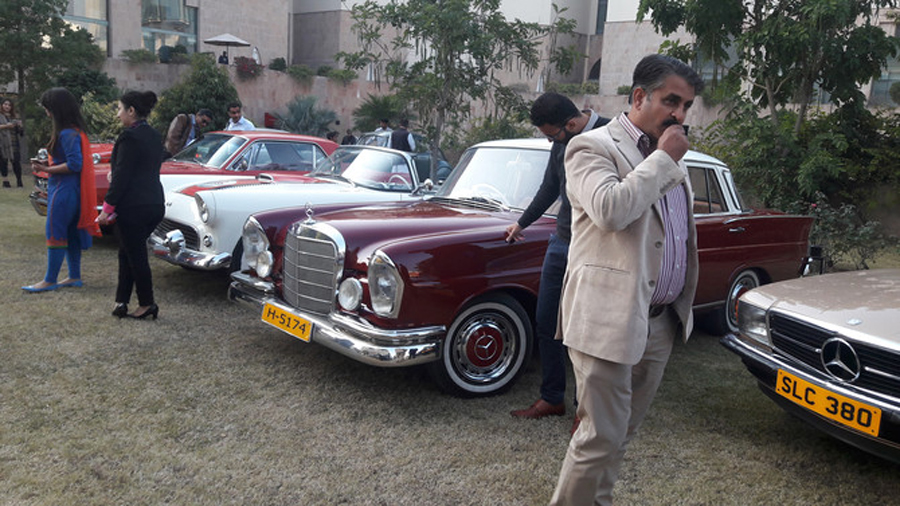


Owners of vintage car showcased more than two dozen classic vehicles on Friday, at a sprawling lawn of a private restaurant, as part of their annual rally to promote a softer image of Pakistan.

Owners of the glittering and colorful vintage and classic cars said that the main purpose of the event was to travel across the country to promote a “soft image of Pakistan”.

Ali Leghari, who owns a 1964 model Ferrari 250 California, is travelling with his family for the rally. “I hope my little contribution will help promote a positive image of Pakistan,” he said. 
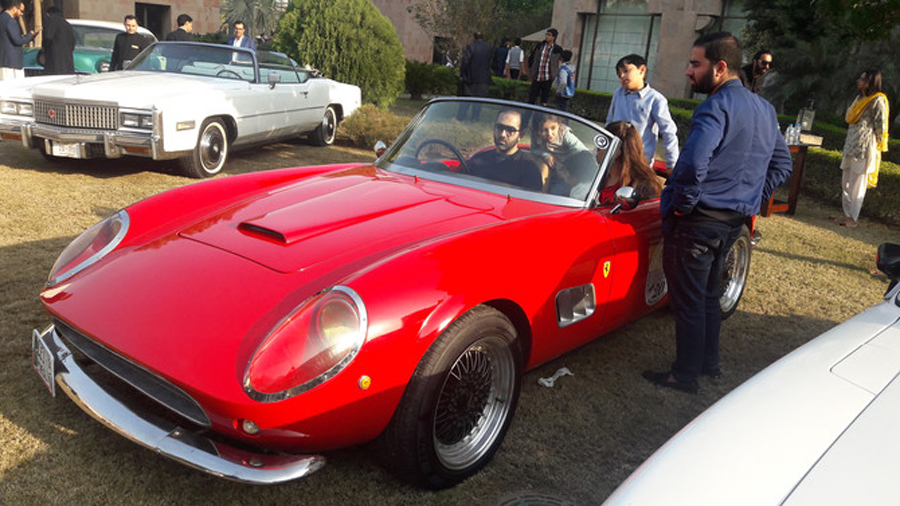


Ali Leghari, owner of the 1964 model Ferrari 250 California, took part in the vintage car rally along with his wife and children.

A vintage car aficionado, Leghari said he has been driving the Ferrari 250 since 1993.

Advocate Zafar Durrani, another car enthusiast, drives a Morris Garages 1959. He says he bought it three years ago from a vintage car dealer in Lahore. “This is a passion with a mission – the mission is to create awareness about the vintage cars. It is a heritage, we should preserve it,” he said. 


The vintage car show featuring over two dozen classic vehicles attracted a large number of car enthusiasts here in Islamabad on Friday.

Another visual at the exhibition is the 1965 Ford Mustang which stands out at the gathering for its unique shape and design. Its owner, Liaqat Malik, says that he has had the car since 2003. “I have spent a lot of money on its maintenance, but I’m happy to have this asset,” he said.

Other classic cars in the show included, an Aston Martin, Mercedes, MGs, Buick, Cadillac, and the Jaguar. 
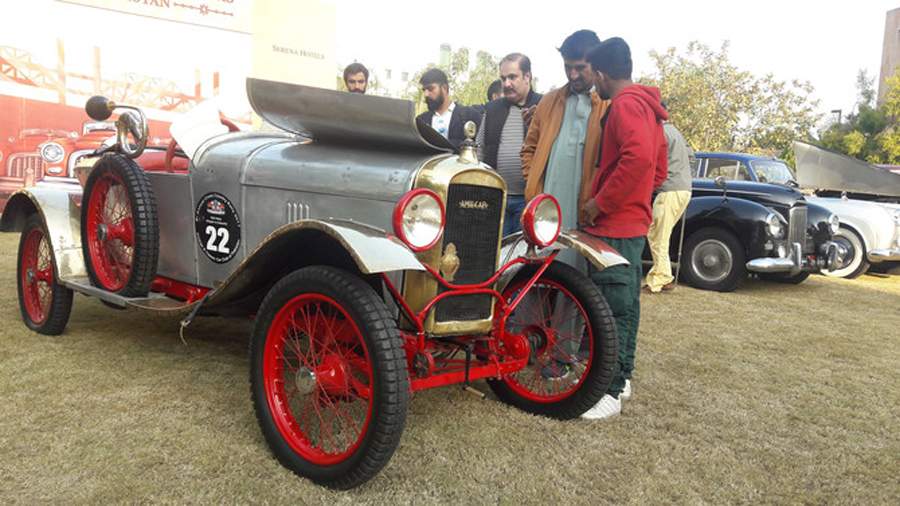


The vintage car show featuring over two dozen classic vehicles attracted a large number of car enthusiasts here in Islamabad on Friday.

Car enthusiasts were jubilant to learn about the classics, taking selfies, and updating their social media feeds with the pictures. 
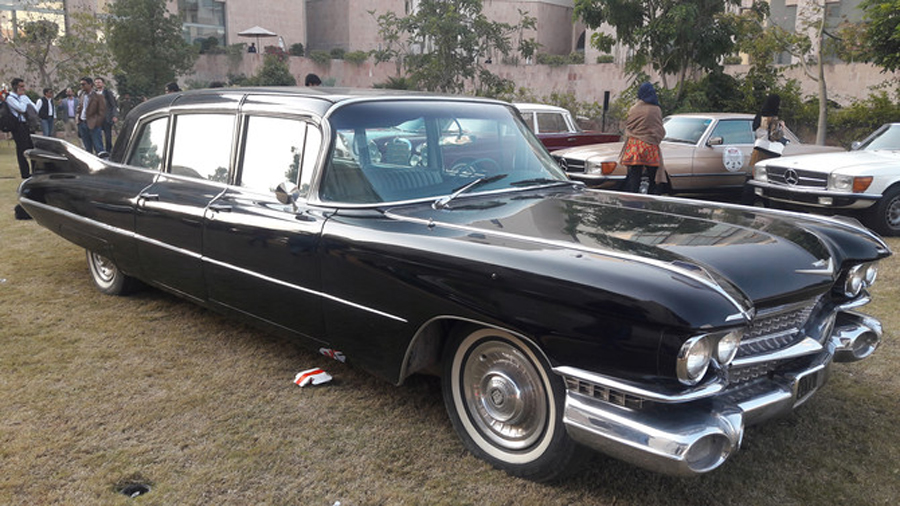


The car show is part of an annual rally organised by the Vintage & Classic Car Club of Pakistan. This year's edition began from Karachi on December 1 and will end in Peshawar on December 9.


Salma Baig, a businesswoman who recently sold her Cadillac, said that she was pleased to be a part of the show and was looking forward to buying another Cadillac. “It is not easy to buy a vintage car. It takes months and sometimes years to find a unique and original classic; and then convince the owner to sell it,” she said.

Urging the government to lift the ban on the import of vintage cars, Baig said: “Lifting the ban will open a new market and bring new business opportunities to Pakistan, along with satiating the thirst of classic car-lovers.”


Pakistan PM approves framework for National Energy Plan aimed at cutting power costs

Updated 4 sec ago
Follow

Pakistan PM approves framework for National Energy Plan aimed at cutting power costs

  • Electricity costs in Pakistan have been a major concern for both industries and domestic consumers
  • PM Shehbaz Sharif instructs authorities to expedite privatization of power distribution companies

ISLAMABAD: Prime Minister Shehbaz Sharif on Wednesday approved the framework for a National Energy Plan aimed at ensuring low electricity costs for industries and facilitating domestic consumers, Pakistani state broadcaster reported. 

The development took place during a meeting of the Cabinet Committee on Energy in Islamabad presided over by Sharif. The Pakistani prime minister directed all ministries and provincial governments to present a “workable and coordinated” strategy under the proposed plan.

Electricity costs in Pakistan have been a major concern for both industries and domestic consumers. Industrial users often face high tariffs that increase production cost while residential consumers struggle with rising bills that impact household budgets. 

“Prime Minister Shehbaz Sharif has given in-principle approval for the formulation of a comprehensive National Energy Plan in consultation with relevant ministries and provincial governments,” Radio Pakistan said in a report.

“He emphasized that the government’s top priorities include ensuring electricity supply to industries at the lowest possible cost and providing facilitation for domestic consumers.”

Sharif also approved the establishment of a dedicated secretariat for the National Energy Plan and gave approval to the framework guidelines for auctioning wheeling charges, it added.

Wheeling charges are fees paid for using another company’s power grid to transmit electricity from a generator to a consumer, covering the cost of transporting electricity over someone else’s network.

The report said Sharif instructed authorities to include the recommendations of the climate change, finance, industries and petroleum ministries into the plan. 

Sharif also gave instructions to expedite the privatization of power distribution companies (DISCOs) and urged competitive tariffs for industries to boost production capacity.

Fluctuations in fuel prices, inefficiencies in the power sector, and reliance on imported energy have contributed to high electricity costs in Pakistan in recent years, making energy affordability and stability a key focus for government policies and reforms.

Pakistan has pushed energy sector reforms to tackle long-standing issues like circular debt, power theft, and transmission losses, which have caused blackouts and high electricity costs. 

In February, Pakistan developed a new energy policy that it says will help the country attract $5 billion in investment through public-private partnerships.