BEIRUT: Israel said that Operation Northern Shield would “find and destroy” attack tunnels built across the border from Lebanon. The operation was taking place inside Israeli territory.
“We see Hezbollah’s activities as a flagrant and blatant violation of Israeli sovereignty” and UN resolutions, said Lt. Col. Jonathan Conricus, a military spokesman. “This activity is another example of the negative effects of Iranian entrenchment in the region.”
Conricus said that Hezbollah had been developing an offensive plan that would “shift the battleground into Israel,” using firepower and ground units. “The surprise component of that plan was supposed to be tunnels that would allow infiltrators into Israel,” he said.
The military operation is likely to raise tensions between Israel and Hezbollah, which have both been preoccupied with other conflicts since their last clash more than a decade ago.
Lebanon said that it was monitoring Israel’s operation along its southern border. Lebanese President Michel Aoun and Elizabeth Richard, the US ambassador to Lebanon, had met to discuss the military activity.
The envoy said after the meeting that the “discussions dealt with developments in the south” and stressed “her country’s support for Lebanon and the importance of forming a new government.”
A Lebanese military source told Arab News: “What is happening on the other side of the Lebanese border is an Israeli affair. Lebanon has nothing to do with it. We are doing our job as usual — sending patrols and monitoring.”
The source likened the tunnel operation to Israel’s building of a concrete barrier on its border with Lebanon. “We have no problem with what the Israeli army is doing on their side as long as it does not violate Lebanese sovereignty,” he said.
However, the source described Israeli army spokesman Avichai Adraee’s warning to the Lebanese army to stay away from the tunnels as an “intimidation.”
“We are used to arrogant Israeli intimidation,” he said.
Lebanese army command said that it was monitoring the Israeli operation.
“The situation on the Lebanese side is calm and stable,” the army said in a statement.
“Army units deployed in the area are carrying out their usual missions along the border in cooperation and coordination with the UN Interim Force in Lebanon to prevent any escalation or destabilization in the south.
“The Lebanese army is fully prepared to face any emergency,” it said.
Lebanon’s official National News Agency reported that “Israeli bulldozers, backed by military vehicles and soldiers, were carrying out unidentified digging and bulldozing operations behind the separation wall adjacent to the Lebanese village of Kfarkla and beyond the gate of Fatima.”
The UN peacekeeping force sent patrols along a road adjacent to a barbed-wire fence separating Lebanon and occupied Palestine.
“The overall situation in the area of operations is calm and (the force) is working ... to maintain overall stability,” its leadership told Arab News.
“The peacekeepers have increased their patrols along the Blue Line, together with the Lebanese armed forces, to avoid any misunderstanding that could lead to escalation.”
Gen. Stefano Del Col, the UN force’s chief of staff, contacted both the Lebanese armed forces and the Israeli army to “urge all parties to use the force’s mechanisms of liaison and coordination to ease any tension.”
Peacekeeping liaison teams were “operating on and monitoring both sides of the Blue Line around the clock” to check on violations of UN Security Council resolutions.


![]()

Beirut calls for calm as Israel targets ‘attack tunnels’
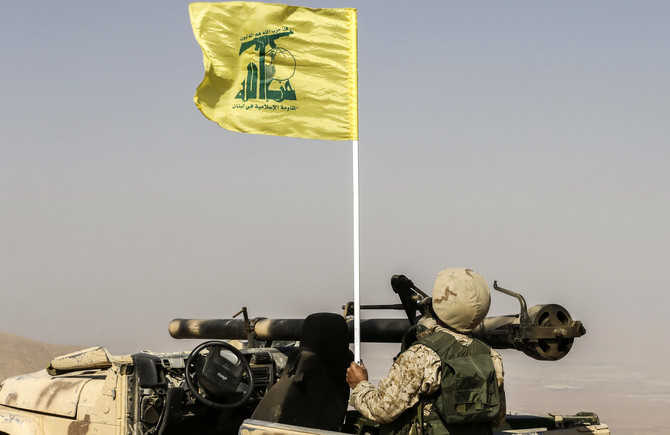
Beirut calls for calm as Israel targets ‘attack tunnels’
- The military had also enhanced its readiness along the border
- The army would only be operating within Israel and not crossing the border


Latest updates


Recommended


© 2026 SAUDI RESEARCH & PUBLISHING COMPANY, All Rights Reserved And subject to Terms of Use Agreement.