NEW DELHI: Indian authorities were struggling Thursday to figure out how to recover the body of an American killed after wading ashore on an isolated island cut off from the modern world.
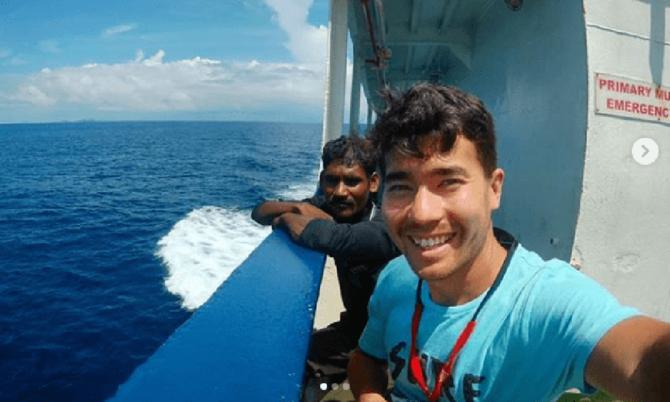
John Allen Chau was killed last week by North Sentinel islanders who apparently shot him with arrows and then buried his body on the beach, police say.
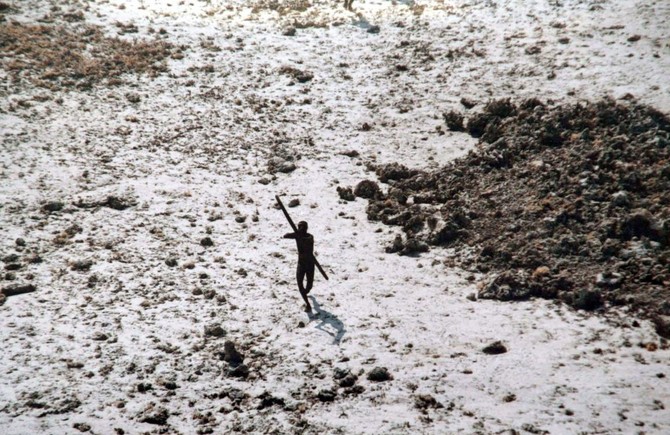
But even officials don’t travel to North Sentinel, where people live as their ancestors did thousands of years ago, and where outsiders are seen with suspicion and attacked.
“It’s a difficult proposition,” said Dependera Pathak, director-general of police on India’s Andaman and Nicobar Islands, where North Sentinel is located. “We have to see what is possible, taking utmost care of the sensitivity of the group and the legal requirements.”
Police are consulting anthropologists, tribal welfare experts and scholars to figure out a way to recover the body, he said.
While visits to the island are heavily restricted, Chau paid fishermen last week to take him near North Sentinel, using a kayak to paddle to shore and bringing gifts including a football and fish.
It was “a foolish adventure,” said P.C. Joshi, an anthropology professor at Delhi University who has studied the islands. “He invited that aggression.”
Joshi noted that the visit not only risked Chau’s life, but also the lives of islanders who have little resistance to many diseases.
“They are not immune to anything. A simple thing like flu can kill them,” he said.
On his first day Chau interacted with some tribesmen — who survive by hunting, fishing and collecting wild plants — until they became angry and shot an arrow at him. The 26-year-old self-styled adventurer and Christian missionary then swam back to the fishermen’s boat waiting at a safe distance.
That night, he wrote about his visit and left his notes with the fishermen. He returned to North Sentinel the next day, Nov. 16.
What happened then isn’t known, but on the morning of the following day, the fishermen watched from the boat as tribesmen dragged Chau’s body along the beach and buried his remains.
Pathak said seven people have been arrested for helping Chau, including five fishermen, a friend of Chau’s and a local tourist guide.
Chau was apparently shot and killed by arrows, but the cause of death can’t be confirmed until his body is recovered, Pathak said.
In an Instagram post, his family said it was mourning him as a “beloved son, brother, uncle and best friend to us.” The family also said it forgave his killers and called for the release of those who assisted him in his quest to reach the island.
“He ventured out on his own free will and his local contacts need not be persecuted for his own actions,” the family said.
Authorities say Chau arrived in the area on Oct. 16 and stayed on another island while he prepared to travel to North Sentinel. It was not his first time in the region: he had visited the Andaman islands in 2015 and 2016.
With help from a friend, Chau hired fishermen for $325 to take him there on a boat, Pathak said.
After the fishermen realized Chau had been killed, they left for Port Blair, the capital of the island chain, where they broke the news to Chau’s friend, who in turn notified his family, Pathak said.
Police surveyed the island by air Tuesday, and a team of police and forest department officials used a coast guard boat to travel there Wednesday. Another trip was planned Thursday.
India has a very hands-off approach to the island’s people. Tribespeople killed two Indian fishermen in 2006 when their boat broke loose and drifted onto the shore, but Indian media reports say officials did not investigate or prosecute anyone in the deaths.
India recently changed some of its rules on visiting isolated regions in the Andamans. While special permits are required, scholars say visits are now theoretically allowed in some parts of the Andamans where they used to be entirely forbidden, including North Sentinel. Chau had no permit, police said.
Chau had wanted ever since high school to go to North Sentinel to share Christianity with the indigenous people, said Mat Staver, founder and chairman of Covenant Journey, a program that takes college students on tours of Israel to affirm their Christian faith. Chau went through that program in 2015.
“He didn’t go there for just adventure. I have no question it was to bring the gospel of Jesus to them,” Staver said.
Staver said Chau’s last notes to his family on Nov. 16 told them that they might think he was crazy but that he felt it was worth it and asked that they not be angry if he was killed.
Before attending Oral Roberts University, Chau had lived in southwestern Washington state and went to Vancouver Christian High School. Phone messages left with relatives were not immediately returned Wednesday.


![]()
![]()
![]()
![]()

Indian police struggle to reclaim body of American killed on North Sentinel Island

Indian police struggle to reclaim body of American killed on North Sentinel Island
- Even officials don’t travel to North Sentinel, where people live as their ancestors did thousands of years ago, and where outsiders are seen with suspicion and attacked
- Police are consulting anthropologists, tribal welfare experts and scholars to figure out a way to recover the body of adventurer John Allen Chau


Latest updates


Recommended


© 2026 SAUDI RESEARCH & PUBLISHING COMPANY, All Rights Reserved And subject to Terms of Use Agreement.