EL GOUNA: It takes phenomenal guts for a first-time director to tackle a subject such as leprosy, with an actual victim of the disease in the lead role.
A. B. Shawky’s “Yomeddine,” which screened at the El Gouna Film Festival this week, is a touching road-trip drama starring Rady Gamal, a real-life leprosy survivor. The director met Gamal at a leper colony north of Cairo when he made a short documentary, “The Colony,” in 2009. He could not have found a better actor. Gamal is not ashamed of his disease or disability and uses his wrinkled face with marvelous ease to express his joys and pains.
Gamal stars as Beshay and when first we see him, his gnarled hands rummaging through a garbage bin, we are shocked. When his mentally unstable wife Ireny (Shoq Emara) dies, Gamal decides to find his estranged family. He gets into his donkey cart and, along with young friend Obama (Ahmed Abdelhafiz), embarks on the journey of a lifetime. Since ancient times, lepers have been treated as outcasts (as we saw in most brutal form in William Wyler’s 1959 classic “Ben-Hur”), and not much has changed for Beshay in the present day. He is looked down upon and kept at arm’s length by people unduly fearful of contracting the disease. The road from Cairo, where Beshay begins his journey, to Luxor, where the family that abandoned him lives, is filled with adventures, some happy, some not.
Although the movie has several high points, which probably helped it earn its competition slot at the Cannes Film Festival in May, the plot is weak in places, becoming boringly predictable, and some scenes simply seem unnecessary. For instance, was there really a need for flashbacks and dream sequences, which appear to stick out like a sore thumb?
The climax, meanwhile, seems forced as Shawky seems to have taken the easy way out. If the idea was to draw the viewer into an emotional trap, it does not quite work. However, “Yomeddine” does steer clear of becoming a celebration of disfigurement and poverty.
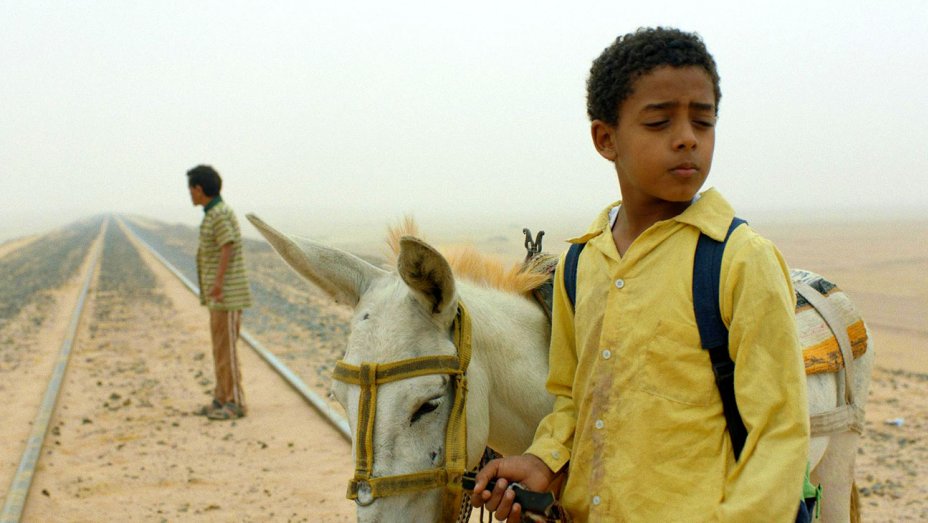

Film review: Fact meets fiction in ambitious drama ‘Yomeddine’
- Yomeddine is a touching road-trip drama
- It steers clear of becoming a celebration of disfigurement and poverty
New book explores 12 masterpieces of Islamic manuscript art across centuries
- William Greenwood discusses his new book on a dozen masterful Islamic manuscripts
DUBAI: A new book exploring 12 extraordinary Islamic manuscripts has been published with the intention of making these richly illustrated masterpieces accessible to all.
“Illuminated: Art, Knowledge, and Wonder in Twelve Islamic Manuscripts,” published by Empty Quarter Press, showcases a dozen of the finest manuscripts ever produced, including the medieval Arab classics “Maqamat al-Hariri,” “Kalila wa Dimna,” “Aja’ib Al-Makhluqat Wa Ghara’ib Al-Mawjudat,” and “Kitab Al-Diryaq,” as well as spectacular works spanning the 13th to 17th century Timurid, Safavid, and Mughal worlds.
Its author, William Greenwood, is a specialist in Islamic art and culture. The featured manuscripts were valued as both vessels of knowledge and as artistic products in their own right. From medical treatises and celestial charts to epic poetry and fables, each manuscript reflects the diverse traditions of Islamic intellectual and artistic life.
For Greenwood, who has worked as a curator for more than 10 years, most recently at Zayed National Museum in Abu Dhabi, the featured manuscripts are important for several reasons. Firstly, they are incredible works of art. Secondly, each is “a snapshot of the time when it was made, in terms of the artistic styles and content, but also the historical context.”
The first chapter of “Kitab al-Diryaq,” for example, has been attributed to mid-13th-century Mosul, and “is very much about glorifying the ruler,” Greenwood says. “Kitab Suwar al-Kawakib al-Thabita,” copied in 15th-century Samarkand, speaks to the flourishing of science during the Timurid Renaissance, while the Hamzanama, from 16th-century India, marks the beginning of a distinctively Mughal style of painting.
“The third reason is that, as beautiful as the paintings and illumination are, these are almost always intended to enliven texts which in themselves are wonderful – whether they are national epics like the “Shahnameh,” encyclopaedic works like “Aja’ib al-Makhluqat,” or demonstrations of virtuoso linguistic skill like “The Maqamat of Al-Hariri.”
Lastly, he says, they are “remarkable testaments to a multicultural and cosmopolitan Islamic world, absorbing, refining, and rethinking everything from Indian fables and classical astronomy into a coherent and distinctively ‘Islamic’ whole.”
Greenwood’s interest in illuminated manuscripts was initially sparked by a mid-14th-century Mamluk copy of “Sulwan al-Muta’ fi ‘Udwan al-Atba’,” which he encountered while working at the Museum of Islamic Art in Doha.
“It’s the only illustrated medieval copy of this text and was probably made for a royal patron,” explains Greenwood, who has also worked at the British Museum in London. “The mix of Byzantine, Persian, and Chinese elements within the painting appealed to my interest in cross-cultural encounters. The text itself is part of the ‘mirrors for princes’ genre, which is supposed to provide guidance for rulers; this was a very important type of writing, which is represented in ‘Illuminated’ by an early 14th-century Mamluk copy of ‘Kalila wa Dimna.’”
However, it was not a single discovery or experience that prompted him to write the book, but rather a growing realization that, although the general public engages with illustrated and illuminated Islamic manuscripts, there were few general works on the topic.
“There are lots of very detailed publications which deal either with specific manuscripts or particular design elements across them, but not much for an interested but non-academic audience. It was also quite exciting to think about having paintings from these very different manuscripts together in one publication. Here you can follow the evolution of styles and ideas from the 13th through to the 17th century, which is helpful for non-specialists.”
The end result is a richly illustrated book written for a wide audience. Both a celebration of the artistic traditions of the Islamic book and an invitation to uncover its beauty and treasures, “Illuminated” brings together Islamic art, scholarship, and storytelling in an accessible and engaging form.
“I hope that being able to see these works together in one publication will open readers’ eyes to how wonderful they are,” says Greenwood. “This is really intended for everyone, and if it sparks wider interest in the manuscripts featured, then that in itself brings a unique value. All of these works deal with learning and imparting wisdom in some way, and if this book can help to spread that a little further, then it has done its job.”


