

Get hooked on traditional Palestinian embroidery

UAE-based artist Joanna Barakat is set to give a class on traditional stitching techniques. (Arab News)
Updated 20 September 2018
Follow

Get hooked on traditional Palestinian embroidery

  • Joanna Barakat gives workshops on Palestinian embroidery
  • She talks about the significance and history of the craft

DUBAI: I just finished cross-stitching my first Gaza cypress tree motif, begun around the kitchen table of the UAE-based artist Joanna Barakat, who gives workshops on Palestinian embroidery, or tatreez. Next up: Motifs from Hebron, Ramallah and Jaffa.

Until I took her class, which she’ll be teaching at Tashkeel in Dubai next weekend, I hadn’t paid much attention to the stitches that adorn the region’s fabrics. Now, I read them like signposts for clues as to where they’re from.

Barakat, who was born in Jerusalem, begins with a talk on the history of tatreez, showing us photos from different regions before 1948 and passing around examples of her grandmother’s work.
We learn how embroidery was more elaborate for weddings, how women incorporated their environment in their work — Jaffa, for instance, has an orange motif — and how it reflected their status. Bedouin women stitched a blue hem on their dresses, adding red motifs if they remarried. “Each tribe had its own style and its own way of dressing to express their identity,” Barakat says.

The Nakba in 1948 almost killed off the tradition, as women lost access to the region’s textile factories. “Everybody was traumatized,” she says. “You had a good decade there where almost nothing came out.”

But their resilience resurfaced in their craft, earning them a living in refugee camps. “It became a symbol of resistance and empowerment.”

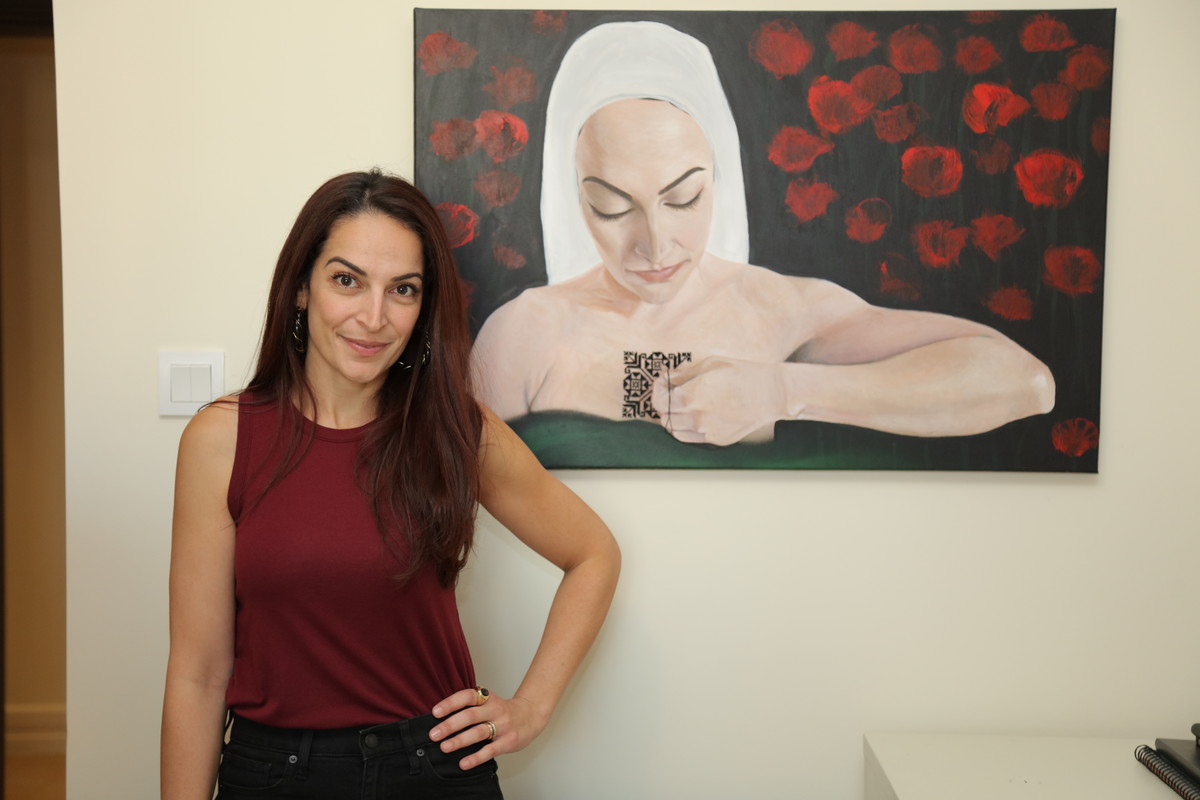
In that way, Barakat uses embroidery in her paintings: in one self-portrait, a needle punctures her chest on the canvas, “trying to stitch my own Palestinian identity into me,” she explains.
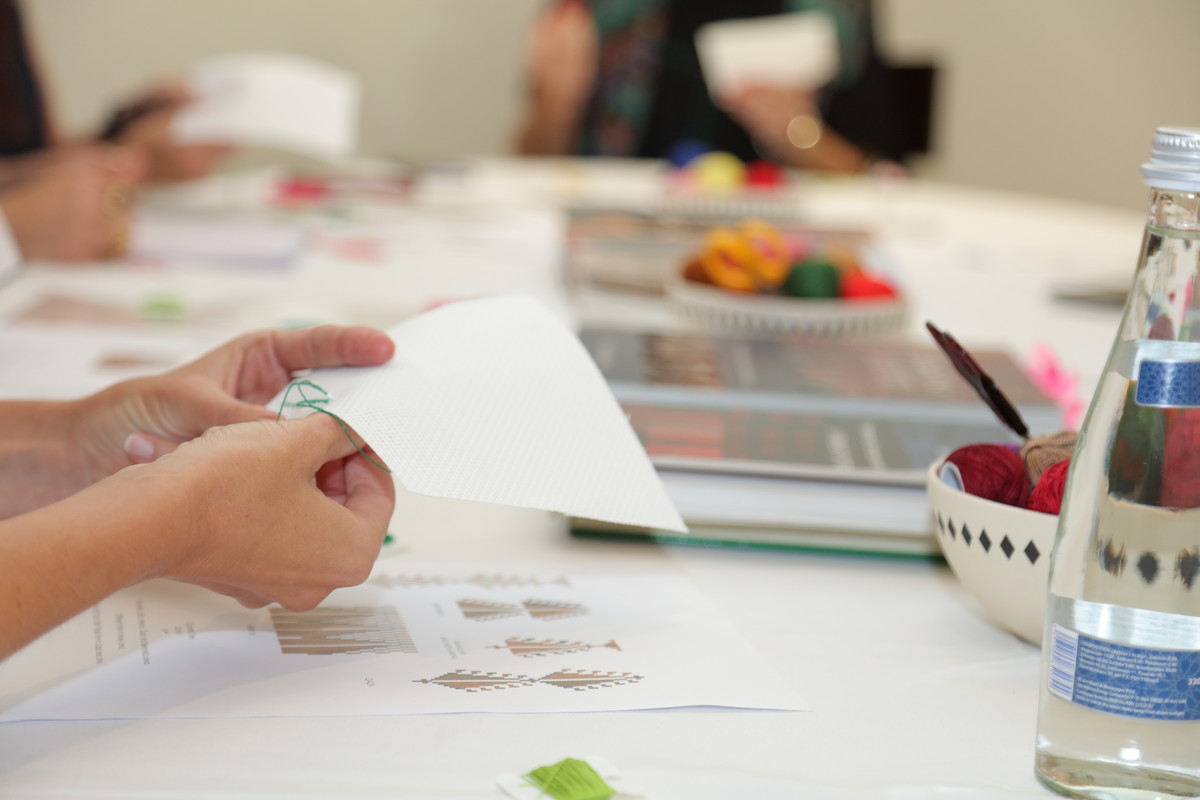
Her workshop may have stitched some of that into me as well. After giving us our own cross-stitch kits, with Aida fabric, green threads and cypress tree patterns, she shows us how to stitch, correcting us patiently as we go. As they might say in crochet class, I’m hooked.

Joanna Barakat’s workshops on Palestinian embroidery are at Tashkeel in Dubai on Sept. 29 and Dec. 8 for $73, from 10 a.m.-3 p.m. with a one-hour break, lunch included. Email [email protected] for more information.


Hamza Hawsawi on headlining The Fridge in Riyadh

Updated 14 February 2026
Follow

Hamza Hawsawi on headlining The Fridge in Riyadh

DUBAI: Saudi R&B artist Hamza Hawsawi headlined The Fridge’s “Concert Series KSA Season 1” over the weekend, performing a show in Riyadh’s JAX District as part of a two-day program spotlighting emerging talent.

Hawsawi’s performance followed “The Fridge Open Mic,” which took place at the same venue the night before. The open mic offered rising artists a professional stage to perform original material in front of a live audience, creating space for experimentation and discovery within the local music scene.

Speaking during the event, Hawsawi highlighted the importance of platforms such as open mics for artists. “I think it is important because an open mic is an opportunity to get to know new artists,” he said. “For industry professionals, like Fridge, it is an eye-opener to the scene, and it lets you understand how the scene is going, what kind of artists you’re gonna be dealing with in the future.”

From an artist’s standpoint, he added, the format remains essential for growth. “We do need open mics. We do need to be out there and to try different things, and to sing to different people, and to test our art and find out if people are gonna gravitate towards it or not.”

Hawsawi has spent more than 15 years developing a sound rooted in R&B, soul and pop, building an audience that now spans the region and beyond. He has accumulated more than 33 million global views and collaborated with a range of regional and international artists. 

His track “Million Miles” was selected as the official Rally Dakar anthem, while his live performances have included stages such as MDLBeast and the Abu Dhabi Grand Prix.

Asked whether he feels a responsibility to help shape the Saudi R&B scene, Hawsawi described a fluid relationship with that role. “Sometimes I feel that sense of responsibility,” he said. “Other times I feel like I’m just a human being trying to express my feelings … But we’re just artists at the end of the day.”

He added that while he sometimes embraces being a beacon for the genre, “other times I feel like I want to be low-key, and I don’t even want to be seen or heard.”

Hawsawi also reflected on one of his personal challenges as an artist in the Kingdom: writing and performing primarily in English. 

“That has been the biggest challenge to face,” he said. 

While Arabic remains the most widely spoken language in Saudi Arabia, Hawsawi explained that English allows him to express what he feels more clearly, particularly when it comes to emotion and meaning.

“The nuances of what I feel and all the metaphors for me trying to say something but not saying it, you know, not a lot of people get that,” he said, noting that his work often reaches a niche audience. “But I’m happy with that.”