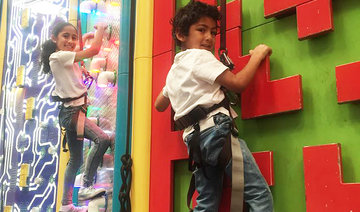
JEDDAH: Parents in the Kingdom are becoming more aware of the benefits of enrolling their children in fitness classes at a young age.
Former Al-Ahli footballer and Saudi international Wael Kayal, now a coach who runs a youth program at 305 Lifestyle Venue in Jeddah, ensures that children stay healthy through his fitness program and stresses the importance of enrolling them at an early stage.
“It is super important for children to start being active from a young age. Our program is more tailored for kids starting at the age of five, as they have better listening habits, concentration, commitment and social awareness,” Kayal, 43, told Arab News. “The sooner the better they develop the athletic fundamentals that are necessary.”
He explained that every child differs in their ability owing to their lifestyle: “You can have a five-year-old developed and ready to move on to more speed development and strength conditioning, and a 12-year-old coming in overweight who has never exercised and you have to go back to develop their ABCs.”

Wael Kayal
Kayal is eager to encourage the children to stay committed to a healthier lifestyle and uses a very careful, considered approach. “You cannot be forceful with these kids because they already might have some insecurities. We take our time and go at a slower pace so that the child stays committed and sees results eventually,” he said.
The coach says sports shape a child’s character. “Our program is designed not only for kids to benefit from athletics but to develop their overall lifestyle. That includes eating habits, sleep habits and lifestyle choices. We have kids who come from a variety of schools in Jeddah, yet they all become friends and it helps them to become extrovert and confident. In the last half-hour of our program, they sit and mingle, enjoy smoothies and fruit, and play a team sport: football, dodgeball or sand volleyball. This is fun and it helps with their socializing skills after our workouts.”
Kayal’s message to parents is to “keep your kids committed. Communicate with your kids daily about the choices they are making. This stage in their lives will develop their habits for life. Visit your kids’ activities once in a while and give them positive feedback on their achievements, however small. This keeps them going. I can do my part, the child can do theirs and the parent does their part. This is a recipe for success.”
Arab News talked to a number of parents of the children enrolled at 305 Lifestyle.
Khloud Nazer, 43, a Saudi full-time mother, said: “It’s important to get them started at an early age, so they can grow up with a love for sports and to learn these healthy lifestyle habits early.”
She believes sports have an effect on the child’s character growing up: “Once they start developing their muscles and they see that they’re fit, it builds their confidence and that definitely trickles into other aspects of their life — it helps with their self-esteem. And that’s definitely going to help them when they grow up.”
She said she sees an increase in parents adopting this healthy culture for children, “especially with the younger generation now and the new parents. I’ve seen a lot more educated parents who are very careful about what their children are eating and what they do during the day. There definitely is a rise.”
Her advice to fellow parents is to “start your kids on a program from a young age, because this will be built into their habits. You see a lot of children who are obese and these things really break my heart. It’s avoidable. Instilling healthy eating habits and lifestyle habits and staying active is important for all children.”
Sociologist Reem Al-Saigh, 36, said: “Our parents didn’t raise this habit when we were younger. That is why I want to instill these habits in my children, as young as they are now.”
Al-Saigh said sports have an effect on the child’s cognitive abilities as well. “It will give them a stronger personality, and physical activity has an impact on the growth of their brain. It will make them more productive in their studying or when it comes to socializing with people.”
She applauds 305 Lifestyle for the number of children whom they teach these important habits. “Obesity can often be seen in young kids these days. This new type of awareness and the number of kids I see here today is very impressive.”
Thirty-three-year-old Jeddah Sondos Hajji, owner of Baby Sensory,?? said: “It is very important for children to run and play, especially after long hours at school. They should be doing this and playing sports throughout the day, not playing on electronics.”
Sports builds their character from a young age, she said, “and also their cognitive and coordination skills.”