

Tribal women come out in large numbers to vote

1 / 6
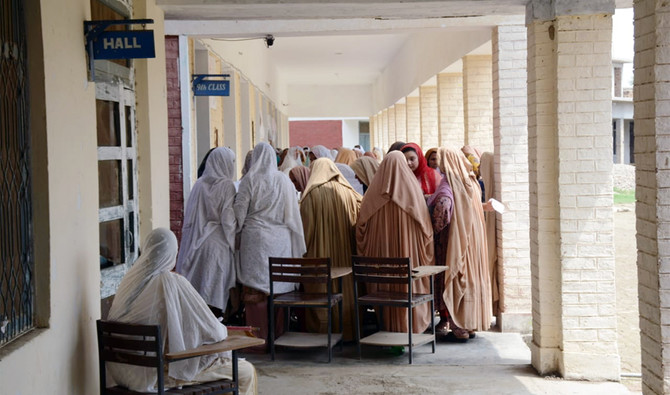
Women cast votes at polling stations in Mohmand tribal district (Arab News photo).
2 / 6
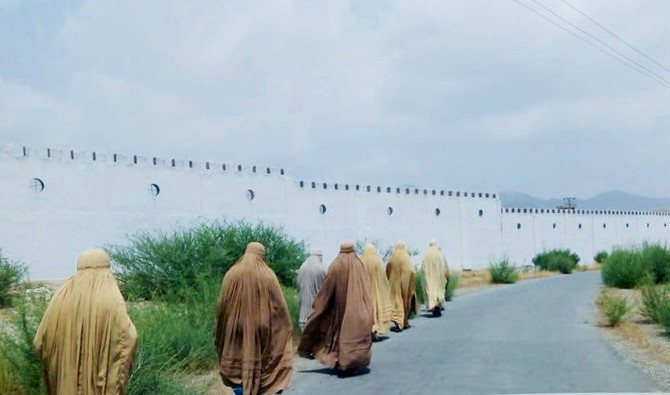
Women leave homes in Baizai subdivision of Mohmand district to cast their votes. (social media)
3 / 6
Paramilitary troops stand guard at women polling stations on Wednesday.
4 / 6
Women cast votes at polling stations in Mohmand tribal district (Arab News photo).
5 / 6
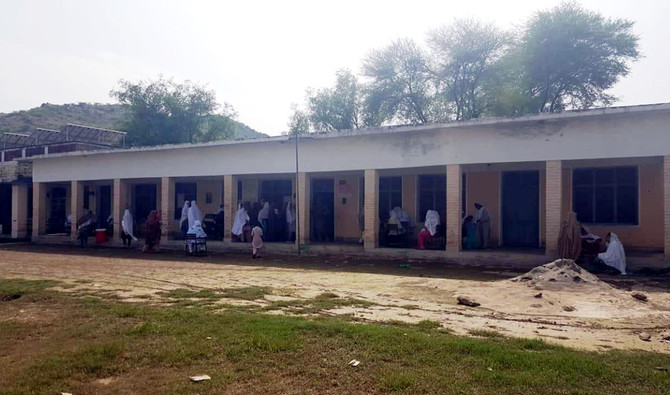
Women at a polling station in Mohmand tribal district. (Arab News photos)
6 / 6
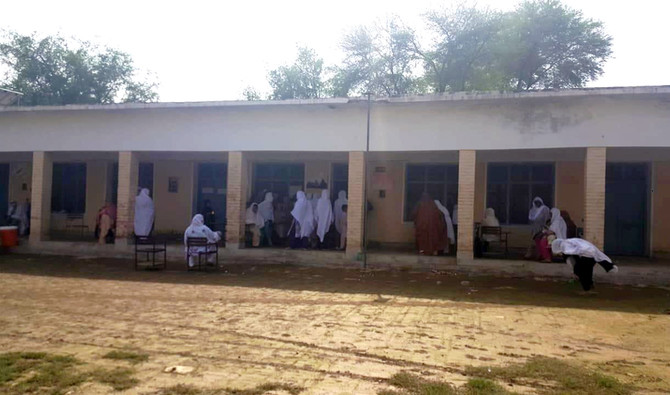
Women at a polling station in Mohmand tribal district. (Arab News photos)
Updated 25 July 2018
Follow

Tribal women come out in large numbers to vote

  • Most women in Baizai subdivision of Mohmand tribal district voted for the first time in 2018 elections
  • Tribal districts have more than 10.02 million registered women voters

PESHAWAR: Women from Pakistan’s once militancy-hit tribal districts exercised their voting rights in large numbers on Wednesday.

Deputy Commissioner of Mohmand Tribal District, Wasif Saeed, told Arab News that women across the district approached polling stations from every nook and corner — something that was not seen in the 2013 general elections.
“In the 2013 polls, 7,121 women had cast votes across the then Mohmand Agency but this time the female voting is much higher,” he added.
Baizai subdivision in Mohmand district lies on the border with Afghanistan and female voting was next to nil in the past, but this time the number was much higher, said Assistant Commissioner Baizai Sher Alam.
“Most of the women in Baizai had not voted in the 2013 elections. But this time almost 80 percent of women cast their votes from the area,” the official added.
Sher Alam said that the merger of the erstwhile Federally Administered Tribal Areas into Khyber Pakhtunkhwa and strong election campaigning of local candidate Abdur Rehman played an important role in pulling the women voters out.
Tauseef Khalid, assistant commissioner in Mohmand, said he visited Ekkaghund, Pindyali, Anbar and Prang Ghar subdivisions on election day and found all women polling stations were filled with voters.
“This time, the women turnout is unprecedented compared with the past,” he said.
Abdul Nasir Khan, returning officer for NA-48 in North Waziristan tribal district, also told Arab News that “women voters’ response was overwhelming today.”
“In 2013, the women voter turnout was 2.74 percent but it seems to be much higher in 2018,” said Abdul Nasir, who is also additional deputy commissioner of North Waziristan.
Regional Election Commissioner for tribal districts Inayatullah Wazir told Arab News that there were 1,884 polling stations in the tribal districts.
“These include 463 vote stations for men, 357 for women and 1,064 combined stations that have separate booths for both men and women,” he added.
He said the tribal districts have in total more than 2.5 million registered voters, including 10.02 million women voters.


Vietnam’s ruling Communist Party re-elects To Lam as general secretary

Updated 58 min 36 sec ago
Follow

Vietnam’s ruling Communist Party re-elects To Lam as general secretary

  • Lam, 68, was reappointed unanimously by the party’s 180-member Central Committee at the conclusion of the National Party Congress, the country’s most important political conclave

HANOI: Vietnam’s leader To Lam was re-elected Friday as the general secretary of its ruling Communist Party, securing a new five-year term in the country’s most powerful position and pledging to rev up economic growth in the export powerhouse.
Lam, 68, was reappointed unanimously by the party’s 180-member Central Committee at the conclusion of the National Party Congress, the country’s most important political conclave.
In a speech, he said he wanted to build a system grounded in “integrity, talent, courage, and competence,” with officials to be judged on merit rather than seniority or rhetoric.
No announcement was made about whether Lam will also become president. If he were to get both positions, he would be the country’s most powerful leader in decades, similar to Chinese leader Xi Jinping.
The Congress was framed by Vietnam’s defining national question: whether the country can transform itself into a high-income economy by 2045. During the meeting, Vietnam set a target of average annual GDP growth of 10 percent or more from 2026 to 2030.
The gathering brought together nearly 1,600 delegates to outline Vietnam’s political and economic direction through 2031. It also confirmed a slate of senior appointments, electing 19 members to the Politburo, the country’s top leadership body.
Beyond settling the question of who will lead Vietnam for the coming years, the Congress will also determine how the country’s single-party system responds to world grown increasingly turbulent as China and the United States wrangle over trade and Washington under President Donald Trump challenges a longstanding global order.
Vietnam’s transformation into a global manufacturing hub for electronics, textiles, and footwear has been striking. Poverty has declined and the middle class is growing quickly.
But challenges loom as the country tries to balance rapid growth with reforms, an aging population, climate risks, weak institutions and US pressure over its trade surplus. At the same time it must balance relations with major powers. Vietnam has overlapping territorial claims with China, its largest trading partner, in the South China Sea.
Lam has overseen Vietnam’s most ambitious bureaucratic and economic reforms since the late 1980s, when it liberalized its economy. Under his leadership, the government has cut tens of thousands of public-sector jobs, redrawn administrative boundaries to speed decision-making, and initiated dozens of major infrastructure projects.
Lam spent decades in the Ministry of Public Security before becoming its minister in 2016. He led an anti-corruption campaign championed by his predecessor, Nguyen Phu Trong. During his rise, Vietnam’s Politburo lost six of its 18 members during an anti-graft campaign, including two former presidents and Vietnam’s parliamentary head.