KARACHI: Hafiz Muhammad Saeed, the chief of Jama’at-ud-Da’wah (JuD), a UN-designated terrorist organization, has said that its political front, the Milli Muslim League (MML), will make Hyderabad Deccan, Junagadh and Kashmir part of Pakistan. They had opted to join it but were forcibly occupied by India.
Addressing an election gathering in Karachi’s North Nazimabad neighborhood, Saeed said the MML, which unlike like other leagues being curved out of Pakistan Muslim League is not personality-centric, will complete the mission of the founder of Pakistan.
Nearly 300 candidates of the MML, a party blacklisted by the US because of alleged terror links, are contesting under the banner of Allah-o-Akber Tehreek (AAT).
Hafiz Saeed on Sunday arrived in the megacity of Karachi to address three election gatherings in Gulshan-e-Iqbal, North Nazimabad and Orangi Town neighborhoods of the city and lead a rally to visit different vicinities.
“Pakistan is a gift of God as it was created on 27th Ramadan. When Quid-e-Azam Muhammad Ali Jinnah was asked about the government, he said we have a model to follow, which was presented and practiced 1400 years ago,” the JuD chief said, adding that in the past 70 years the rules didn’t run the state according to the wishes of the founder, owing to which the areas occupied by India couldn’t be secured.
“Had Pakistan been run according to the wishes of Quid, the Hyderabad Deccan, Junagadh and Kashmir would have become part of our country long before,” he said, vowing that the MML, after forming a government in the country, will make these areas part of Pakistan.
Saeed urged a large number of women participants of the gathering to start a door-to-door campaign to pass on the message. “I urge my brothers and sisters to start a door to door campaign. We have kicked off a movement. People are contesting elections for their party we are fighting election for Pakistan.”
The Milli Muslim League, which was proscribed as a terrorist group by the US in April 2018, had announced it would push for its registration as a political party with the Election Commission of Pakistan but if that failed it would field independent candidates from across Pakistan.
Later it announced it would contest elections under the banner of AAT with 265 contestants. The number, however, reached 300 when independent candidates also announced to contest with the symbol “Chair.”


![]()

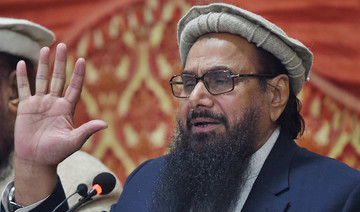
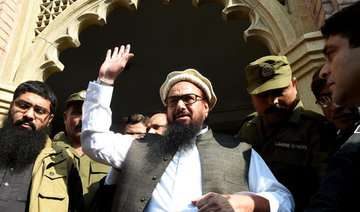
JuD chief, Hafiz Saeed, addresses election rallies in Karachi
JuD chief, Hafiz Saeed, addresses election rallies in Karachi
- The Jama’at-ud-Da’wah (JuD) chief vows to make Hyderabad Deccan, Junagadh and Kashmir part of Pakistan after coming into power
- Around 300 MML candidates are contesting the 2018 general election under the banner of Allah-o-Akber Tehreek (AAT)
Latest updates


© 2026 SAUDI RESEARCH & PUBLISHING COMPANY, All Rights Reserved And subject to Terms of Use Agreement.