


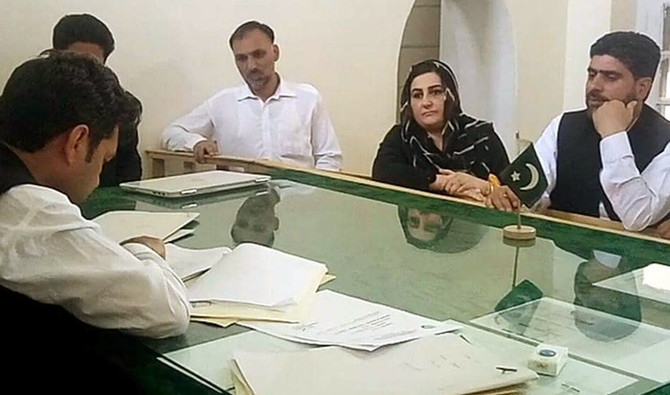

ISLAMABAD: Hamida Shahid is seeking election for a provincial assembly seat in a remote and conservative area of Khyber Pakhtunkhwa (KP) province against two male candidates and is hopeful of winning the seat.
“I am getting an excellent response not only from female voters but also male voters of the area,” Shahid, who is contesting election from Upper Dir, told Arab News on the telephone.
Until recently women in the Upper Dir area were not allowed to vote, let alone contest elections for a provincial or national assembly seat.
“All political parties in the area have decided unanimously that women voters will not be barred from casting their votes,” she said, “I am also trying to create awareness among women voters about the importance of their ballot on election day.”
Shahid, who is a fashion designer and businesswoman, said that she will work for the provision of education and health facilities in the area if elected to the assembly.
“Hundreds of our women die during pregnancy each year due to lack of health facilities and thousands of our children are out of school. This needs to be changed and I will try my best to change it,” she said.
She said that about 50 percent of men in her constituency had so far assured her of their vote and that more would announce their support in the coming days. “They (male voters) are supporting me as their daughter, sister and mother and I think this is a healthy sign for our democracy,” she said.
Shahid says that a large number of men are also campaigning for her in the hilly areas of the constituency. “This will help change the perception in the society so that both men and women are seen as equal and that women can equally contribute to the betterment of the society,” she said.
According to the Election Commission of Pakistan (ECP), 152 women candidates have filed their nomination papers in Balochistan — as well as 350 from Khyber Pakhtunkhwa province, 403 from Sindh province and 1,100 from Punjab province — to contest the election to be held on July 25.
Political analysts said that the increasing participation of women in the electoral process was a healthy sign for democracy in the country. They, however, linked the number of women candidates to the Elections Act’s provision that makes it mandatory for political parties to allocate at least five percent of their tickets to women candidates.
“A political party ... while making the selection of candidates on general seats shall ensure at least five percent representation of women candidates,” the Elections Act 2017 states.
Rasul Bukhsh Rais, a political analyst, said that the Elections Act had helped to create space for women candidates to contest elections and credit was due to the previous parliament for passing this historic law.
“Women have been contesting direct election in Pakistan in the past too but they used to come from elite and well-established families only,” he told Arab News.
Rais said that the Elections Act had allowed political parties to allocate tickets to women from the working class too, especially in remote and conservative areas that were previously contested and ruled by landlords only.
He said that though participation of women in politics is an old tradition in Pakistan, this time more women were challenging male candidates in the constituencies.
“This is a new trend in our politics and also reflects the positive transformation of our society,” he said.
There are a total of 342 seats in the National Assembly and 272 of them are filled by direct elections. In addition, the Pakistani constitution reserves 10 seats for religious minorities and 60 seats for women, to be filled by proportional representation among parliamentary parties.
Likewise, a total of 128 seats are reserved for women in the provincial assemblies, including 66 in Punjab, 29 in Sindh, 22 in Khyber Pakhtunkhwa and 11 in Balochistan.
Besides these reserved seats, women candidates are also seeking to get elected to the National Assembly and provincial assemblies through direct elections.
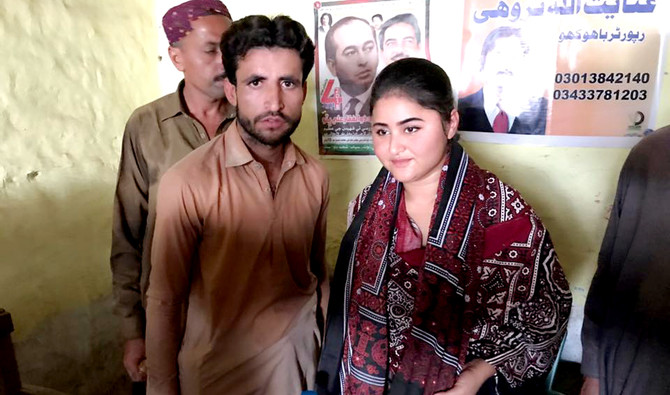
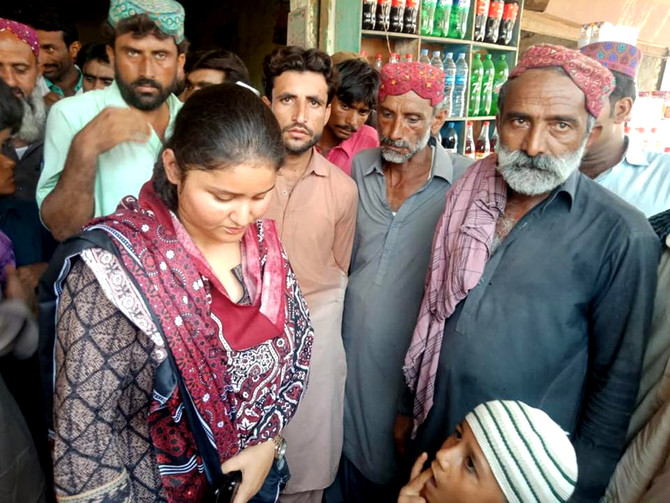
Sughran Lashari, another woman candidate from Jacobabad district in Sindh province, said that she had been conducting her campaign for a provincial assembly seat and was “receiving good response from the female voters.”
She said that it was not easy to convince the male voters of her constituency to give her their ballot because the “majority of them are not educated but I am trying my best to persuade them for their vote.”
Lashari said that many women candidates contested direct elections in the interior of Sindh but the majority of them come from well-settled families. “I come from a humble background and am quite optimistic to make a mark in this election,” she told Arab News.
Farzana Bari, a political analyst and academic, said that political parties had awarded tickets to the majority of female candidates from losing constituencies to merely fulfil the legal requirement, but “this too will help increase acceptability of women’s political role in society.”
She said that mainstream political parties had failed to address women's issues and it was now the responsibility of women candidates from all parties to not only raise their voice for marginalized segments of society but to try to address their genuine grievances.
“Women form almost half of the population of Pakistan and their active participation in politics is bound to bring positive and healthy changes in the society and our democratic setup,” Bari said.


