ISLAMABAD: Pakistan has expressed its strong resolve to keep up efforts on counter financing of terrorism, an official statement said.
Dr. Shamshad Akhtar, the caretaker finance minister, said the coordination between the central bank, banking institutions and law enforcement agencies have been strengthened to curb money laundering and terror financing.
Akhtar chaired on Friday a high-level meeting to discuss matters related to Financial Action Task Force (FATF).
FATF’s plenary meeting is scheduled to take place in Paris from June 24 where Pakistan is required to submit its action plan for review.
Key government ministers and senior officials including Finance Minister Dr. Shamshad Akhtar, Foreign Minister Abdullah Hussain Haroon and National Security Adviser Lt. General (retd) Nasir Khan Janjua, reviewed Pakistan’s strategy ahead of the Financial Action Task Force (FATF) Plenary meeting.
Dr. Shamshad Akhtar said the Finance Ministry had recently improved institutional mechanisms for handling Anti-Money Laundering and Combating the Financing of Terrorism (AML/CFT).
“Indeed, Pakistan needs to satisfy FATF for avoiding sanctions and demonstrating its resolve to combat the menace of terrorism,” Islamabad-based analyst and professor at Quaid-i-Azam University Zaffar Nawaz Jaspal told Arab News.
Jaspal added: “Nevertheless, it’s an irony that despite Pakistani armed forces’ successful military operations and arrests of Al-Qaeda members and other wanted militants by law enforcement agencies, the Western nations are pressuring Pakistan at the FATF forum.”
While discussing the suggestions to further strengthen measures and strong implementation of mechanism, government officials “underscored Pakistan’s resolve to further strengthen the AML/CFT regime emphasized and agreed on formation of a high-level implementation committee to regularly oversee progress made by different agencies and departments engaged in the drive to counter financing of terrorism,” the official statement read.
The high-level meeting stressed intergovernmental cooperation and coordination for better results.
“Pakistan needs to demonstrate that it will prevent its formal and informal financial sector from being used for socially undesirable motives,” Dr. Vaqar Ahmed, an economist and joint executive director at Islamabad based think-tank Sustainable Development Policy Institute, told Arab News.
“Organizations and individuals responsible for promoting money laundering or related activities should be dealt with as per laws; and implementation of these laws should be certain and timely,” Vaqar suggested.
He added: “Such measures will also benefit the Pakistan economy, which requires greater documentation and transition of activities currently under the informal sector toward formalized systems. The central bank and other regulators would also require capacity building to check transactions not allowed under the law.”
In February this year, FATF decided that Pakistan was to be placed on its gray list from June 2018, and Islamabad was asked to submit its action plan on how it wanted to act against proscribed militant factions and curb terror financing.
FATF is an intergovernmental body that monitors money laundering and terror financing.
Earlier this week, on June 20, the Securities and Exchange Commission of Pakistan (SECP) unveiled new regulations to curb money laundering and CFT regulations to avert being placed on the gray list by FATF.
“The regulations are fully compliant with FATF recommendations, which are mandatory to adopt for Pakistan as a member of the Asia Pacific Group on Money Laundering,” the SECP said in a statement.


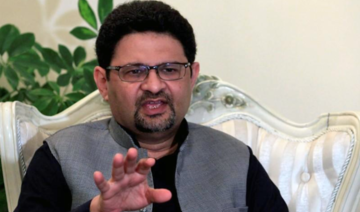
![]()

Few days before FATF meeting, Pakistan vows to fortify steps against terror financing
Few days before FATF meeting, Pakistan vows to fortify steps against terror financing
- The high-level meeting stressed inter-governmental cooperation and coordination for better results, the official statement said
- FATF plenary meeting is scheduled to take place from June 24 in Paris where Pakistan is required to submit its action plan for review

Latest updates


Recommended


© 2026 SAUDI RESEARCH & PUBLISHING COMPANY, All Rights Reserved And subject to Terms of Use Agreement.