Abused and destitute: Wars fuel rise in global number of widows

1 / 4
Attacks by Rohingya Muslim insurgents on the Myanmar security forces in Rakhine state triggered a response by the army and Buddhist vigilantes so brutal a senior UN official denounced it as a textbook example of ethnic cleansing. (REUTERS)
2 / 4
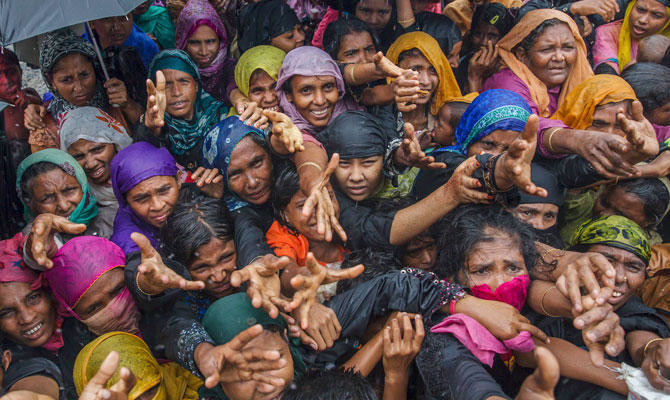
Rohingya Muslim women, who crossed over from Myanmar into Bangladesh, stretch their arms out to collect sanitary products distributed by aid agencies near Balukhali refugee camp, Bangladesh, Sunday, Sept. 17, 2017. (AP)
3 / 4
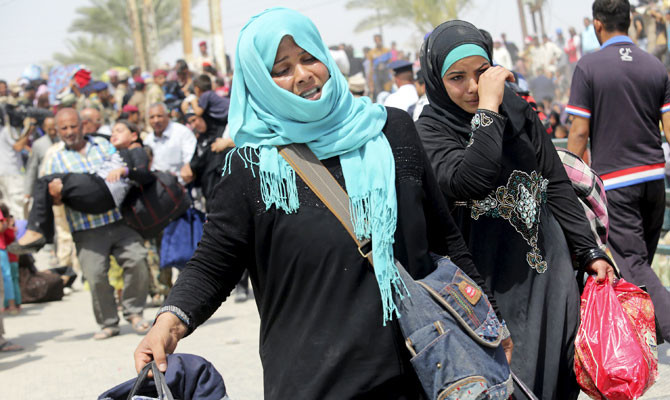
Displaced Sunni women fleeing the violence in Ramadi, carry bags as they walk on the outskirts of Baghdad, May 24, 2015. (REUTERS)
4 / 4
This combo photo comprises of portraits of some of the Rohingya Muslim women taken during an interview with The Associated Press in November 2017 in Kutupalong refugee camp in Bangladesh. (AP)
Updated 23 June 2018
Follow

Abused and destitute: Wars fuel rise in global number of widows

  • One in seven widows globally — 38 million — lives in extreme poverty
  • Deaths through conflict and disease contributed to a 9 percent increase in the number of widows between 2010 and 2015

LONDON: Millions of widows worldwide suffer crushing poverty and persecution, their numbers swelled by a proliferation of conflicts from Syria to Myanmar.
International Widows’ Day on June 23 aims to raise awareness of the often hidden injustices they face.
Many are robbed of their inheritance, while others are enslaved by in-laws, accused of witchcraft or forced into abusive sexual rituals. Here are some facts:
- Experts estimated there were 258.5 million widows globally in 2015, but say the number is likely to have risen.
- Deaths through conflict and disease contributed to a 9 percent increase in the number of widows between 2010 and 2015.
- The biggest jump has been in the Middle East and North Africa, where the estimated number of widows rose 24 percent between 2010 and 2015, partly due to the Syrian war and other conflicts.
- One in seven widows globally — 38 million — lives in extreme poverty.
- One in 10 women of marital age is widowed. The proportion is about one in five in Afghanistan and Ukraine.
- A third of widows worldwide live in India or China. India, with an estimated 46 million widows in 2015, has overtaken China (44.6 million) to become the country with the largest number of widows.
- Widow “cleansing” rituals in some sub-Saharan countries may require a widow to drink the water used to wash her dead husband’s body or to have sex with an in-law, village “cleanser” or stranger.
- Campaigners for widows’ rights say such rituals, which are intended to rid a widow of her husband’s spirit, spread disease and are a violation of dignity.
- Widows are regularly accused of killing their husbands either deliberately or through neglect — including by transmitting HIV/AIDS — in India, Nepal, Papua New Guinea and sub-Saharan Africa.
- Property seizures and evictions by the late husband’s family are widespread in many places including Angola, Bangladesh, Botswana, India, Ivory Coast, Ghana, Kenya, Malawi, Nigeria, Tanzania and Zimbabwe.
- A significant number of girls are widowed in childhood — a reflection of the prevalence of child marriage in developing countries and the custom of marrying off young girls to much older men.


Flights to Ethiopia's Tigray region suspended as clashes erupt

Updated 57 sec ago
Follow

Flights to Ethiopia's Tigray region suspended as clashes erupt

Addis Ababa - ETH
Addis Ababa, Jan 29, 2026 (AFP) - - Clashes between federal and Tigrayan forces have erupted in Ethiopia's northern Tigray region, prompting the suspension of flights, security and diplomatic sources told AFP on Thursday.
The renewed tensions risk a return to conflict in the volatile region, which around three years ago emerged from a brutal war between Ethiopian federal forces and the Tigray People's Liberation Front (TPLF) that killed at least 600,000 people between November 2020 and November 2022, according to the African Union -- a toll some experts say is understated.
Hostilities broke out in recent days in Tsemlet, western Tigray, an area claimed by forces from the neighbouring Amhara region who have refused to withdraw despite a peace agreement signed in Pretoria at the end of 2022 requiring them to do so.
"The situation appears to be deteriorating," the security source said.
A diplomatic source who spoke on condition of anonymity told AFP that the Tigray forces were facing "the ENDF (Ethiopian army) alongside Amhara militias".
"The clashes were confirmed in recent days, but today we don't know the situation," the source added.
A local source, speaking on condition of anonymity, also confirmed the clashes, while the federal army has yet to respond to AFP.
The sources confirmed the suspension of flights to Tigray, which are operated by Ethiopian Airlines, the fully state-owned carrier and the only airline serving the northern region.
The national carrier is yet to reply to AFP.
The TPLF, which once controlled all of Ethiopia before being displaced by Prime Minister Abiy Ahmed's administration, remains banned.
Addis Ababa has accused the group of forging ties with neighbouring Eritrea and "actively preparing to wage war against Ethiopia".
Tensions remain high in Tigray despite the peace agreement that ended the fighting, with several hundred thousand people still displaced.
dyg/mnk/kjm