‘Full, peaceful, and unconditional withdrawal’ could spare Houthis in Hodeidah: UAE’s Gargash

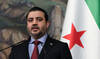
Emirati Foreign Minister Anwar Gargash speaks during a press conference in Dubai on June 18, 2018. (AFP)
Updated 21 June 2018
Follow

‘Full, peaceful, and unconditional withdrawal’ could spare Houthis in Hodeidah: UAE’s Gargash

  • Gargash said that the UN, international aid groups, and the media are all reporting that Houthi militias are “purposefully and deliberately” seeking to manufacture a humanitarian crisis in Hodeidah.
  • Gargash added that Houthi militias are blocking off-loading of aid at Hodeida port.

LONDON: UAE Minister of State for Foreign Affairs Anwar Gargash said Thursday that the “full, peaceful, and unconditional withdrawal” of Houthi militia from the city of Hodeidah and its port is the only way to ensure that the situation in the city and its surroundings does not deteriorate.
Gargash added that Houthi militias are “blocking off-loading of aid at Hodeida port,” destroying water and sewage systems, and indiscriminately placing mines, IEDs, snipers and heavy weaponry in residential areas.
Most humanitarian aid to Yemen comes through Hodeidah port, but it is also a conduit for the supply of weapons and ammunition from Iran to the Houthi militias, including missiles used to target Saudi Arabia.
Gargash tweeted his comments a day after the Saudi-led coalition fully recaptured Hodeidah airport, and added that the UN, international aid groups, and the media are all reporting that Houthi militias are “purposefully and deliberately” seeking to manufacture a humanitarian crisis and worsen conditions in Hodeidah and its port.
The minister of state for foreign affairs also said that the Saudi-led coalition fighting the Houthis would not allow the militias to “divert us from our strategic goals.”


Jailed Turkish Kurd leader calls on government to broker deal for Syrian Kurds

Updated 7 sec ago
Follow

Jailed Turkish Kurd leader calls on government to broker deal for Syrian Kurds

  • Clashes between Syrian forces and the SDF have cast doubt over a deal to integrate the group’s fighters into the army
ANKARA: Jailed Turkish Kurd leader Abdullah Ocalan said Tuesday that it was “crucial” for Turkiye’s government to broker a peace deal between the Kurdish-led Syrian Democratic Forces (SDF) and the Damascus government.
Clashes between Syrian forces and the SDF have cast doubt over a deal to integrate the group’s fighters into the army, which was due to take effect by the end of the year.
Ocalan, founder of the Kurdistan Workers’ Party (PKK) militant group, called on Turkiye to help ensure implementation of the deal announced in March between the SDF and the Syrian government, led by former jihadist Ahmed Al-Sharaa, whose forces ousted longtime ruler Bashar Assad last year.
“It is essential for Turkiye to play a role of facilitator, constructively and aimed at dialogue,” he said in a message released by Turkiye’s pro-Kurdish DEM party.
“This is crucial for both regional peace and to strengthen its own internal peace,” Ocalan, who has been jailed for 26 years, added.
“The fundamental demand made in the agreement signed on March 10 between the SDF and the government in Damascus is for a democratic political model permitting (Syria’s) peoples to govern together,” he added.
“This approach also includes the principle of democratic integration, negotiable with the central authorities. The implementation of the March 10 agreement will facilitate and accelerate that process.”
The backbone of the US-backed SDF is the YPG, a Kurdish militant group seen by Turkiye as an extension of the PKK.
Turkiye and Syria both face long-running unrest in their Kurdish-majority regions, which span their shared border.
In Turkiye, the PKK agreed this year at Ocalan’s urging to end its four-decade armed struggle.
In Syria, Sharaa has agreed to merge the Kurds’ semi-autonomous administration into the central government, but deadly clashes and a series of differences have held up implementation of the deal.
The SDF is calling for a decentralized government, which Sharaa rejects.
Turkish Foreign Minister Hakan Fidan, whose country sees Kurdish fighters across the border as a threat, urged the SDF last week not to be an “obstacle” to stability.
Syrian Kurdish leader Mazloum Abdi said Thursday that “all efforts” were being made to prevent the collapse of talks.