

We need our voice in elections, say Pakistani expats in UAE

In this file photo a Pakistani election official empties a ballot box at the end of polling in Islamabad on May 11, 2013 election. Some 7.9 million Pakistanis living abroad will not be able to vote in the 2018 general elections following the Supreme Court’s decision last week that deployment of an e-voting system in haste would be harmful. (AAMIR QURESHI/AFP)
Updated 12 June 2018
Follow

We need our voice in elections, say Pakistani expats in UAE

  • Expatriates blame government for not providing voting rights in the coming election
  • Expats have equal right to choose their leaders in the parliament

DUBAI: Pakistani expatriates in the UAE have claimed that the government is responsible for not organizing voting rights for them.
“It’s more of management issue. Due to the registration process, constituency and other processing issues, the Senate and National Assembly weren’t able to complete the process,” said Muhammad Ahmed Shaikhani, president of the Pakistan Business Council. “Due to technical reasons and logistic challenges, such as implementation of a biometric system and technology equipment supplies, it was delayed and unfortunately we lost the opportunity.” 
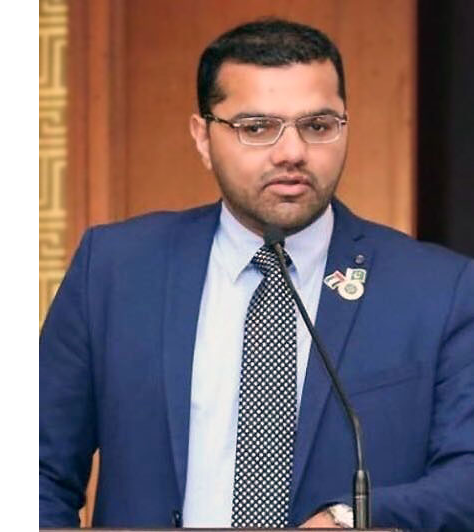


               Muhammad Ahmed Shaikhani


Shaikhani said that the national assembly should have special seats for expatriates.
“More or less 8 million Pakistanis live abroad and they are a major contributor to the Pakistani economy. We need a voice in Pakistan that understand our problems and needs. In fact, the National Assembly and provisional assemble must have special seats for expat Pakistanis,” said Shaikhani, who is also a member of the Overseas Pakistanis Foundation.
He said that losing expatriate votes is a state loss. “Pakistani expats are intellectually more experienced than the local population. We are more educated and have a vast experience in different fields and knowledge with the international community.”
Syed Naqvi, a geologist who has lived in the UAE for more than ten years, also believes that missing expatriate votes is a loss for the country. “Living abroad, the expat community has a broader picture of Pakistan and the region’s geopolitical situation. Most of them can vote for the person of their choice without any pressure, unlike back at home where people are under pressure from the big lords in the villages and party workers in the cities. In addition, many expats settled in North America and Europe are educated and aware of the benefits of true democracy, and keeping them away from the voting process is a big loss of nation.”
Ayesha Imtiaz is planning to visit Pakistan and cast her vote. “Voting is our right and it should not be taken away from us. I am not going to miss it at any cost. I am flying to Pakistan to vote Insha Allah.”
However, there will be few like Ayesha who can visit the country during the election. Most of them will miss the elections. “It is the lack of political will, due to which our embassies have not been able to execute the process. I feel sorry and disappointed that they are not capable of providing voting rights to the large expat community of Pakistanis based in the UAE.”
“By voting, expats also contribute to their country’s democratic progress. The country needs a change for better and that is only possible if we all vote,” said Ayesha, who has lived in Dubai for the past 15 years.
Mahmood Mossa, who is the finance director of a multinational company in Dubai, is also going to miss the election and will not be able to cast a vote. “It is because of both lack of management and lack of interest by institutions in Pakistan that do not want the expat community to voice their concern. They always cite the reason as shortage of time. However everyone knows that the election is held every five years, so why not plan for it in advance?”
“Voting is the basic fundamental right in a democratic country. We vote so that we can put the future of our country in the right hands. Unfortunately we as Pakistanis don’t understand the importance of the vote. As in the past because of low literacy levels we have been selling our future. But enough is enough and we cannot let those so-called leaders come to power again and destroy our beautiful motherland.”


Top Pakistani clerics warn government against sending troops to Gaza to disarm Hamas

Updated 23 December 2025
Follow

Top Pakistani clerics warn government against sending troops to Gaza to disarm Hamas

  • Pakistani clerics raise alarm over reports of pressure on Muslim nations to provide troops for Gaza stabilization force under Trump peace plan
  • Islamabad has previously said that it is willing to join the international stabilization force but ‘not ready’ to play any role in disarming Hamas

ISLAMABAD: A group of Pakistan’s top religious and political leaders on Monday warned the government against sending Pakistani troops to Gaza to disarm Palestinian group Hamas, amid discussions over a proposed International Stabilization Force (ISF) for the Palestinian territory.

The representative gathering, chaired by prominent scholar Mufti Taqi Usmani, brought together leaders from Deobandi, Barelvi, Ahl-e-Hadees and Shia schools of thought, alongside leaders of the country’s main religio-political parties, Jamiat Ulema-e-Islam-Fazl (JUI-F) and Jamaat-e-Islami (JI).

The international stabilization force, which is to be composed of troops from Muslim countries, is the cornerstone of President Donald Trump’s peace plan for Gaza announced in Sept. Islamabad has previously said it is willing to join the ISF but “not ready” to play any role in disarming Hamas. Hamas’s Gaza chief Khalil Al-Hayya said this month the group had a “legitimate right” to hold weapons, while Israel has repeatedly insisted that Hamas be disarmed.

In a joint statement issued after the meeting in the port city of Karachi on Monday, Pakistani clerics raised alarm over reports that international pressure is mounting on Muslim-majority nations to provide troops for the transitional security force in Gaza, following Israel-Hamas ceasefire.

“In such circumstances, demands are being made to Muslim countries that they send their forces there to disarm Hamas,” the statement said. “Several Muslim governments have already refused this, and pressure is being increased on Pakistan.”

Last month, the United Nations Security Council approved Washington’s plan, which called for a yet-to-be-established Board of Peace as a transitional authority that Trump would head, and the stabilization force, which would be empowered to oversee borders, provide security and demilitarize the territory.

The gathering of Pakistani clerics urged Islamabad to resist any diplomatic overtures from Washington regarding troop deployment.

“This gathering, with full emphasis, demands the Government of Pakistan refrain from sending its forces to disarm Hamas and that it should not yield to any pressure in this regard,” the statement said.

The assembly expressed complete support for the liberation of Palestine and described the effort as a “duty of every Muslim.”

It said that Pakistan’s armed forces are “imbued with the spirit of jihad” and that the “notion of placing them against any sacred struggle for the liberation of Baitul Muqaddas or Palestine is impossible for the nation to accept.”

The religious leaders characterized the proposal as a “conspiracy” from which the government must “protect the country.”

Pakistani foreign office spokesperson Tahir Andrabi and the prime minister’s spokesperson for foreign media, Mosharraf Zaidi, did not respond to Arab News requests for comment on the statement.

Washington reportedly views Pakistan as a prime candidate for the ISF, given its experience in high-intensity border conflicts and internal counter-insurgency operations.

Last week, Pakistan’s foreign office said that Islamabad had not taken any decision on joining the proposed stabilization force for Gaza and had received no formal request from the US or any other country in this regard.

“I am not aware of any specific request made to Pakistan. We will inform you about any development if it takes place,” Andrabi told reporters.

He also sought to distance the government from rumors of a pending visit by Pakistan’s defense forces chief, Field Marshal Asim Munir, to the US to meet President Trump.