Call to Prayer: Muezzins of the Grand Mosque in Makkah

1 / 5
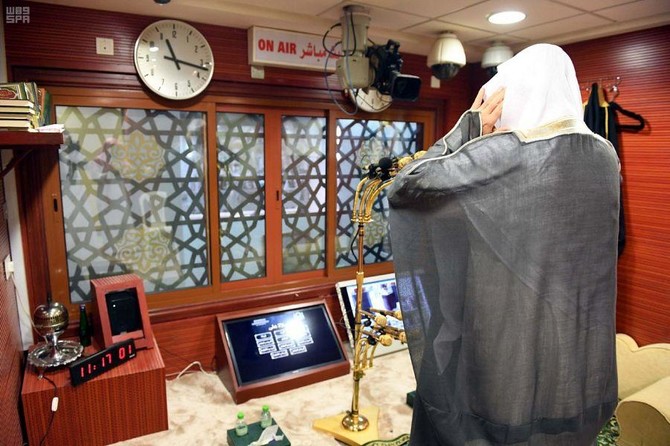
There are 20 main muezzins and four trainees at the Grand Mosque in Makkah, Saudi Arabia. (SPA)
2 / 5
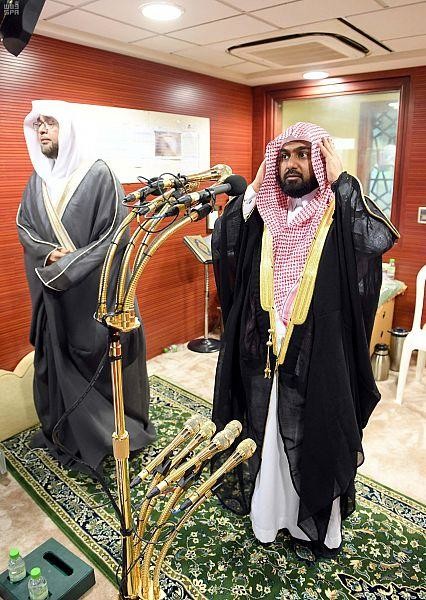
There are 20 main muezzins and four trainees at the Grand Mosque in Makkah, Saudi Arabia. (SPA)
3 / 5
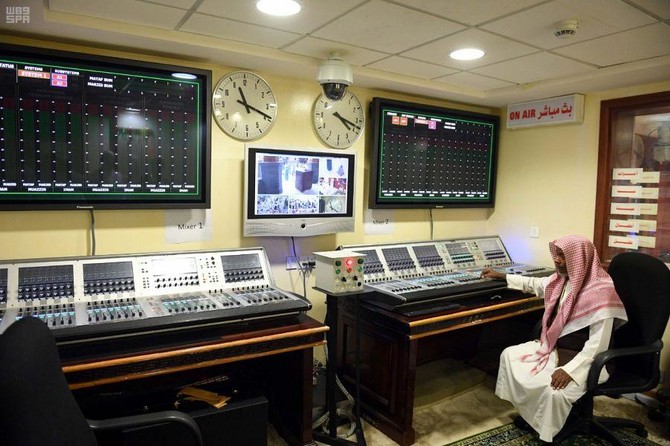
There are 20 main muezzins and four trainees at the Grand Mosque in Makkah, Saudi Arabia. (SPA)
4 / 5
There are 20 main muezzins and four trainees at the Grand Mosque in Makkah, Saudi Arabia. (SPA)
5 / 5
There are 20 main muezzins and four trainees at the Grand Mosque in Makkah, Saudi Arabia. (SPA)
Updated 12 June 2018
Follow

Call to Prayer: Muezzins of the Grand Mosque in Makkah

JEDDAH: Calls to prayer heard from the Grand Mosque known as Masjid Al-Haram resonate across Makkah every day.
The pilgrims and people of Makkah are able to recognize the voice of every muezzin, the man whose voice can be heard calling Muslims to prayer via loud speakers at the top of each mosque's minarets.
Saudi state news agency SPA, spoke to the muezzin of Masjid Al-Haram, Sheikh Ali Ahmad Mulla. He is considered one of the most famous muezzins at the Grand Mosque for the past 40 years.
He said there are 20 main muezzins at the mosque and four trainees.
Mulla said every muezzin has his own style, they call to prayer and recite after the imam whilst praying the five obligatory prayers,  as well as the Tarwaeeh and funeral prayers.
There is always a substitute muezzin in case of absence or emergency.
Mulla, named as the Sheikh of Muezzins, has worked at the Grand Mosque since 1975.
His unique voice is recognized by most guests that visit the masjid in Makkah.
At the age of 14, Mulla practiced the call to prayer from the minaret of Bab Al-Zeyada in the Grand Mosque. Then he moved to the minaret at Bab Al-Mahkma, and after a period of time, he became the muezzin for the entire mosque.
Mulla said they use a calendar-type clock according to Makkah’s local time in order to call for prayer at the exact times.
He said such modern inventions have contributed to advancing these matters, adding that the greatest modern tools are being applied to the Grand Mosque to facilitate tasks.


Foreign ministers chair Saudi-Omani coordination council meeting in Muscat

Updated 23 December 2025
Follow

Foreign ministers chair Saudi-Omani coordination council meeting in Muscat

MUSCAT: Saudi Foreign Minister Prince Faisal bin Farhan met with Oman’s Foreign Minister Sayyid Badr bin Hamad Al-Busaidi on Monday.

They reviewed bilateral relations between their nations and ways to enhance and develop them across various fields. Additionally, they discussed regional and international developments.

The ministers co-chaired the third meeting of the Saudi-Omani Coordination Council in the Omani capital, Muscat, with the participation of the heads of the Council’s subsidiary committees and the two heads of the Council’s General Secretariat teams.

The meeting comes as an affirmation of the keenness of Saudi and Omani leaders to strengthen ties and advance them toward greater prosperity for both nations.

In his remarks during the meeting, Prince Faisal affirmed that gathering builds on the previous council meeting, held last year in AlUla, and on its positive and fruitful outcomes within the framework of the approved recommendations and initiatives. 

He stressed the importance of continuing the work of the council’s subsidiary committees to complete the necessary procedures to implement the remaining initiatives, and of the General Secretariat’s role in follow-up and in addressing any challenges that may hinder implementation.

He also underscored the importance of developing and enhancing trade relations, stimulating investment, and strengthening cooperation between the public and private sectors.

He also praised the ongoing work to establish and launch the Coordination Council’s electronic platform, which aims to connect all committee work and initiatives to facilitate follow-up on the Council’s progress. 

Al-Busaidi affirmed in his remarks the qualitative progress in relations between the two countries and the notable development witnessed across numerous sectors toward achieving economic integration and enhancing intra-trade and joint investments. 

The Omani foreign minister also highlighted deeper cooperation in the security and judicial fields, as well as the cultural and tourism sectors, noting the advanced and continuous political cooperation, consultation, and coordination on regional and international issues.