- Police to receive modern weapons, armored vehicles, drones and anti-drone systems
- New Safe City projects, forensic lab planned as the province prioritizes security
PESHAWAR: Pakistan’s northwestern Khyber Pakhtunkhwa province on Friday unveiled a Rs2.17 trillion ($7.81 billion) budget for fiscal year 2026-27, sharply increasing spending on policing and public safety as authorities seek to strengthen security in a region that has witnessed a surge in militant violence in recent years.
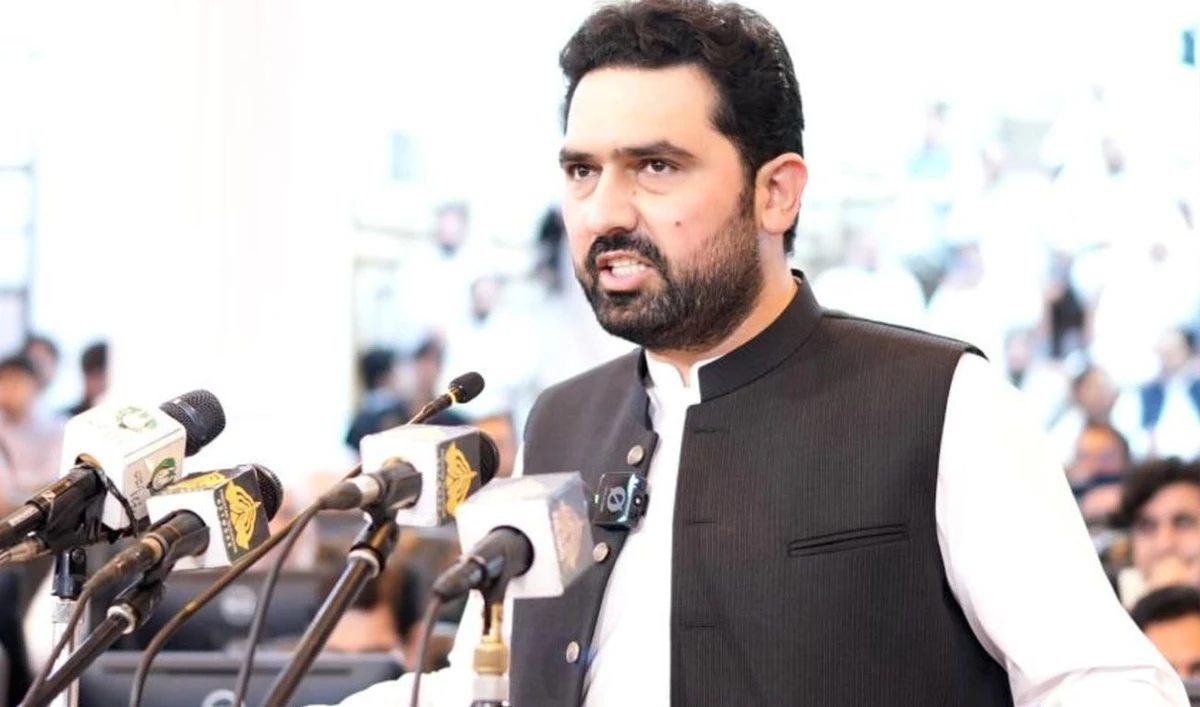
Chief Minister Sohail Afridi presented the budget in the provincial assembly, proposing Rs1.65 trillion ($5.92 billion) in current expenditure and Rs524.3 billion ($1.89 billion) in development spending. The government projected total receipts of Rs2.12 trillion ($7.64 billion) and said a projected deficit of Rs48 billion ($173 million) would be financed through provincial savings without taking on new debt.
The budget places particular emphasis on law enforcement and public safety in the province, which borders Afghanistan and has experienced frequent militant attacks targeting security forces and civilians. The province has repeatedly called for greater resources to address security challenges, particularly in districts adjoining the Afghan frontier and the merged tribal districts.
“The police budget has been increased to Rs191.393 billion ($689 million), representing a 185 percent increase,” Afridi told lawmakers, according to a statement circulated by provincial authorities.
“Rs14.5 billion ($52.2 million) has been allocated for the police procurement plan under which modern weapons, bulletproof vehicles, armored personnel carriers, drones and anti-drone systems will be purchased,” he said. “Rs7.9 billion ($28.4 million) has been allocated for monthly operational support to the police.”
The chief minister said new Safe City projects would be launched in multiple districts, while a forensic science laboratory would be established in Peshawar to strengthen criminal investigations and evidence collection.
The government has also allocated Rs1 billion ($3.6 million) for drone-assisted policing initiatives.
Beyond security, the provincial government allocated Rs468.4 billion ($1.68 billion) for education and Rs334.8 billion ($1.2 billion) for health, making them the largest social-sector components of the budget.
Among major education initiatives, the government plans to establish 72 Chief Minister Model Schools at a cost of Rs10 billion ($36 million), allocate Rs18.5 billion ($66.6 million) for free textbooks and launch a Rs1.5 billion ($5.4 million) internship program for youth. It also set aside Rs2 billion ($7.2 million) for interest-free loans to university students and announced separate interest-free financing schemes for agricultural graduates.
The health budget includes Rs50 billion ($180 million) for the Sehat Card Plus health insurance program, Rs14.2 billion ($51 million) for free medicines in public hospitals and Rs80 billion ($288 million) for medical teaching institutions. The government said recruitment of 2,819 doctors, dental surgeons and nurses was underway.
Afridi said the budget had been structured around nine thematic sectors, with public safety, education, health, governance reforms and economic development among the key priorities. He added that no new taxes had been imposed and provincial revenues were projected at
Rs182.4 billion ($656 million), around Rs50 billion ($180 million) higher than the previous year.
The province also allocated Rs17 billion ($61 million) for temporarily displaced persons, Rs15 billion ($54 million) for the Ehsaas social protection program and Rs22.7 billion ($81.7 million) for water resource protection initiatives.