


MANILA: The two houses of Congress last week passed their versions of the proposed Bangsamoro Basic Law (BBL), moving a step closer to the realization of President Rodrigo Duterte’s promise of wider autonomy for the country’s Muslim minority.
However, while this can be considered the farthest reached in the peace process between the Philippine government and the Moro Islamic Liberation Front (MILF), no celebrations greeted the passage — either at the House of Congress or at the Senate — of their respective versions of what is supposed to be a landmark bill.
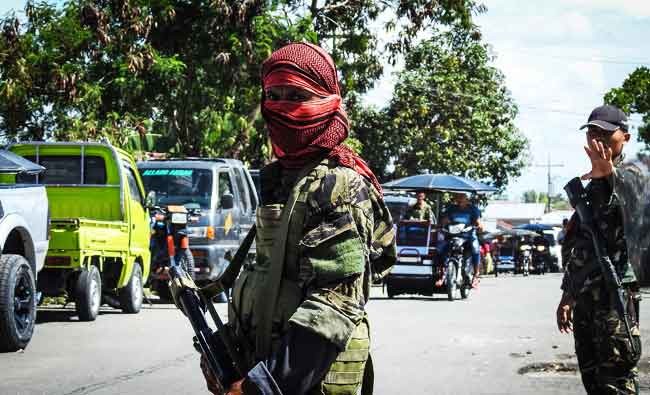
Instead, there is now more uncertainty than certainty about the acceptance by the Muslim community in the country of the proposed BBL due to be finalized and signed into law by the President next month. Some see it as the light at the end of the tunnel, but others have expressed fear that it will give a platform to radicals.
This is mainly because in the approved versions of the BBL in both houses of Congress important provisions of the original draft proposed by the Bangsamoro Transition Commission (BTC) had been deleted. If not restored, critics say “this will kill the essence of the Muslim minority’s self-rule.” The BBL, once signed into law and ratified in a plebiscite, is expected to bring forth an institution “capable of responding to the challenge of the times and to the aspirations of the Bangsamoro, unimpaired and free of the maladies that have afflicted the Autonomous Region in Muslim Mindanao (ARMM).”
However, observers note that the amendments made to the proposed BBL made the future Bangsamoro region lesser than the current ARMM.
Manila-based Imam Ebra Moxir, in an interview, said he remained hopeful that the bicameral committee that will meet before Duterte delivers his state-of-the-nation address on July 23 would make sure they come up with a final BBL version at least close to the draft submitted by the BTC, one that is true to the aspirations of the Bangsamoro people.
He admitted that there may have been some unconstitutional provisions in the BTC draft of the bill, and the lawmakers had to amend these to make sure it would not be problematic and will pass even if brought before the Supreme Court.
“That’s from my perspective. In my view, our lawmakers were only making sure that the end result will not be questionable, that everything is constitutional. Otherwise, we will have a problem. Instead of moving onward, it will be backward,” Moxir said.
Moxir added that he had seen posts on social media criticizing the BBL. Some of the critics, he believes, have their own agenda, “so we have to show that they have the wrong perspective and the lawmakers are right, that what they are doing is for the morale and welfare of the Bangsamoro.”
“Let’s give the BBL a chance because if it will not be passed and implemented, I think there will be more problems in Mindanao,” Moxir continued.
On the other hand, Najib D., a Maguindanao resident, said a diluted BBL would surely not get support from the general Bangsamoro populace.
“Any 20 or 30 percent non-support will be significant. Our lawmakers might be thinking they will be able to resolve the problem with a diluted BBL, but no. You may solve some problems but you create more problems in the end. A third of the population is as significant as the two-thirds,” he pointed out.
“They should have just considered the BTC-proposed BBL by voting yes or no instead of amending it. Their approved bills turned out to be less than the ARMM in terms of powers,” he continued.
Asked what could be the consequences, Najib said: “First, those who are already old and are now tired of fighting, it’s possible they will just agree to it. But with an unacceptable BBL, you also create another form of more radical, more determined younger generations of mujahideens.
“You will provide a platform for the radicals to advance their propaganda ... So, these people in Congress are not fully aware or have less understanding of the problem in Mindanao,” he continued.
Najib further lamented that the problem with some people in government is that they see the other party in a peace process as an enemy. “So when an agreement comes to Congress, they reduce the concession that will be given to the Bangsamoro. In the end, you did not win anyway.”
He believed that even if final BBL is not acceptable to the MILF, “they will not go back to war but they will not stop any factions from going in that direction. Because if you do not have an agreement, the best environment is a conflict environment.
“This is a time wherein Filipinos should come to their consciousness, either to choose to create a nation that includes Muslims or run the risk of disintegration of this country,” he further stated.
Meanwhile, Dr. Potre Dirampatan-Diampuan of the United Religions Initiative said while the Congress versions of the BBL have been watered down, “we cannot be totally judgmental at the moment because there is still one step left” which is through the bicameral committee. “That will be the finality of it all.
“Right now many or some people think that there seems to be no difference between this BBL now, especially the Senate version, and the existing ARMM. In other words, if there will be no changes, why is there a need for a new law?”
On whether the BBL is the light at the end of the tunnel or will it provide a platform to the radicals, Diampuan said: “That’s the powerful question ... It is more on the uncertainty than the certainty.” Diampuan said that she is keeping her fingers crossed that the bicameral committee of Congress will come up with a good acceptable version for the people of Muslim Mindanao.”
“That is where we are crossing our fingers. As we cross our fingers, we pray that something good emerges out of this conversion.
“I think the word there is trust. It is really, really trust,” she continued, pointing out that people in Muslim Mindanao should be given the chance to govern themselves.
Asked what she thinks is the worst possible scenario, Diampuan replied: “As we say, peace is very elusive. But we will remain praying that peace may prevail in the country.”


