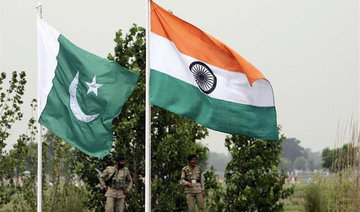
SRINAGAR: Thousands of people from the northern Indian state of Jammu and Kashmir headed back to their homes near the de facto border with rival Pakistan on Wednesday, after their armies agreed to stop exchanging artillery fire following repeated recent clashes.
More than 50,000 people had taken shelter in schools and colleges in the Indian-ruled part of disputed Kashmir, away from the shelling that officials say killed 12 people and wounded many more on both sides over the past few weeks.
Mountainous Kashmir is divided between the nuclear-armed neighbours, who both claim it in full and have fought two of their three wars over the region since their separation in 1947. On Tuesday, their armies agreed to "fully implement" a 2003 ceasefire agreement.
"In case of any issue, restraint will be exercised and the matter will be resolved through utilisation of existing mechanisms of hotline contacts and border flag meetings at local commander's level," Pakistan's military said in a statement.
Bacchan Lal, the headman of Abdullian village in Jammu and Kashmir, who has been living in a college with 350 other people over the past two weeks, said such agreements rarely last long.
"They agree to respect the ceasefire several times every year but then they violate it again. Every time people are killed, cattle perish and we end up in such camps," he said. "We are in camps for the second time this year. We don't want this uncertainty. We want permanent peace as we had 30 years ago".
Farmer Chuni Lal, 45, said he was worried about a delay in sowing premium Basmati rice this year because of the hostility. He said tillers like him could not afford to miss the key planting season, urging the countries to find a lasting solution to the regular outbreaks of firing.
Jammu and Kashmir Chief Minister Mehbooba Mufti, who runs the state with the support of Prime Minister Narendra Modi's Hindu nationalist party, welcomed the ceasefire agreement.
"This brings great relief to the people residing in the vicinity," she said on Twitter on Wednesday. "Peace on our borders is the first essential step to a larger understanding and I truly hope it sustains."
Tensions between the two sides had escalated since an attack on an Indian army camp in February that India blamed on Pakistan. Islamabad regularly denies Indian allegations that it trains and arms militants and helps them infiltrate across the so-called Line of Control that divides Kashmir.

Thousands go home as India, Pakistan agree to end Kashmir firing
- Tensions between the two sides had escalated since an attack on an Indian army camp in February that India blamed on Pakistan.
- India and Pakistan agree to respect the ceasefire several times every year but then they violate it again.
Trump orders blockade of ‘sanctioned’ Venezuela oil tankers
WASHINGTON: US President Donald Trump announced Tuesday a blockade of “sanctioned oil vessels” heading to and leaving Venezuela, sharply escalating his pressure campaign against Caracas while issuing new demands for access to the country’s crude.
The United States has for months been building a major military deployment in the Caribbean — with the stated goal of combatting Latin American drug trafficking, but taking particular aim at Venezuela.
Caracas views the operation as a campaign to push out leftist strongman Nicolas Maduro — whom Washington and many nations view as an illegitimate president — and to “steal” Venezuelan oil.
Tensions have been mounting for weeks as Trump signals intent to launch military action inside Venezuela, ominously declaring that the country’s airspace should be considered “closed” and that efforts at halting drug trafficking “on land” would begin soon.
Last week, the United States opened a new front in the campaign, seizing an oil tanker that had left Venezuela and announcing sanctions on several other vessels and companies associated with the Venezuelan oil industry.
“Today, I am ordering A TOTAL AND COMPLETE BLOCKADE OF ALL SANCTIONED OIL TANKERS going into, and out of, Venezuela,” Trump wrote Tuesday evening on his Truth Social platform.
Referring to the many Navy and Marine forces assembled in the Caribbean — including the world’s largest aircraft carrier — Trump warned “Venezuela is completely surrounded by the largest Armada ever assembled in the History of South America.”
- ‘Stolen’ oil -
With Venezuela’s economy heavily reliant on crude exports, the move to cripple its oil sector is likely to further ramp up pressure on Maduro.
But Trump on Tuesday pointed to another goal — regaining US access to Venezuelan oil production.
The US armada “will only get bigger,” Trump said, until Venezuela returns “to the United States of America all of the Oil, Land, and other Assets that they previously stole from us.”
He did not specify what oil or land he was referring to, but Venezuela in the 1970s nationalized its oil industry.
Later, under Maduro’s predecessor Hugo Chavez, companies were forced to cede majority control to the Venezuelan state oil company, PDVSA.
A spokesperson for US company Chevron, which still operates in Venezuela under a special sanctions waiver, said Tuesday that its operations “continue without disruption and in full compliance with laws and regulations applicable to its business.”
Caracas blasted Trump’s announcement on Tuesday, saying he aimed at “stealing the riches that belong to our homeland.”
Venezuela has been sidestepping US oil sanctions for years, selling crude at a discounted price on the black market, mainly to China.
Venezuela is estimated to have oil reserves of some 303 billion barrels, according to the Organization of the Petroleum Exporting Countries (OPEC) — more than any other nation.
“If there are no oil exports, it will affect the foreign exchange market, the country’s imports... There could be an economic crisis,” Elias Ferrer of Orinoco Research, a Venezuelan advisory firm, told AFP recently.
“Not just a recession, but also shortages of food and medicine, because we wouldn’t be able to import.”
- ‘Terrorist’ regime -
The Pentagon has defended its operation, dubbed “Southern Spear,” by arguing it is targeting drug cartels designated under the Trump administration as foreign terrorist organizations.
The US military has thus far only struck boats in international waters it claims are trafficking drugs, killing at least 95 people, in what many experts say amount to extrajudicial killings.
But Trump’s administration has also given terrorist designation to an alleged Venezuelan group, the Cartel de los Soles — and claims that Maduro is its leader.
“For the theft of our Assets, and many other reasons, including Terrorism, Drug Smuggling, and Human Trafficking, the Venezuelan Regime has been designated a FOREIGN TERRORIST ORGANIZATION,” Trump said.
The United States has for months been building a major military deployment in the Caribbean — with the stated goal of combatting Latin American drug trafficking, but taking particular aim at Venezuela.
Caracas views the operation as a campaign to push out leftist strongman Nicolas Maduro — whom Washington and many nations view as an illegitimate president — and to “steal” Venezuelan oil.
Tensions have been mounting for weeks as Trump signals intent to launch military action inside Venezuela, ominously declaring that the country’s airspace should be considered “closed” and that efforts at halting drug trafficking “on land” would begin soon.
Last week, the United States opened a new front in the campaign, seizing an oil tanker that had left Venezuela and announcing sanctions on several other vessels and companies associated with the Venezuelan oil industry.
“Today, I am ordering A TOTAL AND COMPLETE BLOCKADE OF ALL SANCTIONED OIL TANKERS going into, and out of, Venezuela,” Trump wrote Tuesday evening on his Truth Social platform.
Referring to the many Navy and Marine forces assembled in the Caribbean — including the world’s largest aircraft carrier — Trump warned “Venezuela is completely surrounded by the largest Armada ever assembled in the History of South America.”
- ‘Stolen’ oil -
With Venezuela’s economy heavily reliant on crude exports, the move to cripple its oil sector is likely to further ramp up pressure on Maduro.
But Trump on Tuesday pointed to another goal — regaining US access to Venezuelan oil production.
The US armada “will only get bigger,” Trump said, until Venezuela returns “to the United States of America all of the Oil, Land, and other Assets that they previously stole from us.”
He did not specify what oil or land he was referring to, but Venezuela in the 1970s nationalized its oil industry.
Later, under Maduro’s predecessor Hugo Chavez, companies were forced to cede majority control to the Venezuelan state oil company, PDVSA.
A spokesperson for US company Chevron, which still operates in Venezuela under a special sanctions waiver, said Tuesday that its operations “continue without disruption and in full compliance with laws and regulations applicable to its business.”
Caracas blasted Trump’s announcement on Tuesday, saying he aimed at “stealing the riches that belong to our homeland.”
Venezuela has been sidestepping US oil sanctions for years, selling crude at a discounted price on the black market, mainly to China.
Venezuela is estimated to have oil reserves of some 303 billion barrels, according to the Organization of the Petroleum Exporting Countries (OPEC) — more than any other nation.
“If there are no oil exports, it will affect the foreign exchange market, the country’s imports... There could be an economic crisis,” Elias Ferrer of Orinoco Research, a Venezuelan advisory firm, told AFP recently.
“Not just a recession, but also shortages of food and medicine, because we wouldn’t be able to import.”
- ‘Terrorist’ regime -
The Pentagon has defended its operation, dubbed “Southern Spear,” by arguing it is targeting drug cartels designated under the Trump administration as foreign terrorist organizations.
The US military has thus far only struck boats in international waters it claims are trafficking drugs, killing at least 95 people, in what many experts say amount to extrajudicial killings.
But Trump’s administration has also given terrorist designation to an alleged Venezuelan group, the Cartel de los Soles — and claims that Maduro is its leader.
“For the theft of our Assets, and many other reasons, including Terrorism, Drug Smuggling, and Human Trafficking, the Venezuelan Regime has been designated a FOREIGN TERRORIST ORGANIZATION,” Trump said.
© 2025 SAUDI RESEARCH & PUBLISHING COMPANY, All Rights Reserved And subject to Terms of Use Agreement.