

Groceries got you down? 6 healthy iftar shopping tips to help you out

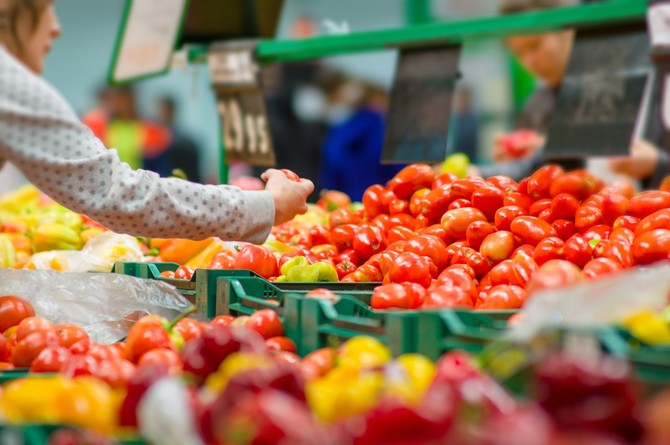
Making sure your family is eating well is a process that begins in the supermarket. (Shutterstock)
Updated 30 May 2018
Follow

Groceries got you down? 6 healthy iftar shopping tips to help you out

With two weeks' worth of traditional Ramadan meals left to prepare, you may find yourself making unhealthy choices in the kitchen. Making sure your family is eating well is a process that begins in the supermarket, however, so read on for the top expert shopping tips.

Choose your fats carefully

Your intake of fats should be limited. Unsaturated fats like vegetable oil, raw nuts and avocados are preferred over saturated fats, such as margarine and butter. Try grilling instead of frying and try to choose low fat dairy products and low fat meats.

Beware of processed and canned foods

These foods often contain high amounts of sodium, sugars and fats. They are often less nutritious than frozen or fresh foods. Just as author Michael Pollan writes in his book, “Food Rules: An Eater's Manual,” “Don’t eat anything your great grandmother wouldn’t recognize as food.”

Keep an eye on your carbohydrates

Wholegrain carbohydrates are always a winner. They contain more fibers and do not cause peaks in blood sugar levels because they get absorbed more slowly. Whole wheat bread, brown rice and bran are great options for iftar sandwiches, biriyani dishes and snacks, as opposed to refined carbohydrates like white bread and commercial cereals that are very high in sugars.

Chomp away on fruits and vegetables

Spend the maximum amount of time in the fresh produce aisle and try to choose options that are in season, or even locally grown. Failing that, frozen and sun-dried fruits are an option, while canned fruits should remain strictly off the shopping list due to the syrupy, sugary liquid in which they are stored.

Cut salt and sugar

Salt and sugar are considered white poison in the world of nutrition. Your intake of simple sugars should be limited to less than five percent of your total daily intake of food. As for salt, it should be iodized and you should not consume more than 1500 mg per day.

Read food labels carefully

The serving information on food labels tells you the size of a recommended single serving and the total number of servings per package. Be aware of how many servings you are consuming and choose foods with more fibers, proteins, vitamins and minerals and less sodium, sugars and trans-fats.


World of Coffee trade show capitalizes on Gulf’s strong coffee culture

Updated 06 January 2026
Follow

World of Coffee trade show capitalizes on Gulf’s strong coffee culture

DUBAI: Long regarded as the birthplace of coffee brewing, the Middle East is entering a new phase of cafe culture — and the fifth edition of World of Coffee, which takes place in Dubai from Jan. 18-20, will help drive that momentum.

Saudi Arabia alone is home to more than 5,100 branded cafes, with daily coffee consumption exceeding 36 million cups. Coffee is part of the social and cultural fabric, from traditional majlis gatherings to contemporary specialty cafes.

“Saudi Arabia’s coffee sector is evolving rapidly. There is increasing investment in quality, education, and presentation, alongside renewed interest in origin storytelling and cultural context,” said Shouq Bin Redha, exhibition manager for World of Coffee Dubai 2026, where Saudi Arabia will host a national pavilion.

“Saudi coffee has a very distinct identity rooted in heritage, ritual, and hospitality. Its profile is closely tied to traditional preparation methods and regional flavor preferences, which sets it apart on the global stage,” she told Arab News. “The national pavilion reflects this balance between tradition and modernization.”

Organized by DXB LIVE in partnership with the Specialty Coffee Association, World of Coffee Dubai has expanded dramatically, growing from 5,000 sq. meters in 2022 to more than 20,000 sq. meters in 2026. The event brings together producers, traders, roasters, cafe owners and innovators from around the world.

“At its core, the event is about bringing together the full coffee value chain in one place,” Redha said. “We want participants to leave not only having discovered new products or origins, but with stronger partnerships, clearer market insight, and a deeper understanding of how the industry is evolving.”

She added: “The Gulf has become an increasingly attractive market for producers because it combines strong consumer demand with a growing appreciation for quality, origin, and traceability.”

The UAE’s coffee market alone exceeds $3.2 billion, while Dubai continues to strengthen its position as one of the world’s most cafe-dense and diverse cities.

“Dubai, in particular, offers a unique gateway to multiple markets at once. For producers, World of Coffee Dubai provides direct access not only to local buyers, but to an international audience that uses the city as a regional and global trading hub,” Redha said.

When it comes to trends in the Gulf’s coffee scene, Redha said she expected to see “continued diversification in sourcing, with buyers exploring a broader range of origins and flavor profiles. There is also growing interest in coffees that offer greater transparency, whether through direct trade relationships, clearer traceability, or stronger sustainability credentials.”