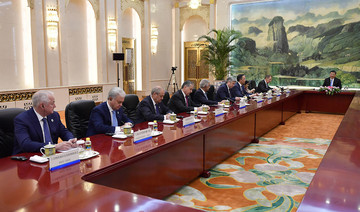
ISLAMABAD: Pakistan vowed to eliminate terrorism and extremism in the region by working with Shanghai Cooperation Organization as the three-day meeting got under way in Islamabad.
“Pakistan fully supports and welcomes the efforts of SCO-RATS in the fight against three evils of terrorism, extremism and separatism,” Foreign Secretary Tehmina Janjua said at the Shanghai Cooperation Organization-Regional Anti-Terrorist Structure (SCO-RATS) meeting.
Legal experts from the eight member states — China, Kazakhstan, Kyrgyzstan, India, Russia, Tajikistan, Uzbekistan and Pakistan — as well as representatives of the SCO-RATS executive committee, were taking part in the meeting.
It is the first SCO meeting to be held in Pakistan since it joined the organization in June 2017. The main purpose of the meeting is to discuss terrorist threats facing the region and how to enhance counter-terrorism cooperation between the member states.
“We support the SCO consensus that as we engage in the fight against terrorism, we must respect the norms and principles of international law, UN Charter and shun double standards,” the Foreign Secretary said.
She also emphasized that terrorism cannot and should not be identified with any religion, individual countries or nationalities.
She said: “We have lost thousands of our citizens and law enforcement personnel, with many more injured. We have also suffered economic losses of more than $120 billion.”
But human and financial losses have not dented Pakistan’s determination to fight this menace, she said, adding that comprehensive efforts over the past several years, supported by a firm domestic political consensus, have helped Pakistan to turn the tide against terrorism.
The Shanghai Cooperation Organization is a permanent intergovernmental international organization, which was founded on June 15, 2001 in Shanghai, China.
Former ambassadors, political and security analysts view the first-ever SCO meeting in Islamabad as an opportunity for the government to present its case against terrorism and extremism effectively to the international community.
Former ambassador Mohammed Ayaz Wazir said it was good for Pakistan to be hosting the hold the meeting at a time when some hostile countries have been trying to isolate it in the international community.
“Pakistan should also enhance bilateral relationship with the SCO members as Euro-Asia is going to be an economic hub and peace center of the world,” he told Arab News.
Wazir pointed out that immediate benefit of the SCO platform is that Pakistan and India have been talking to each other despite being reluctant to revive the bilateral talks on several important issues.
“For peace and development in the region, all member states of the SCO should shun their petty differences and devise cogent mechanisms of cooperation and collaboration,” he said.
Tahir Malik, professor at a public-sector university and political analyst, said it has become a global challenge to overcome the menaces of terrorism and extremism, that no country could deal with effectively acting alone.
“All SCO member states should cooperate in the fields of research and technology to promote knowledge-based economy and peace in the region,” he told Arab News.


![]()

Pakistan vows to fight extremism under the banner of Shanghai Cooperation Organization
Pakistan vows to fight extremism under the banner of Shanghai Cooperation Organization
- Pakistan hosts meeting of Shanghai Cooperation Organization-Regional Anti-Terrorist Structure (SCO-RATS) to discuss enhancing counter-terrorism cooperation among the member states.
- Pakistan should also enhance bilateral relationship with the SCO members as Euro-Asia is going to be an economic hub.
Latest updates






© 2026 SAUDI RESEARCH & PUBLISHING COMPANY, All Rights Reserved And subject to Terms of Use Agreement.