No reprieve for Pakistan as unrelenting heatwave continues

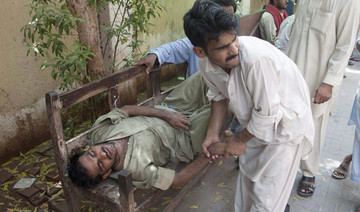
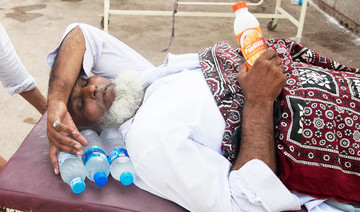
Heat waves can be dangerous because they can kill large numbers of people through heat stress, which may lead to heat stroke, heat exhaustion, and heat rashes or cramps. (REUTERS)
Updated 21 May 2018
Follow

No reprieve for Pakistan as unrelenting heatwave continues

  • The country will likely suffer more frequent and intense heat waves as the average temperature continues to spike, warned the climate change ministry
  • Globally, one in three persons is vulnerable to heat wave-related health effects, says ministry spokesman Mohammad Saleem

ISLAMABAD: Deadly heat waves will become a much bigger socio-economic problem and health hazard in Pakistan in the coming decades as the average temperature in the country continues to rise, the climate change ministry warned on Sunday.
Such extreme weather conditions — induced by global warming — will be more intense and frequent, ministry spokesperson Mohammad Saleem said.
This would occur over a much greater area of the country and be most apparent in densely populated urban areas, he added.
“But devastating fallouts of heat waves on humans can be largely mitigated through timely and effective responsive measures.”
Saleem also said extreme heat waves, such as the one presently sweeping through various cities and towns in Pakistan, are frequently cited as one of the most direct effects of global warming.
Heat waves can be dangerous because they can kill large numbers of people through heat stress, which may lead to heat stroke, heat exhaustion, and heat rashes or cramps.
They can also trigger forest fires, reduce crop yields and damage ecosystems.
According to Saleem, the World Meteorological Department’s studies show that the annual average temperature in the country has increased by about 0.5°C, which has led to a five-fold rise in the number of heat wave days over the last 30 years.
Quoting a study published last year in the Nature Climate Change Journal, Saleem said that globally, one in three persons is vulnerable to heat wave-related health effects.
He said it was important to come up with heat wave management strategies for every district, which should include planned power outages, sustained provision of water, healthcare facilities in hospitals that will be ready for emergencies, as well as the setting up of roadside public shelters.


Uganda army denies seizing opposition leader as vote result looms

Updated 5 sec ago
Follow

Uganda army denies seizing opposition leader as vote result looms

KAMPALA: Uganda’s army denied claims on Saturday that opposition leader Bobi Wine had been abducted from his home, as counting continued in an election marred by reports of at least 10 deaths amid an Internet blackout.
President Yoweri Museveni, 81, looked set to be declared winner and extend his 40-year rule later on Saturday, with a commanding lead against Wine, a former singer turned politician.
Wine said Friday that he was under house arrest, and his party later wrote on X that he had been “forcibly taken” by an army helicopter from his compound.
The army denied that claim.
“The rumors of his so-called arrest are baseless and unfounded,” army spokesman Chris Magezi told AFP.
“They are designed to incite his supporters into acts of violence,” he added.
AFP journalists said the situation was calm outside Wine’s residence early Saturday, but they were unable to contact members of the party due to continued communications interruptions.
A nearby stall-owner, 29-year-old Prince Jerard, said he heard a drone and helicopter at the home the previous night, with a heavy security presence.
“Many people have left (the area),” he said. “We have a lot of fear.”
With more than 80 percent of votes counted on Friday, Museveni was leading on 73.7 percent to Wine’s 22.7, the Electoral Commission said.
Final results were due around 1300 GMT on Saturday.
Wine, 43, whose real name is Robert Kyagulanyi, has emerged as the main challenger to Museveni in recent years, styling himself the “ghetto president” after the slum areas where he grew up in the capital, Kampala.
He has accused the government of “massive ballot stuffing” and attacking several of his party officials under cover of the Internet blackout, which was imposed ahead of Thursday’s polls and remained in place on Saturday.
His claims could not be independently verified, but the United Nations rights office said last week that the elections were taking place in an environment marked by “widespread repression and intimidation” against the opposition.

- Reports of violence -

Analysts have long viewed the election as a formality.
Museveni, a former guerrilla fighter who seized power in 1986, has total control over the state and security apparatus, and has ruthlessly crushed any challenger during his rule.
Election day was marred by significant technical problems after biometric machines — used to confirm voters’ identities — malfunctioned and ballot papers were undelivered for several hours in many areas.
There were reports of violence against the opposition in other parts of the country.
Muwanga Kivumbi, member of parliament for Wine’s party in the Butambala area of central Uganda, told AFP’s Nairobi office by phone that security forces had killed 10 of his campaign agents after storming his home.