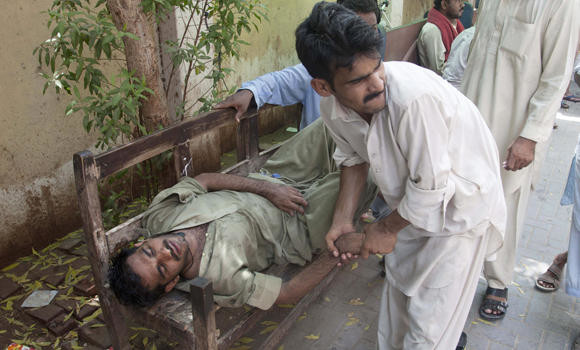
KARACHI: More than 500 people have died from a three-day heatwave in southern Pakistan, officials said Tuesday, as medics battled to treat victims after a state of emergency was declared in hospitals.
The majority of the deaths occurred in the port city of Karachi, Pakistan’s economic hub of around 20 million people, where temperatures reached 45 degrees Celsius (111 Fahrenheit) at the weekend, said Sabir Memon, a senior provincial health official.
“The number of people who have died due to the heatwave in government hospitals is now more than 500. The death toll may go up,” he said.
The deaths came as the overwhelmingly Muslim country of around 200 million people observes the Islamic holy month of Ramadan, during which eating and drinking is forbidden from sunrise to sunset.
Semi Jamali, a doctor at Karachi’s largest hospital said they had treated about 3000 patients.
“More than 200 of them were either received dead or died in hospital,” Jamali told AFP.
Pakistan’s largest charity, Edhi Welfare Organization, said their two morgues in the city had received more than 400 corpses.
“More than 400 dead bodies have so far been received in our two mortuaries in the past three days,” Edhi spokesman Anwar Kazmi told AFP. “The mortuaries have reached capacity.”
Electricity shortages have crippled the water supply system in Karachi, hampering the pumping of millions of gallons of water to consumers, the state-run water utility said.
Pakistan’s Meteorological Office said temperatures remained at around 44.5 Celsius in Karachi on Tuesday but forecast thunderstorms for the evening.
“Due to a low depression developing in the Arabian sea, thunderstorms will likely begin this evening and might continue for the next three days,” a Meteorological official told AFP.
The provincial government meanwhile announced a public holiday to encourage residents to stay inside, an official said. Many of the victims have been laborers who toil outdoors.
Some residents also took to hosing each other down with water on Tuesday to avoid collapsing from heat stroke.
Meanwhile, seven more people were killed in Punjab, the largest wheat-bowl province of Pakistan, during the past 24 hours, officials said.
Fasting exemption
Tahir Ashrafi, a prominent Islamic cleric, urged those who were at risk of heat stroke to abstain from fasting.
“We (religious scholars) have highlighted on various television channels that those who are at risk, especially in Karachi where there is a very serious situation, should abstain from fasting,” he said.
“Islam has drawn conditions for fasting, it is even mentioned in the holy Qur'an that patients and travelers who are not able to bear fasting can delay it and people who are weak or old and are at risk of falling sick or even dying because of fasting should abstain,” he added.
An official from the National Disaster Management Authority told AFP heat stroke treatment centers would be established at all hospitals across the province to provide “emergency medicines for heat stroke victims.”
The deaths come a month after neighboring India suffered a deadly heatwave, with more than 2,000 deaths.
Hundreds of mainly poor people die at the height of summer every year in India, but this year’s toll was the second highest in the country’s history.


![]()
![]()
Death toll from Pakistan heatwave tops 500

Death toll from Pakistan heatwave tops 500
Latest updates


© 2026 SAUDI RESEARCH & PUBLISHING COMPANY, All Rights Reserved And subject to Terms of Use Agreement.