DUBAI: On May 14, 1948, the creation of the state of Israel was declared, formed out of Palestine, and the next day became known as the day of the “Nakba,” or “catastrophe.”
More than 700,000 Palestinians ended up as refugees, as they fled or were driven off their land, and the first Arab-Israeli War began.
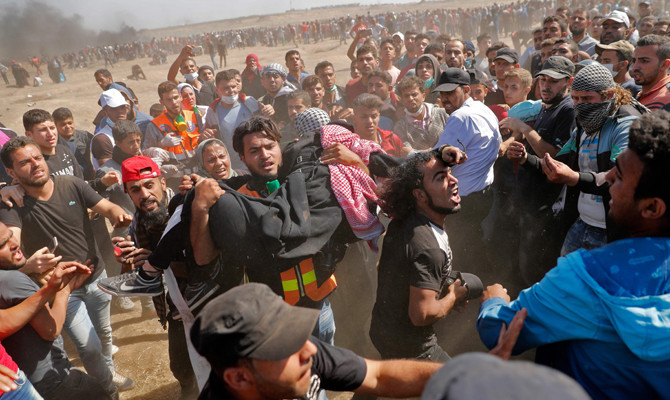
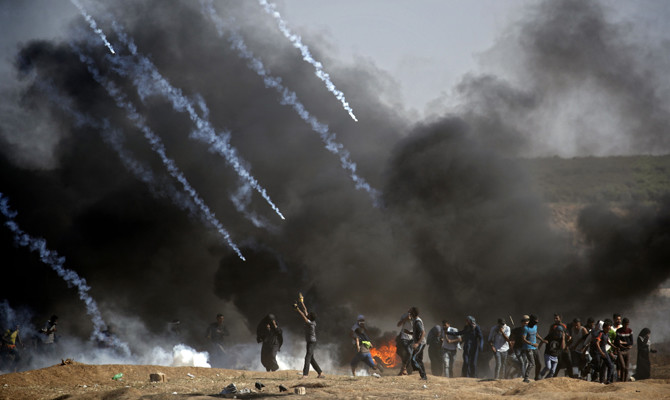
This year, on the eve of the 70th anniversary, the US opened its relocated embassy in Jerusalem, and at least 55 Palestinians were shot by Israeli forces while protesting along the Gaza Strip’s border, a grim reminder that the Nakba is not over.
“For Palestinians, the Nakba is also a continuing affair that only started in 1948, but continued through 1967 and until today, with Jerusalem,” Ghassan Khatib, a former Palestinian government minister, told Arab News.
“Seven decades have passed since Al-Nakba, the biggest crisis in the history of Palestine,” Basem Abdullah Al-Agha, ambassador of Palestine to Saudi Arabia, told Arab News.
“The state of Israel was created on the Palestinian people’s home, from which 6 million Palestine refugees continue to suffer from the cruelty of exile and loss of human security, and with ever-expanding Israeli settlements, Palestinians continue to live under occupation.”
The Nakba is not only about the refugees, according to Khatib.
“The Nakba is the turning point for all Palestinians. And commemorating the Nakba is about taking a stand for resistance, and in particular for self-determination and statehood.”
Third-generation Palestinians, who have made a home somewhere else, struggle with national identity and where to call home. “I’m a Palestinian who grew up in Saudi Arabia,” said 28-year old Dania Husseini, whose family hails from Jerusalem.
“I guess I’m one of those who have an identity crisis. I don’t fit into the typical Palestinian culture or the Saudi or the Western, really. I have a mentality of my own that developed after living in all the environments I lived in and met the people that were part of them.”
Whether refugees or not, it is not hard in the Arab world to find someone whose life wasn’t altered forever by the Nakba.
Arab News columnist Ramzy Baroud was born and raised in a Gaza camp. His family village, Beit Daras, was erased from the map.
The father and grandmother of Arab News writer Daoud Kuttab fled Jerusalem’s Musrara neighborhood for the Jordanian city of Zarqa.
You will find their stories in our eight-page supplement today, which marks Nakba day and the toll it has taken over seven decades.
And in the story of Dr. Bishara A. Bahbah, whose family still holds the deed to their orchard in the Lod-Jaffa area, you will find some hope. As he said: “Even if Israel takes our lands, they can never take away our brainpower and our unshakable will and determination to succeed.”


![]()
![]()
![]()


Israel’s killing of Palestinians a grim reminder that Nakba is not over

Israel’s killing of Palestinians a grim reminder that Nakba is not over
- This year, on the eve of the 70th anniversary, the US opened its relocated embassy in Jerusalem, and at least 55 Palestinians were shot by Israeli forces while protesting along the Gaza Strip’s border, a grim reminder that the Nakba is not over.
- Whether refugees or not, it is hard in the Arab world to find someone whose life wasn’t altered forever by the Nakba.
Related


Latest updates


© 2026 SAUDI RESEARCH & PUBLISHING COMPANY, All Rights Reserved And subject to Terms of Use Agreement.