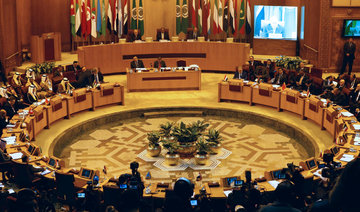
Saudi Arabia’s Minister of Culture and Information Awwad Al-Awwad on Tuesday chaired the 9th regular session of the Executive Office of the Council of Arab Information Minister in Cairo.
Al-Awwad conveyed the wishes of King Salman and Crown Prince Mohammed bin Salman that resolutions would be reached in this session that contribute to the promotion of joint Arab media work within the framework of the Arab League.
The minister also referred to the king’s recent affirmation that “the Palestinian issue is still our first issue and will be so until the Palestinian people gain all their legitimate rights, foremost of which is the establishment of an independent state with East Jerusalem (Al-Quds) as its capital.”
He pointed out that the Kingdom supports all efforts to reach a political solution to the crisis in Yemen in a manner that ensures its unity, independence and territorial integrity.
He added: “The Kingdom also welcomes the statement issued by the Security Council, which strongly condemned the launching of more than 132 Iranian-made ballistic missiles by Houthi militias against Saudi cities, and the Kingdom affirms its commitment to provide humanitarian assistance to the Yemeni people.”
He said: “The role of the Arab media in countering terrorism is one of the most important items before the Council, confirming our awareness of the importance of addressing this phenomenon and the pivotal role of media in confronting it.”
The minister also stressed that the Arab media nowadays has a key role and a great responsibility to play in saving lives and preserving property through the implementation of specific programs that identify, educate and disseminate awareness about this dangerous and destructive phenomenon and how to prevent it from spreading its poison.
He believed that the success of Arab efforts to combat terrorism requires all members’ coordination and concerted efforts for combating radical misguided ideas.
Al-Awwad concluded by stressing the need to consider addressing media issues in effective ways in line with the Council’s goals and visions. He hoped that the Council’s meeting would make effective decisions that have an impact on the Arab media and realize the aspirations of our Arab peoples.