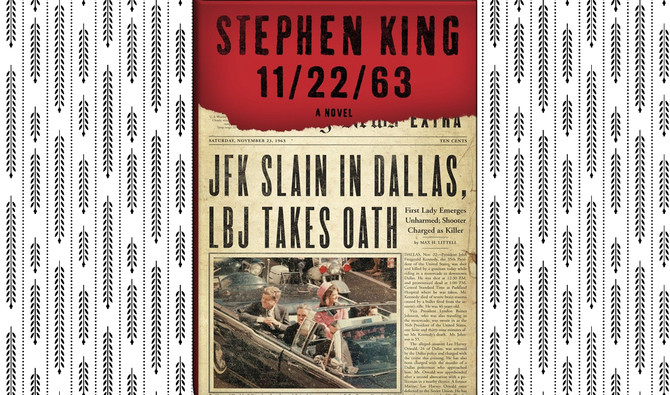
What We Are Reading Today: Stephen King’s 11/22/63  

Updated 04 May 2018
Follow

What We Are Reading Today: Stephen King’s 11/22/63  

  • Stephen King decides to right one of history’s most monumental wrongs in this morose melange of science-fiction, philosophy and romance
  • King’s painstaking research is evident throughout; his attention to detail a joy to discover on page after page

As a concept, going back in time to correct past mistakes has always been an appealing one.

And in this morose melange of science-fiction, philosophy and romance, Stephen King decides to right one of history’s most monumental wrongs.

11/22/63 throws a humble New England schoolteacher into middle-class America in the 1960s, tasked with preventing the assassination of John F. Kennedy.

No small feat. King’s painstaking research is evident throughout; his attention to detail a joy to discover on page after page.

His character development is strong, as always, and the love story interwoven into the far-fetched, fantastical time paradoxes means there is something for everyone in this rather bleak commentary on humanity’s uncanny ability to make the same mistakes over and over again.

Is it King’s best novel? Not by any stretch. But the atmosphere he creates is a stark departure from some of the better-known titles in his considerable canon.

Fans of alternative histories will love this book.

And for the rest of us, there is a lot to enjoy in the vivid world, flawed-yet-very-believable characters and the assessment on the darker side of human nature that King has written.


What We Are Reading Today: Laws of the Land

Photo/Supplied
Updated 09 January 2026
Follow

What We Are Reading Today: Laws of the Land

  • Employing archives from Mainland China and Taiwan that have only recently become available, this is the first book to document fengshui’s invocations in Chinese law during the Qing dynasty

Author: Tristan G. Brow

Today the term fengshui, which literally means “wind and water,” is recognized around the world. Yet few know exactly what it means, let alone its fascinating history. In “Laws of the Land,” Tristan Brown tells the story of the important roles — especially legal ones — played by fengshui in Chinese society during China’s last imperial dynasty, the Manchu Qing (1644–1912).

Employing archives from Mainland China and Taiwan that have only recently become available, this is the first book to document fengshui’s invocations in Chinese law during the Qing dynasty.