

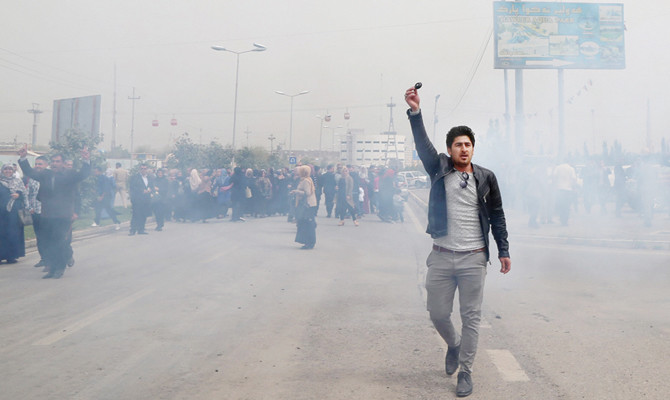

Hoshang Waziri, a writer and journalist, describes in detail how he was arrested by the Iraqi Kurdish security apparatus, known as Asaysh, after a wave of demonstrations against corruption and unpaid salaries swept through Iraqi Kurdistan last month.
On March 27, he was using his cellphone as a “citizen journalist” when he and several others were detained and some were threatened with torture. One of his fellow detainees, a Peshmerga fighter, told Waziri he had fought against Daesh around Mosul but was now disillusioned with the Kurdistan Regional Government. “Enough!” he said. “I’m fed up with these thieves.”
“Irbil, ruled with a tight fist by Masoud Barzani’s Kurdistan Democratic Party, has not faced a public political protest for years,” Waziri writes.
“Last month’s action was the first major show of political discontent directed at the government since 1996.”
He says the Iraqi Kurds’ new oppressors are the two ruling families, the Barzanis and Talabanis. He stresses that the situation is not as bad as it was under Saddam Hussein. But if Kurdish rulers keep silencing opposition with violence, “Iraqi Kurdistan will soon become another republic of fear.”


