Cambridge Analytica, firm at the center of Facebook's privacy debacle, declaring bankruptcy and shutting down

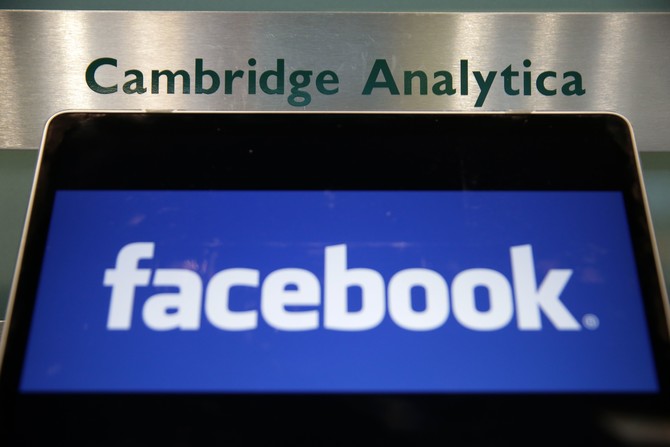
Cambridge Analytica, the Trump-affiliated data firm at the center of Facebook's worst privacy scandal in history, is declaring bankruptcy and shutting down. (AFP)
Updated 02 May 2018
Follow

Cambridge Analytica, firm at the center of Facebook's privacy debacle, declaring bankruptcy and shutting down

  • Cambridge Analytica said it has filed papers to begin insolvency proceedings in the UK and will seek bankruptcy
  • The London firm blamed "unfairly negative media coverage" and said it has been "vilified"

LONDON: Cambridge Analytica, the Trump-affiliated data firm at the center of Facebook's worst privacy scandal in history, is declaring bankruptcy and shutting down.
The London firm blamed "unfairly negative media coverage" and said it has been "vilified" for actions it says are both legal and widely accepted as part of online advertising.
Cambridge Analytica said it has filed papers to begin insolvency proceedings in the UK and will seek bankruptcy protection in a federal court in New York.
"The siege of media coverage has driven away virtually all of the company's customers and suppliers," Cambridge Analytica said in a statement. "As a result, it has been determined that it is no longer viable to continue operating the business."
Cambridge Analytica has been linked to Donald Trump's 2016 presidential campaign. The British firm suspended CEO Alexander Tayler in April amid investigations.
Cambridge Analytica sought information on Facebook to build psychological profiles on a large portion of the U.S. electorate. The company was able to amass the database quickly with the help of an app that appeared to be a personality test. The app collected data on tens of millions of people and their Facebook friends, even those who did not download the app themselves.
Facebook has since tightened its privacy restrictions. Cambridge has denied wrongdoing, and Trump's campaign has said it didn't use Cambridge's data.
The firm has said it is committed to helping the U.K. investigation into Facebook and how it uses data. But U.K. Information Commissioner Elizabeth Denham said in March the firm failed to meet a deadline to produce the information requested.
Denham said the prime allegation against Cambridge Analytica is that it acquired personal data in an unauthorized way, adding that the data provisions act requires services like Facebook to have strong safeguards against misuse of data.


Paris exhibition marks 200 years of Le Figaro and the enduring power of the press

Updated 17 January 2026
Follow

Paris exhibition marks 200 years of Le Figaro and the enduring power of the press

  • The exhibition celebrated the bicentennial of Le Figaro, offering visitors a rare opportunity to step inside the newspaper’s vast historical archive

PARIS: One of France’s most influential newspapers marked a major milestone this month with a landmark exhibition beneath the soaring glass nave of the Grand Palais, tracing two centuries of journalism, literature and political debate.
Titled 1826–2026: 200 years of freedom, the exhibition celebrated the bicentennial of Le Figaro, offering visitors a rare opportunity to step inside the newspaper’s vast historical archive. Held over three days in mid-January, the free exhibition drew large crowds eager to explore how the title has both chronicled and shaped modern French history.
More than 300 original items were displayed, including historic front pages, photographs, illustrations and handwritten manuscripts. Together, they charted Le Figaro’s evolution from a 19th-century satirical publication into a leading national daily, reflecting eras of revolution, war, cultural change and technological disruption.
The exhibition unfolded across a series of thematic spaces, guiding visitors through defining moments in the paper’s past — from its literary golden age to its role in political debate and its transition into the digital era. Particular attention was paid to the newspaper’s long association with prominent writers and intellectuals, underscoring the close relationship between journalism and cultural life in France.
Beyond the displays, the program extended into live journalism. Public editorial meetings, panel discussions and film screenings invited audiences to engage directly with editors, writers and media figures, turning the exhibition into a forum for debate about the future of the press and freedom of expression.
Hosted at the Grand Palais, the setting itself reinforced the exhibition’s ambition: to place journalism firmly within the country’s cultural heritage. While the exhibition has now concluded, the bicentennial celebrations continue through special publications and broadcasts, reaffirming Le Figaro’s place in France’s public life — and the enduring relevance of a free and questioning press in an age of rapid change.