PESHAWAR: With the general elections around the corner, a new political alliance is being set up, comprising several religious parties from different schools of thought.
Former member of the National Assembly Maulana Hamidul Haq, the son of Jamiat Ulema-e-Islam (Sami) chief Maulana Samiul Haq, told Arab News that they were discussing the alliance with several parties and would announce it soon.
Maulana Sami is head of Darul Uloom Haqqania, a madrassa in Nowshera district which was recently granted huge funds by the PTI-led provincial government. However, the Maulana was disappointed when the PTI politicians did not support him in the Senate elections even though the party had formally announced it would back him for Senate berth.
Hamidul Haq added that another reason behind their split from the PTI was their disagreement about adjustment of seats as he claimed the party leadership, including the chief minister, were trying to grab the constituencies on which JUI-S also wanted to contest the elections.
JUI-S spokesman Maulana Yousaf Shah also confirmed that their meeting was under way and the alliance would formally be announced soon. However, he refused to comment further and said the matter would be announced soon after the meeting.
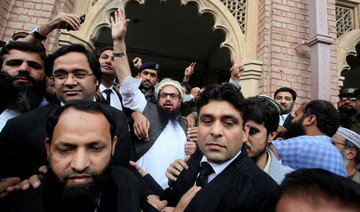
MML President Saifullah Khalid told Arab News that his party also wanted to join the alliance, though it was waiting to hear from the Election Commission of Pakistan.
“We held discussions today and we told all other parties that we will be able to decide about joining the alliance once the Election Commission approves our party’s registration,” he said.
Sadaqat Hussain from the MML told Arab News that the new alliance could be comprised from Ahle Sunnat wal Jamaat, Ansarul Ummah, MML, Jamiat Ulema-e-Pakistan, Jamiat Ahle Hadith and Jamiat Ulema-e-Islam-Sami.


![]()

Controversial MML gears up for 2018 polls with new electoral alliance
Controversial MML gears up for 2018 polls with new electoral alliance
- Milli Muslim League, the political arm of US-sanctioned Jamat-ud-Dawa, is forging new ties with other religious-political parties before the forthcoming general elections.
- Former member National Assembly Maulana Hamidul Haq, son of Jamiat Ulema-e-Islam chief, Maulana Samiul Haq, told Arab News that they are discussing the alliance with several parties and would announce it soon.

Latest updates


© 2026 SAUDI RESEARCH & PUBLISHING COMPANY, All Rights Reserved And subject to Terms of Use Agreement.