NAIROBI: Africa’s top regional body is hosting its annual summit in Ethiopia this weekend to discuss the future of the continent of some 1.4 billion people, but across the continent the organization is becoming less popular.
Set up to “promote the unity and solidarity of the African States,” analysts say the African Union is facing a legitimacy crisis among the continent’s youth after failing to meet their expectations. African countries are battling military coups, disputed elections and protests inspired by hardship worsened by foreign aid cuts.
’A bloc of old leaders’
Africa has the youngest population in the world with more than 400 million people aged 15 to 35 years old. But it is also home to several of the world’s oldest and longest-serving leaders — a paradox that has contributed to an upsurge in coups.
With a young population set to double by 2050, it is the only rapidly growing region where its people are getting poorer. In different countries and on social media, African youths view the AU as a bloc of old leaders and one which sees their interests as less of a priority.
The organization has missed opportunities to be people-centered and citizen-driven and has instead focused largely on governments and leaders, said Liesl Louw-Vaudran, a senior analyst with the Crisis Group.
“What the youth is really asking and why people are frustrated is because this is not an African Union for citizens. It’s not a people-driven African Union,” Louw-Vaudran added.
Elections are one example of the AU’s loopholes
As several African countries held elections for new presidents over the last year, there was a clear pattern of sidelined opposition candidates, disputed results and protests from mostly young voters after incumbents were reelected.
Despite the election outcomes, the AU was often accused of being quick to side with reelected incumbents and slow to call out flawed processes.
As authorities in Uganda shut down the Internet and clamped down on the opposition during the East African country’s presidential election in January, the African Union Commission issued a statement “commending” the conduct of the poll. A day after, the AU election observer mission issued a preliminary report noting “reports of harassment, intimidation and arrest of opposition leaders, candidates, supporters’ media and civic society actors” in the election.
The AU social media post commending the election enraged many youths, with one person retorting: “Dictatorship club has spoken.”
One key challenge the AU has battled with over the years is weak enforcement of resolutions, according to Macharia Munene, a professor of history at the United States International University in Nairobi. And that’s because “not all members meet their dues or fully accept what is generally decided,” he said.
An AU Summit coming amid a new world order
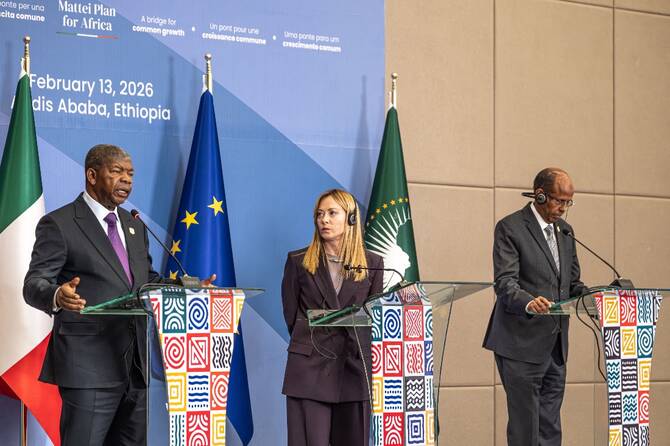
At the 39th African Union Summit being held in Ethiopia’s capital of Addis Ababa on Saturday and Sunday, the theme is water and sanitation. Discussions will feature the continent’s response to climate change and humanitarian crises following foreign aid cuts from international partners such as the United States.
Observers say the AU Summit will provide an opportunity to align continental priorities with international partners, especially at a time of discussions around a ‘new world order’ stirred by US President Donald Trump with foreign leaders signaling shifting global alliances.
Still, critics urge the African Union to look inward by paying closer attention to the continent’s most pressing challenges and doing more to hold leaders accountable when they fail to meet expectations.
In Nigeria’s capital of Abuja, resident Chima Ekwueme said the African Union does not care about holding leaders accountable, citing Nigeria’s deadly security crises and economic hardship despite its rich mineral wealth.
“They are there for their own interests,” Ekwueme, 32, said of the AU. “In Nigeria, we have all it takes to put things in order (but) look at how difficult things are and where is the AU.”


![]()

African Union summit opens as youth anger grows over a ‘bloc of old leaders’
Short Url
https://arab.news/65esk
African Union summit opens as youth anger grows over a ‘bloc of old leaders’
- Africa has the youngest population in the world with more than 400 million people aged 15 to 35 years old
- But it is also home to several of the world’s oldest and longest-serving leaders


Latest updates


© 2026 SAUDI RESEARCH & PUBLISHING COMPANY, All Rights Reserved And subject to Terms of Use Agreement.