


BAGHDAD: Iraqis will go to the polls on May 12 to elect 329 MPs — the fourth parliamentary vote since the 2003 US-led invasion toppled the regime of Saddam Hussein.
With security better in much of the country than it has been for several years, the election has led to a surge of interest in a new generation of female candidates.
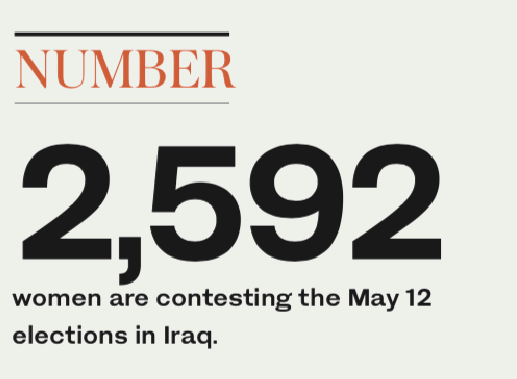
A total of 2,592 women are standing for office across the country and in Baghdad many of them have shunned the nation’s conservative traditions to run socially liberal and occasionally glamorous campaigns unlike anything Iraq has seen before.
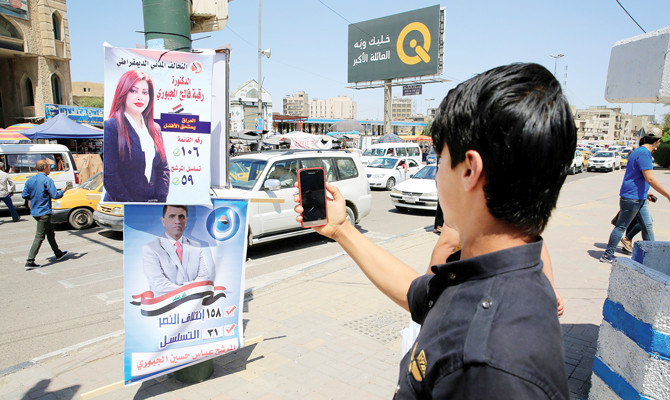
Some posters depicting female candidates in make-up and without Islamic headscarves, have provoked a mixed response from an electorate more accustomed to voting for unsmiling religious clerics.
While some voters said the images were a welcome change to the dry, male-dominated campaigns of old, others accused the women of lacking “political depth” and relying on their looks to woo the public. The candidates themselves have defended their unorthodox approach as just another way to generate interest in the election.
 In an interview with Iraqi news agency, Al-Manar Press, Mannal Al-Mu’atassim, said she hoped her fashionable image would motivate more young people to support her in the polls. She told Arab News that while she was “not betting” on her looks to win her more votes, she regarded her appearance as more important than her ability to debate conventional political issues.
“I believe that Iraqi voters are heading toward choosing new faces, so there is no need for an electoral program or slogans,” she said.
Under the terms of the Iraqi constitution, 25 percent of the seats in the national Parliament are reserved for women.
This is the first time, however, that the participation of female candidates has generated such widespread public interest among an electorate used to taking a cynical view of more established politicians linked to corruption and sectarian violence.
Ziena Al-Shimari, another female candidate in Baghdad, told Arab News she had been granted permission to run by the head of her tribe and was now determined to stand up for the rights of a new generation of Iraqis.
“I am calling on us to unify the Arab tribes because they support the young while the state does not,” she said.Since campaigning began on April 14, the images of the women have given rise to a range of reactions, from anger and mockery to adulation and pride.
“I will vote for one of the beautiful candidates and I do not mind if she has robbed me” Murtadha Zayer, a soldier, told Arab News. “If a beautiful thief robs me in front of my eyes it is better than having an ugly thief who continues to trick me all the time.”
Some of the pictures showing the female candidates have been torn by infuriated voters, while others have been defaced to give the women beards and mustaches.
Salah Ahmed, a political activist, criticized many of the women for lacking “cultural or political depth” and targeting “ignorant voters”.
“If we asked them to participate in electoral debates to identify their visions, plans and ways of thinking, we would find they had nothing to offer. So to compensate for this shortage they are focusing on their make-up and changes to their appearance,” he said.
Bushra Zuwini, a former minister of women’s affairs, told Arab News political factions are using female candidates who lack knowledge of important issues to trick the electorate.
“The big blocs now have experience in how to defraud voters, so they brought in new faces that do not understand politics and do not have any programs or visions,” she said. “This phenomenon will reflect negatively on women.


