

PM Abbasi steps in to resolve Karachi’s power crisis

In this file photo, volunteers cover their heads with water-soaked towels, to beat the heat, while distributing water bottles, outside Jinnah Postgraduate Medical Center (JPMC) in Karachi, Pakistan, June 25, 2015. (REUTERS)
Updated 23 April 2018
Follow

PM Abbasi steps in to resolve Karachi’s power crisis

  • K-Electric and Sui Southern Gas Company have blamed each other for load shedding in Karachi
  • Karachi has faced prolonged load shedding for the last few weeks as summer and Ramadan draw near

KARACHI: Prime Minister Shahid Khaqan Abbasi announced on Monday good news for those living in Pakistan’s largest city, Karachi. The city has experienced power outages of up to 12 hours over the last few weeks.
The crisis worsened when the Sui Southern Gas Company Limited (SSGL) stopped supplying the minimum required gas of 190 mmcfd to the power company, K-Electric, because of a row over outstanding charges.
In the blame game between the two utility companies, Sindh Chief Minister Syed Murad Ali Shah had warned that if the federal government failed to resolve the differences between K-Electric and the SSGL, a law and order situation might develop in Karachi.
Addressing a news conference today at Sindh’s Government House after presiding over a meeting of the Cabinet Committee on Energy, Abbasi told reporters that the current crisis would end as SSGCL will begin providing the 190 mmcfd to K-Electric.
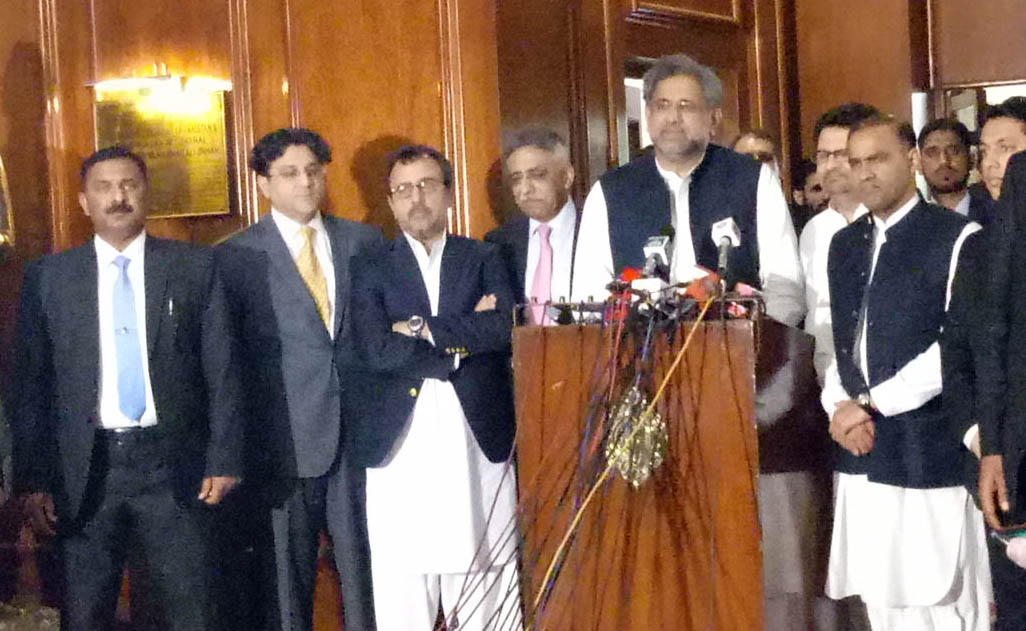


Prime Minister of Pakistan Shahid Khaqan Abbasi addressing a news conference at Sindh Governor House Karachi on Monday, April 23, 2018. (AN photo)

 While ruling out any chance of taking back K-Electric from the private party, Abbasi said Finance Adviser Miftah Ismail, who was standing by his side, would revolve the payment issue within the next 15 days.
“Complete load shedding will end with 100 percent payments of bills by costumers,” the prime minister clarified.
“Things are getting worse and may create a law and order situation in the city where peace has now been restored after making many sacrifices and doing a lot of hard work,” the chief minister told Arab News on Saturday.


Pakistan deputy PM directs authorities to monitor food prices ahead of Ramadan 

Updated 6 sec ago
Follow

Pakistan deputy PM directs authorities to monitor food prices ahead of Ramadan 

  • Prices of essential food items surge during holy month of Ramadan due to hoarding, profiteering by traders
  • Deputy PM Ishaq Dar directs authorities to prevent artificial price hikes, exploitation of consumers in Ramadan

ISLAMABAD: Pakistan’s Deputy Prime Minister Ishaq Dar on Tuesday directed authorities to monitor prices of essential food items ahead of Ramadan to prevent artificial price hikes and consumers from getting exploited, his office said. 

Pakistani increasingly shop for essential food items during the holy month of Ramadan, as millions across the country fast from dawn till sunset. Prices of essential food items surge during the holy month every year as traders often indulge in hoarding and profiteering. 

Dar chaired a meeting to review the availability and prices of essential commodities across the country on Tuesday, his office said. 

“DPM/FM [foreign minister] directed federal & provincial authorities to continue close monitoring, particularly in view of the approaching month of Ramazan, to prevent any artificial price hike or exploitation of consumers by unscrupulous elements,” Dar’s office said in a statement.

A central moon sighting committee in Pakistan, the Ruet-e-Hilal Committee, determines when Ramadan begins. The Islamic month is expected to start this year after mid-February, around Feb. 17 or Feb. 18.

Pakistan’s government also announces subsidies for the masses during the holy month to lower the prices of essential food items. 

In 2024, the Shehbaz Sharif-led government announced a Ramadan package comprising a subsidy of $26.8 million (Rs7.5 billion) to lower the prices of essential items for over 30,96,00,000 families.