Researchers accidentally engineer plastic-eating enzyme

A boy stands near a whale-shaped art installation that is made of plastic and trash made by environmental activist group Greenpeace Philippines, lying along the shore in Naic, Cavite in the Philippines, in this May 12, 2017 file photo. (REUTERS)
Updated 17 April 2018
Follow

Researchers accidentally engineer plastic-eating enzyme

  • Despite recycling efforts, most plastic can persist for hundreds of years in the environment
  • Researchers say they are now working on further improvements to the enzyme

TAMPA: Researchers in the US and Britain have accidentally engineered an enzyme which eats plastic and may eventually help solve the growing problem of plastic pollution, a study said Monday.
More than eight million tons of plastic are dumped into the world’s oceans every year, and concern is mounting over this petroleum-derived product’s toxic legacy on human health and the environment.
Despite recycling efforts, most plastic can persist for hundreds of years in the environment, so researchers are searching for better ways to eliminate it.
Scientists at the University of Portsmouth and the US Energy Department’s National Renewable Energy Laboratory decided to focus on a naturally occurring bacterium discovered in Japan a few years ago.
Japanese researchers believe the bacterium evolved fairly recently in a waste recycling center, since plastics were not invented until the 1940s.
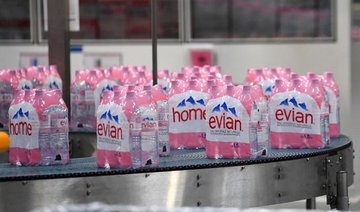
Known as Ideonella sakaiensis, it appears to feed exclusively on a type of plastic known as polyethylene terephthalate (PET), used widely in plastic bottles.

The researchers’ goal was to understand how one of its enzymes — called PETase — worked, by figuring out its structure.
“But they ended up going a step further and accidentally engineered an enzyme which was even better at breaking down PET plastics,” said the report in the Proceedings of the National Academy of Sciences, a peer-reviewed US journal.
Using a super-powerful X-ray, 10 billion times brighter than the Sun, they were able to make an ultra-high-resolution three-dimensional model of the enzyme.
Scientists from the University of South Florida and the University of Campinas in Brazil did computer modeling which showed PETase looked similar to another enzyme, cutinase, found in fungus and bacteria.
One area of the PETase was a bit different, though, and researchers hypothesized that this was the part that allowed it to degrade man-made plastic.
So they mutated the PETase active site to make it more like cutinase, and unexpectedly found that this mutant enzyme was even better than the natural PETase at breaking down PET.
Researchers say they are now working on further improvements to the enzyme, with the hope of eventually scaling it up for industrial use in breaking down plastics.
“Serendipity often plays a significant role in fundamental scientific research, and our discovery here is no exception,” said study author John McGeehan, professor in the School of Biological Sciences at Portsmouth.
“Although the improvement is modest, this unanticipated discovery suggests that there is room to further improve these enzymes, moving us closer to a recycling solution for the ever-growing mountain of discarded plastics.”


Apple to update EU browser options, make more apps deletable

Updated 22 August 2024
Follow

Apple to update EU browser options, make more apps deletable

  • iPhone maker came under pressure from regulators to make changes after the EU’s sweeping Digital Markets Act took effect on March 7
  • Apple users will be able to select a default browser directly from the choice screen after going through a mandatory list of options

STOCKHOLM: Apple will change how users choose browser options in the European Union, add a dedicated section for changing default apps, and make more apps deletable, the company said on Thursday.
The iPhone maker came under pressure from regulators to make changes after the EU’s sweeping Digital Markets Act took effect on March 7, forcing big tech companies to offer mobile users the ability to select from a list of available web browsers on a “choice screen.”
The new rules require mobile software makers to show the choice screen where users can select a browser, search engine and virtual assistant as they set up their phones, which earlier came with preferred options from Apple and Google.
In an update later this year, Apple users will be able to select a default browser directly from the choice screen after going through a mandatory list of options.
A randomly ordered list of 12 browsers per EU country will be shown to the user with short descriptions, and the chosen one will be automatically downloaded, Apple said. The choice screen will also be available on iPads through an update later this year.
Apple released a previous update in response to the new rules in March, but browser companies criticized the design of its choice screen, and the Commission opened an investigation on March 25 saying it suspected that the measures fell short of effective compliance.
The company said it has been in dialogue with the European Commission and believes the new changes will address regulators’ concerns.
It also plans to introduce a dedicated area for default apps where a user will be able to set defaults for messaging, phone calls, spam filters, password managers and keyboards.
Users will also be able to delete certain Apple-made apps such as App Store, Messages, Camera, Photos and Safari. Only Settings and Phone apps would not be deletable.