GAZA: The US for a second week in a row has blocked a UN Security Council statement supporting the right of Palestinians to demonstrate peacefully and endorsing Secretary-General Antonio Guterres’ call for an independent investigation into deadly protests in Gaza.
Palestinian UN Ambassador Riyad Mansour told reporters at UN headquarters in New York Friday evening that 14 of the 15 council nations agreed to the statement, but the US, Israel’s closest ally, objected.
Mansour called the US rejection “very irresponsible,” saying it gives Israel “the green light to continue with their onslaught against the civilian population” in Gaza.
He said the UN will keep all its options open including seeking a Security Council presidential statement or resolution, going to the UN General Assembly or the Gene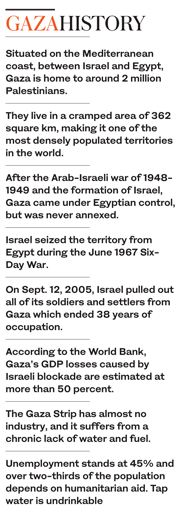 va-based Human Rights Council where there are no vetoes, and urging Secretary-General Guterres to establish an independent investigation.
“We will not give up,” Mansour said. “We will continue knocking on doors.
The Arab League’s UN Ambassador Maged Abdelaziz said Arab ministers will discuss options to pursue the Palestinian issue at a meeting in Saudi Arabia’s capital Riyadh on April 12 ahead of a summit of Arab leaders in the country on April 15.
Israel’s UN Ambassador Danny Danon called on the Security Council to condemn Gaza’s Hamas rulers for exploiting children as human shields and to end their provocations.
Hamas rulers, who are orchestrating the demonstrations, say the protests are against a decade-old border blockade by Israel. But Israel accuses the group of using the protests as cover for trying to infiltrate the border and attack Israelis. It has warned that anyone approaching the border fence is risking their lives.
Israel captured Gaza, a thin strip of land along the Mediterranean coast, from Egypt in the 1967 Mideast war and occupied the area for nearly four decades before withdrawing all troops and settlements in 2005. Hamas, a militant group sworn to Israel’s destruction, won legislative elections the following year and in 2007 seized control of Gaza from the internationally recognized Palestinian Authority, headed by Mahmoud Abbas.
Israel and Egypt have maintained a blockade on Gaza in an attempt to weaken the group. Since then, Israel and Hamas have fought three wars, while attempts at internal Palestinian reconciliation have repeatedly failed, in large part because of Hamas’ continued refusal to disarm.
Gaza’s 2 million residents receive only a few hours of electricity each day, tap water is undrinkable and the coastline has been polluted by tons of untreated sewage. Hamas says the demonstrations are meant to draw attention to the harsh conditions in Gaza. But with public discontent rising, it also appears to be an attempt by the group to shake up the situation after other options failed.
International organizations like the World Bank and UN say the blockade continues to stifle the economy. They have repeatedly urged Israel to ease the restrictions significantly.
While thousands of Palestinians have gathered for nonviolent protests, dozens of young men have approached the border and thrown stones, firebombs and burning tires toward the border fence. Israel has mobilized snipers and other special forces on the other side of the fence.
Witness accounts and amateur videos have shown some demonstrators appeared to be unarmed or far from the fence when they were shot.
Hamas has called for a series of demonstrations in the coming weeks, culminating on May 15, the 70th anniversary of Israel’s establishment. Palestinians mark the date as their “naqba,” or catastrophe, when hundreds of thousands were forced or fled from their homes.
Hamas’ top Gaza official, Yehiyeh Sinwar, made a surprise visit to one of the protests and appeared to issue a new threat. “Wait for our great move, when we breach the borders and pray at Al-Aqsa,” referring to the major Muslim shrine in Jerusalem. Sinwar’s threat could set the stage for another serious round of violence in the coming weeks.


![]()

US blocks UN call for Gaza probe
US blocks UN call for Gaza probe
- Paris condemns Israeli army's 'indiscriminate fire' in Gaza
- Gaza violence is latest salvo in war of narratives


Latest updates



© 2026 SAUDI RESEARCH & PUBLISHING COMPANY, All Rights Reserved And subject to Terms of Use Agreement.