Saudi Arabia's stock market closes at highest level since August 2015

Saudi Arabia's stock market closes at highest level since August 2015. (REUTERS)
Updated 27 March 2018
Follow

Saudi Arabia's stock market closes at highest level since August 2015

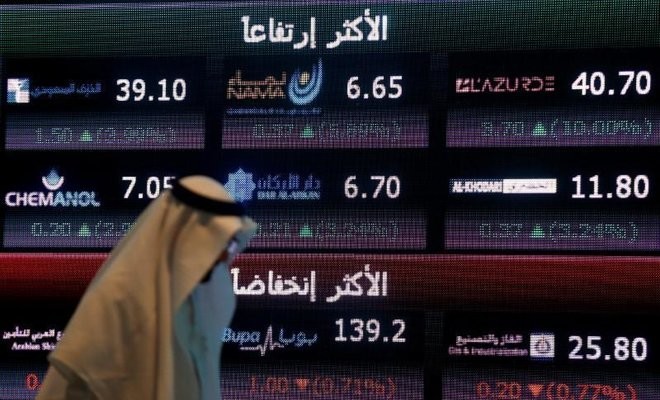
LONDON: Saudi stocks surged to their highest level in nearly three years on Tuesday, as investors continued to bet on the Kingdom’s equities being upgraded to emerging market status by widely tracked index providers. 
The Tadawul finished up 1.1 percent at 7,942.54, its highest close since August 2015, and the day before index provider FTSE Russell announces whether it will include Saudi Arabia in its emerging markets category.
Such an inclusion is predicted to attract billions worth of passive inflows into the Middle East’s largest stock market, with a similar upgrade to emerging market status by rival index provider MSCI widely expected to be announced in June, and forecast to attract even more international funds. 
“If FTSE says yes (on Wednesday) then people will assume that MSCI will say yes in June, which is the reason the market’s been showing such strength recently,” said Mohammed Al-Hajj, vice president and head of MENA strategy at investment bank EFG Hermes. 
Such upgrades may attract up to $45 billion worth of inflows from foreign investors, Al-Hajj noted, with about $14 billion coming from passive inflows from international funds that allocate a set proportion of their portfolios to emerging markets. 
Saudi stocks missed out on an emerging market upgrade at FTSE’s last classification meeting in September, but are widely expected to make the cut on Wednesday. 
Such an upgrade is also expected to be announced in June by MSCI, which last month noted that the Kingdom had implemented “a number of positive market reforms” in the past 18 months, including relaxing foreign ownership restrictions on local stocks, reducing settlement times and introducing short selling. 
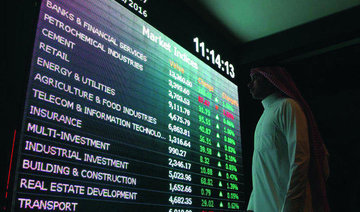
The growing anticipation of such upgrades, which would formally come into effect next year, has boosted Saudi equity values; after a flat 2017 the Tadawul is up 9.9 percent since the start of the year, making it the GCC’s best performing bourse. 
Banks in particular are set to benefit from any reclassification by MSCI and FTSE, said Al-Hajj, with lenders benefiting from rising interest rates in the Kingdom. 
The Saudi Arabian Monetary Authority last week raised its two key interest rates — its repo and reverse repo rates — by 25 basis points, after the rates fell below US rates in recent weeks. 
“The increases are credit positive for Saudi banks because they will prevent Saudi investors’ and depositors’ capital outflows and positively reflect the Saudi banking system’s stable liquidity conditions,” said Moody’s Investors Service in a comment note last week. 
After tightening lending conditions in 2015-16 following a fall in oil prices, liquidity conditions have begun to improve for Saudi banks, Moody’s noted, with credit contracting by 1 percent last year and public-sector deposits increasing 12 percent, underpinned by “improving oil prices and increasing international sovereign bond issuances.”
Banks were among the big gainers on the Tadawul on Tuesday. Shares in NCB and Al-Rajhi Bank, the country’s two largest lenders by market capitalization, rose by 1.3 percent and 1.4 percent respectively. 
Insurance firms, health care providers and fast-moving consumer goods companies are also forecast to be key beneficiaries of emerging market upgrades, according to EFG Hermes, which rated the sectors as overweight last month. 


First EU–Saudi roundtable on critical raw materials reflects shared policy commitment

Updated 16 January 2026
Follow

First EU–Saudi roundtable on critical raw materials reflects shared policy commitment

RIYADH: The EU–Saudi Arabia Business and Investment Dialogue on Advancing Critical Raw Materials Value Chains, held in Riyadh as part of the Future Minerals Forum, brought together senior policymakers, industry leaders, and investors to advance strategic cooperation across critical raw materials value chains.

Organized under a Team Europe approach by the EU–GCC Cooperation on Green Transition Project, in coordination with the EU Delegation to Saudi Arabia, the European Chamber of Commerce in the Kingdom and in close cooperation with FMF, the dialogue provided a high-level platform to explore European actions under the EU Critical Raw Materials Act and ResourceEU alongside the Kingdom’s aspirations for minerals, industrial, and investment priorities.

This is in line with Saudi Vision 2030 and broader regional ambitions across the GCC, MENA, and Africa.

ResourceEU is the EU’s new strategic action plan, launched in late 2025, to secure a reliable supply of critical raw materials like lithium, rare earths, and cobalt, reducing dependency on single suppliers, such as China, by boosting domestic extraction, processing, recycling, stockpiling, and strategic partnerships with resource-rich nations.

The first ever EU–Saudi roundtable on critical raw materials was opened by the bloc’s Ambassador to the Kingdom, Christophe Farnaud, together with Saudi Deputy Minister for Mining Development Turki Al-Babtain, turning policy alignment into concrete cooperation.

Farnaud underlined the central role of international cooperation in the implementation of the EU’s critical raw materials policy framework.

“As the European Union advances the implementation of its Critical Raw Materials policy, international cooperation is indispensable to building secure, diversified, and sustainable value chains. Saudi Arabia is a key partner in this effort. This dialogue reflects our shared commitment to translate policy alignment into concrete business and investment cooperation that supports the green and digital transitions,” said the ambassador.

Discussions focused on strengthening resilient, diversified, and responsible CRM supply chains that are essential to the green and digital transitions.

Participants explored concrete opportunities for EU–Saudi cooperation across the full value chain, including exploration, mining, and processing and refining, as well as recycling, downstream manufacturing, and the mobilization of private investment and sustainable finance, underpinned by high environmental, social, and governance standards.

From the Saudi side, the dialogue was framed as a key contribution to the Kingdom’s industrial transformation and long-term economic diversification agenda under Vision 2030, with a strong focus on responsible resource development and global market integration.

“Developing globally competitive mineral hubs and sustainable value chains is a central pillar of Saudi Vision 2030 and the Kingdom’s industrial transformation. Our engagement with the European Union through this dialogue to strengthen upstream and downstream integration, attract high-quality investment, and advance responsible mining and processing. Enhanced cooperation with the EU, capitalizing on the demand dynamics of the EU Critical Raw Materials Act, will be key to delivering long-term value for both sides,” said Al-Babtain.

Valere Moutarlier, deputy director-general for European industry decarbonization, and directorate-general for the internal market, industry, entrepreneurship and SMEs at European Commission, said the EU Critical Raw Materials Act and ResourceEU provided a clear framework to strengthen Europe’s resilience while deepening its cooperation with international partners.

“Cooperation with Saudi Arabia is essential to advancing secure, sustainable, and diversified critical raw materials value chains. Dialogues such as this play a key role in translating policy ambitions into concrete industrial and investment cooperation,” she added.