ISLAMABAD: President Mamnoon Hussain has said there is no more significant day in Pakistan's history than March 23 — the day its founders stood up against foreign subjugation to create a democratic state.
In a speech at the Pakistan resolution day parade in Islamabad, Hussain said the entire nation pays tribute to all leaders that made sacrifices towards the creation of Pakistan.
He thanked the UAE, Turkey and Jordan for their armed forces participation in the parade and welcomed Sri Lankan President Maithripala Sirisena, to the ceremony.
President Hussain underscored the great sacrifices of Pakistan armed forces and the nation, pointing to the success of military and civil-military anti-terror operations. He also announced the setting up of an award to honour law enforcement officers and armed forces.
However, in a warning to India, he said that while Pakistan was striving for regional peace but its western neighbor should not interpret this as weakness. The decades-old Kashmir dispute can only be resolved peacefully, he added, reminding India that the Kashmir struggle cannot be silenced.
Pakistan will continue to play a supportive role in assisting Afghanistan to secure peace and a stable government, he added.
Prime Minister Shahid Khaqan Abbasi celebrated the 78th Pakistan Day with a video message calling for peace.
“Pakistan is a great nation,” he said. “Our endeavor for peace and prosperity is unwavering. I am hopeful we will make this country a cradle of peace and progression.
“This nation’s success and advancement is our responsibility, which is [Sir Mohammed] Iqbal’s dream and the founding fathers’ precious gift. Pakistan is a symbol of peace.”
Each year on March 23, Pakistan marks the 1940 Lahore Resolution. On that day the Muslim League, led by Quaid-e-Azam Mohammed Ali Jinnah, approved the historic resolution, which later became known as the Pakistan Resolution. This paved the way for a Muslim-majority nation state seven years later, when Pakistan was created in the partitioning of former British India.
The resolution dismissed the concept of a united India. It urged the creation of an autonomous Muslim state consisting of the provinces of Punjab, NWFP (Khyber-Pakhtunkhwa Khwa), Sindh and Baluchistan in the west, and Bengal and Assam in the east.
Pakistan Day also commemorates the adoption of the country’s first constitution, as Pakistan moved toward becoming the world’s first Islamic republic on the same date in 1956. The constitution was eventually ratified on Aug. 14, 1973.
A public holiday, the occasion is marked by a military parade in Islamabad attended by the prime minister, president, cabinet ministers, representatives from the armed services and other dignitaries.
Syed Mohammed Zafar, a leading human-rights activist and veteran politician, said: “Pakistan Day has special significance as from this day, Pakistan said goodbye to Dominion status and became a sovereign republic.”
“Most nations do bring out military might in the form of a parade and display their hardware to assure people that their territorial sovereignty is in good hands”, said Zafar.
Pakistan abandoned the military parade after 2008, fearing it would be targeted by terrorists. But after the massacre of more than 150 schoolchildren in Peshawar, the event was reinstated in 2015 by the military to show determination to defeat the terrorists.


Celebrating the day a Muslim nation state was born
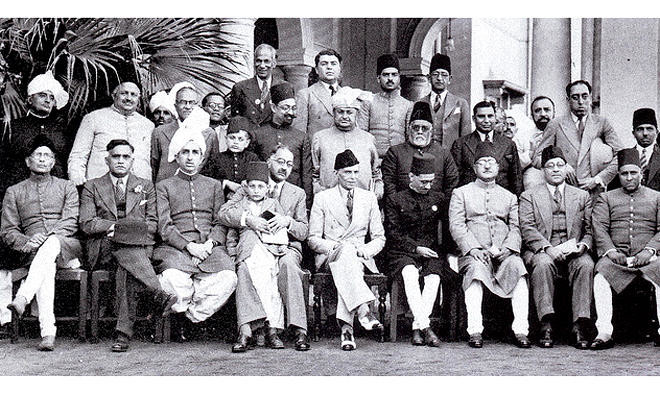
Celebrating the day a Muslim nation state was born

Pakistan, China to sign multiple MoUs at major agriculture investment conference today
- Hundreds of Chinese and Pakistani firms to attend Islamabad event
- Conference seen as part of expanding CPEC ties into agriculture, trade
KARACHI: Islamabad and Beijing are set to sign multiple memorandums of understanding (MoUs) to boost agricultural investment and cooperation at a major conference taking place in the capital today, Monday, with hundreds of Chinese and Pakistani companies expected to participate.
The conference is being billed by Pakistan’s Ministry of National Food Security and Research as a platform for deepening bilateral agricultural ties and supporting broader economic engagement between the two countries.
“Multiple memorandums of understanding will be signed at the Pakistan–China Agricultural Conference,” the Ministry of National Food Security said in a statement. “115 Chinese and 165 Pakistani companies will participate.”
The conference reflects a growing emphasis on expanding Pakistan-China economic cooperation beyond the transport and energy foundations of the flagship China-Pakistan Economic Corridor (CPEC) into agriculture, industry and technology.
Under its first phase launched in 2015, CPEC, a core component of China’s Belt and Road Initiative, focused primarily on transportation infrastructure, energy generation and connectivity projects linking western China to the Arabian Sea via Pakistan. That phase included motorways, power plants and the development of the Gwadar Port in the country's southwest, aimed at helping Pakistan address chronic power shortages and enhance transport connectivity.
In recent years, both governments have formally moved toward a “CPEC 2.0” phase aimed at diversifying the corridor’s impact into areas such as special economic zones, innovation, digital cooperation and agriculture. Second-phase discussions have highlighted Pakistan’s goal of modernizing its agricultural sector, attracting Chinese technology and investment, and boosting export potential, with high-level talks taking place between planning officials and investors in Beijing.
Agri-sector cooperation has also seen practical collaboration, with joint initiatives examining technology transfer, export protocols and value-chain development, including partnerships in livestock, mechanization and horticulture.
Organizers say the Islamabad conference will bring together government policymakers, private sector investors, industry associations and multinational agribusiness firms from both nations. Discussions will center on investment opportunities, technology adoption, export expansion and building linkages with global buyers within the framework of Pakistan-China economic cooperation.


