

Jeddah’s Hafez Gallery showcases Arab talent at Art Dubai

1 / 4
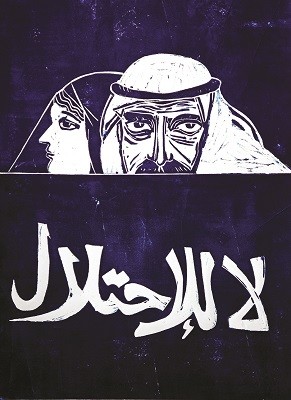
Thuraya Al-Baqsami’s “No to the Invasion” (1990).
2 / 4
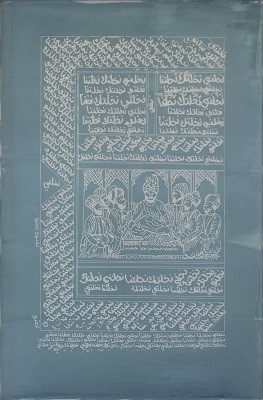
Osama Esid’s “Mona” (2005 – 2007).
3 / 4
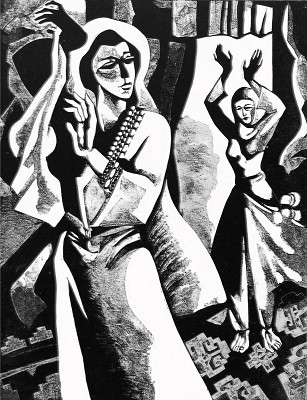
Abdulsattar Al-Mussa’s “Dancing” from the series “Wedding in Al-Refaa” (1986).
4 / 4
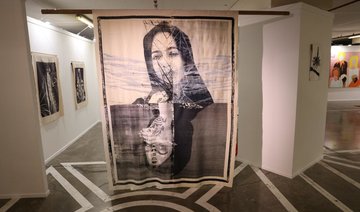
Ahaad Al-Amoudi’s “My Palm, Your Palm, Our Palm” (2017).
Updated 22 March 2018
Follow

Jeddah’s Hafez Gallery showcases Arab talent at Art Dubai

Hafez Gallery is one of the few Saudi Arabia-based galleries featured in the 12th edition of Art Dubai — arguably the region’s most influential art gathering.

Founded in Jeddah in 2014, Hafez Gallery claims to engage “the art community to visually converse and explore Saudi and Middle Eastern modern and contemporary art” and to “nurture the discovery of a Saudi visual identity and participate in the international art dialogue.”

Art Dubai 2018 is split into three main collections: Contemporary; Modern — devoted to masters from the Middle East, North Africa and South Asia; and Marker — a curated section of art spaces that focuses each year on a particular theme or geography.

This year, Hafez Gallery is participating in both Art Dubai Modern and Art Dubai Contemporary with a collection of works that includes photography, acrylics, etching and calligraphy.

In Art Dubai Modern, Hafez Gallery will present the work of two Russian-educated GCC artists: Saudi Abdulsattar Al-Mussa’s “Dancing” (from his series “Wedding in Al-Refaa”), and Kuwaiti Thuraya Al-Baqsami’s “No to the Invasion.”

Al-Mussa’s drawings examine daily social scenes, such as cafés and the energy of their employees. He is one of the few professional Saudi artists to have studied complex typography, carving and graphic art.

Al-Baqsami is a singular voice in the region. She does not bow in the face of societal and political pressure. Her exposure to a multitude of cultures shows in the mélange of history, concept and form presented in her work.

In the Contemporary section, Hafez will showcase artworks from several artists, including “My Palm, Your Palm, Our Palm” by multidisciplinary artist Ahaad Al-Amoudi, whose work intersects the past and present of Saudi Arabia. Al-Amoudi is interested in how communities measure and promote heritage through archiving and how different historical narratives weave through families and communities.

Damascus-born artist Osama Esid’s photography explores personal identity — he has lived in both the US and Egypt. Hafez will show Esid’s “Mona” at Art Dubai, as well as work from other regional artists including Nora Al-Issa, Filwa Nazer, Abdulrahman Al-Shahed and Ibrahim El-Dessouki.

Qaswara Hafez, founder of Hafez Gallery, spoke to Arab News about its participation in Art Dubai.

“Dubai has become a hub for museum directors, curators, and art-world professionals from all over the world,” he said. “Art Dubai commands the respect of the global art community and elicits the participation of galleries and artists from around the world. It is integral to the local art community, representing the state of the region’s art to define where our culture stands at the moment.”

He continued, “We focus on works that reflect the Middle East and discuss its rich culture and diverse standpoints. We don’t select art in isolation — I have to be able to establish a human connection with the artists before anything, after that comes our belief in their projects and the social contribution of their artworks.”

How science is reshaping early years education 

Updated 27 December 2025
Follow

How science is reshaping early years education 

DUBAI: As early years education comes under renewed scrutiny worldwide, one UAE-based provider is making the case that nurseries must align more closely with science.

Blossom Nursery & Preschool, which operates 32 locations across the UAE, is championing a science-backed model designed to close what it sees as a long-standing gap between research and classroom practice.

“For decades, early years education has been undervalued globally — even though science shows the first five years are the most critical for brain development,” said Lama Bechara-Jakins, CEO for the Middle East at Babilou Family and a founding figure behind Blossom’s regional growth, in an interview with Arab News.

Lama Bechara-Jakins is the CEO for the Middle East at Babilou Family and a founding figure behind Blossom’s regional growth. (Supplied)

She explained that the Sustainable Education Approach was created to address “a fundamental gap between what we know from science and what actually happens in nurseries.”

Developed by Babilou Family, the approach draws on independent analysis of research in neuroscience, epigenetics, and cognitive and social sciences, alongside established educational philosophies and feedback from educators and families across 10 countries. The result is a framework built around six pillars; emotional and physical security, natural curiosity, nature-based learning, inclusion, child rhythms, and partnering with parents.

Two research insights, Bechara-Jakins says, were particularly transformative. “Neuroscience shows that young children cannot learn until they feel safe,” she said, adding that stress and inconsistent caregiving can “literally alter the architecture of the developing brain.” 

Equally significant was evidence around child rhythms, which confirmed that “pushing children academically too early is not just unhelpful — it can be counterproductive.”

Feedback from families and educators reinforced these findings. Across regions, common concerns emerged around pressure on young children, limited outdoor time and weak emotional connections in classrooms. What surprised her most was that “parents all sensed that something was missing, even if they couldn’t articulate the science behind it.”

At classroom level, the strongest body of evidence centres on secure relationships. Research shows that “secure attachments drive healthy brain development” and that children learn through trusted adults. At Blossom, this translates into practices such as assigning each child “one primary educator,” prioritising calm environments, and viewing behaviour through “a neuroscience lens — as stress signals, not misbehaviour.”

Bechara-Jakins believes curiosity and nature remain overlooked in many early years settings, despite strong evidence that both accelerate learning and reduce stress. In urban centres such as Dubai, she argues, nature-based learning is “not a luxury. It is a developmental need.” 

For Blossom, this means daily outdoor time, natural materials, gardening, and sensory play — intentional choices aimed at giving children what science says they need to thrive.