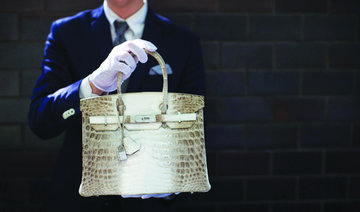
PARIS: French luxury goods maker Hermes, known for $10,000-plus leather handbags such as the Birkin, rewarded shareholders on Wednesday with a higher dividend and a one-off payout after a bumper year for sales and profits.
The company, originally a saddle and harness maker founded in 1837, joined luxury rivals such as Louis Vuitton-owner LVMH and Gucci-parent Kering in benefiting from a rebound in demand from Asian shoppers in 2017.
Hermes shares rose 3.2 percent in early trade after the firm proposed a dividend of €4.10 ($5.03) per share, up 9 percent on a year earlier, and said it also planned a special dividend of €5 per share.
It last made a one-off payout in 2015.
Hermes also reported a record operating margin for last year, reaching 34.6 percent of sales and helped by high productivity at its workshops and the positive impact of currency hedges in the first half of 2017.
“We had an exceptional year in 2017,” CEO Axel Dumas told a briefing with analysts.
Dumas said that hedging against foreign exchange swings would have a slightly negative effect on margins this year, adding these would likely “normalize.” European-based luxury goods firms are grappling with the effects of a stronger euro.
Stocks of Hermes products ran very low at the end of 2017 as items sold out, a situation that was also atypical and which boosted margins, the company said, without detailing a forecast for 2018.
Hermes’ operating margin was 32.6 percent in 2016.
Sales trends in early 2018 had continued the positive momentum of last year, Dumas added.
Hermes, which has long waiting lists for some of its most coveted handbags, is expanding production to keep up with demand, and plans two more leather goods workshops by 2020 in France.
Like peers, it is looking to boost online sales, though it declined to detail how much revenue came from the web. Hermes is rolling out a revamped version of its website, due shortly in Europe after launching in the US and Canada.
By the end of the year, it also plans to set up its first e-commerce site in China, the biggest market for luxury players. Italy’s Gucci and France’s Louis Vuitton launched web sales platforms in China last year.
Hermes’ 2017 operating income was €1.92 billion ($2.36 billion), up 13 percent from a year earlier and in line with analyst forecasts, while net profit rose 11 percent to €1.22 billion.


![]()

Hermes boosts dividend as luxury industry thrives
Hermes boosts dividend as luxury industry thrives


Latest updates


© 2026 SAUDI RESEARCH & PUBLISHING COMPANY, All Rights Reserved And subject to Terms of Use Agreement.