LONDON: Britain and its allies on Thursday pointed the finger directly at Moscow over the poisoning of a Russian double agent, as the Kremlin vowed prompt retaliation against the “irresponsible” expulsion of its diplomats from London.
The escalating international scandal is unfolding as former Russian double agent Sergei Skripal and his daughter Yulia remain in critical condition after exposure to the Soviet-designed chemical Novichok on March 4 in the English city of Salisbury.
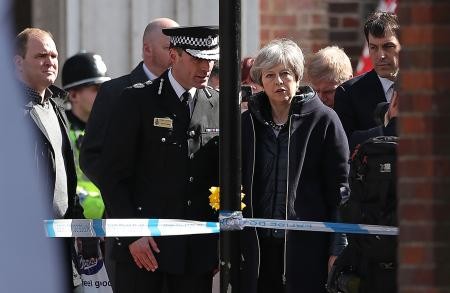
British Prime Minister Theresa May promised a “united stance” as she visited the scene of the attack for the first time on Thursday, a day after saying Moscow was “culpable” and expelling 23 Russian diplomats among other measures.
In a rare joint statement, the leaders of Britain, France, Germany, and the US condemned the attack as an “assault on UK sovereignty.”
“We share the UK assessment that there is no plausible alternative explanation, and note that Russia’s failure to address the legitimate request by the UK government further underlines its responsibility,” the statement said.
The four leaders called on Russia to provide “full and complete disclosure” of the Soviet-era chemical program that developed Novichok, the statement published by the British government said.
Russia did not meet London’s demand that it disclose details of the Novichok program to the Organization for the Prohibition of Chemical Weapons (OPCW) by midnight on Tuesday, leading May to announce the retaliatory measures.
Kremlin spokesman Dmitry Peskov called Britain’s position “absolutely irresponsible.”
He warned that retaliatory steps would soon follow and President Vladimir Putin would choose the option that “most suits Moscow’s interests.”
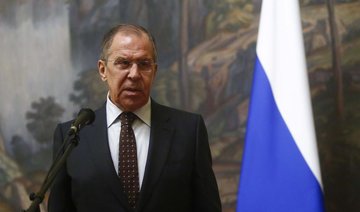
Russia would respond by kicking out British diplomats, Foreign Minister Sergei Lavrov was quoted as saying in Moscow, adding that it would happen “soon.”
He said Moscow did not have a motive to attack Skripal but suggested other players could use the poisoning to “complicate holding the World Cup” in Russia this year and charged that the British government is keen to “deflect attention” from its troubles with Brexit.
May’s statements that Moscow is behind the poisoning are “completely crazy accusations against Russia, our entire country, our people,” Foreign Ministry spokeswoman Maria Zakharova told journalists.
Moscow has mostly shrugged off the measures announced by May, ridiculing the decision not to send British ministers and royals to the World Cup.
Zakharova further accused Britain of refusing to grant access to Yulia Skripal or work with Moscow through the OPCW and give Russia access to the poisonous substance.
However British Foreign Secretary Boris Johnson told the BBC that Britain is “entirely in conformity” with OPCW procedures and is sending a sample of the nerve agent to the watchdog for examination.
The US also told an emergency meeting of the UN Security Council that it believed Russia was responsible for the use of the military-grade nerve agent against Skripal.
NATO allies have branded the attack a “clear breach of international norms and agreements” and Secretary General Jens Stoltenberg said it comes against the “backdrop of a pattern of reckless behavior” by Russia.
He said however that Britain had not invoked the alliance’s Article 5 mutual defense clause.
French President Emmanuel Macron said he would announce unspecified “measures” to respond to the poisoning in the coming days.
Johnson further appealed to international partners to “stand with us against Russia” in a Washington Post editorial, saying the poisoning is “part of a pattern of reckless behavior” by Putin showing “reckless defiance” of international rules.
He accused Moscow of using assassinations to send a signal to dissidents that “we will find you, we will catch you, we will kill you.”
Putin, who is standing in a presidential election Sunday, has not yet commented on Britain’s measures but discussed the Skripal situation with his security council Thursday. His spokesman said the poisoning row had no effect on the campaign.
Besides expelling the diplomats, the biggest such move in 30 years, suspending high-level contacts and cracking down on Russian criminals and dirty money, Britain will invest in a new chemical weapons defense center, said Defense Secretary Gavin Williamson.
The center will receive £48 million (54 million euros, $67 million) of investment and will be based at the existing Porton Down secretive base.
Russia argues that it has destroyed all of its chemical weapons and that its military chemical program has been shut down since the mid-1980s.
Russian chemist Vil Mirzayanov, who worked in the chemical weapons program until 1992 and had exposed the Novichok agents prior to leaving for the US, however, claimed Moscow had stored the substance and its authorities “are still keeping it in secrecy.”
Mirzayanov said Russia was likely behind the attack, though adding that it was also possible that somebody used the Novichok formula published in his book to synthesize the chemical.


Britain’s allies point finger at Moscow over spy poisoning
Britain’s allies point finger at Moscow over spy poisoning


UK veterans are ‘ticking time bomb’ after Iraq war chemical exposure
- Fifteen former RAF personnel were deployed to the Qarmat Ali water plant in 2003, which was contaminated with sodium dichromate
- Veterans say they were not screened or protected, and are now living with serious health conditions
LONDON: Fifteen British servicemen who worked on a carcinogen-contaminated water treatment site during the Iraq war say they were not offered biological screening despite official guidance saying they should have been.
The former Royal Air Force members, who have suffered from ailments including cancer, tumors and nosebleeds, told Sky News they were offered no medical assistance or subsequent treatment after having been exposed to toxic sodium dichromate at the Qarmat Ali water treatment plant in 2003.
The channel said it had seen a letter from the RAF’s medical authority stating that senior officers knew of the dangers posed by the substance.
Peter Lewis, 53, was one of 88 personnel deployed to guard the site, which was deemed vital for getting Iraq’s oil industry up and running. He told Sky: “I’ve had eight or nine operations to remove cancer.
“I’ve had so many lumps taken out of my neck, one on my face. This is something I’m literally fighting every year now. It’s constant.”
Qarmat Ali, the former troops say, was covered in ripped bags of bright orange sodium dichromate.
“We were never warned what the bags of chemicals were,” Jon Caunt, another former serviceman, said. “We were breathing this stuff in.”
His former comrade Tony Watters added: “I never thought about what it was. We were told the site is safe.”
Several months after deployment to the site, however, the servicemen were joined by two workers wearing protective gear who placed signs around it reading: “Warning. Chemical hazard. Full protective equipment and chemical respirator required. Sodium dichromate exposure.”
Watters said: “When you left the site, your uniform was contaminated, your webbing was contaminated.
“You went in your sleeping bag, and that was contaminated. And you were contaminating other people with it back at camp.”
Andy Tosh, who has led the group of veterans as they sought answers from the Ministry of Defence, said: “Even with the warning signs going up … they kept us there. They knowingly kept us exposed.”
The RAF gave some of the men a leaflet on their return to the UK, warning of the dangers of the substance, but not all were told.
The letter seen by Sky acknowledging the dangers posed to the veterans made a “strong” link to “increased risk of lung and nose cancer” as well as numerous other issues. It suggested personnel sent to Qarmat Ali should have their medical records altered to mention their exposure to sodium dichromate.
“Offer biological screening. This cannot be detailed until the numbers exposed are confirmed,” the letter also said.
An inquiry into US personnel deployed to Qarmat Ali found that 830 people were “unintentionally exposed” to sodium dichromate, giving them access to support from the US Department of Veterans Affairs. This came after the death of Lt. Col. James Gentry from cancer in 2009, which the US Army determined came “in line of duty for exposure to sodium dichromate.”
There has been no such inquiry by UK authorities despite British personnel being deployed at the site for longer than their American counterparts.
Thirteen of them have suffered from cancer and similar symptoms, including one who developed a brain tumor.
Jim Garth told Sky: “My skin cancer will never go away … It’s treatable, but when the treatment is finished, it comes back, so I’ve got that for life really.”
Lewis added: “I’m actually getting to the point now where I don’t care anymore … sooner or later, it’s going to do me.”
Caunt described his former colleagues’ conditions as a “ticking time bomb.”
He added: “We do not know what’s going to happen in the future."
The MoD insists medical screening was offered to personnel at the time, despite the men stating that it was not. In 2024, several met with Labour MPs about the issue. One, John Healey, who is now the UK defence secretary, said at the time the veterans should have “answers to their important questions.”
In a statement, the MoD said: “We take very seriously the concerns raised by veterans who were deployed to guard the Qarmat Ali Water Treatment Plant in 2003.
“As soon as we were alerted to the possible exposure of Sodium Dichromate, an environmental survey was conducted to evaluate typical exposure at Qarmat Ali. Results showed that the levels at the time were significantly below UK government guidance levels.”
A 2004 letter seen by Sky News suggested, however, that the MoD knew the levels of sodium dichromate were higher.
“Anyone who requires medical treatment can receive it through the Defence Medical Services and other appropriate services,” the MoD said.
“Veterans who believe they have suffered ill health due to service can apply for no-fault compensation under the War Pensions Scheme.”
Watters called on the government to hold an investigation into what happened at Qarmat Ali.
“We are the working class, we are ex-soldiers who have put our lives on the line and you’re turning a blind eye to us,” he said.
Garth added: “We felt let down at Qarmat Ali all those years ago, and we still feel let down now.”