Saudi Arabia to keep crude oil exports under 7 million barrels a day in April to raise prices

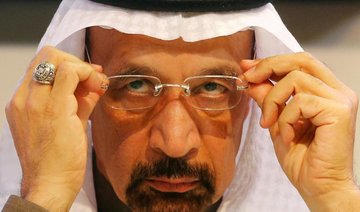
Saudi oil minister Khalid Al-Falih wants oil exporters inside and outside OPEC to continue cooperating on production after their agreement expires at the end of this year. (Reuters)
Updated 14 March 2018
Follow

Saudi Arabia to keep crude oil exports under 7 million barrels a day in April to raise prices

DUBAI: Saudi Arabia plans to keep its crude oil production in April below 10 million barrels per day (bpd), and maintain exports under 7 million bpd, the energy ministry said on Wednesday, as the top OPEC producer wants to end a global supply glut and boost prices.
Saudi Arabia, the world’s biggest oil exporter, has been pumping below its OPEC target since January and reducing its crude shipments, particularly to the US, as it turns its focus on cutting exports in an attempt to drain global oil stocks.
“Despite nominations coming in at 100,000 barrels a day, higher than the previous month, allocations were maintained on par with their March levels,” the ministry said in a statement.
A spokesman for the energy ministry said that Saudi Arabia, along with the OPEC and non-OPEC oil producers participating in a global supply cut agreement, “remain committed to pursuing the common objective of restoring inventories back to their normal levels.”
OPEC and non-OPEC producers, led by Russia, have agreed to maintain oil output cuts until the end of 2018. The aim is to reduce global inventories and support prices.
OPEC has made the five-year average its main target and managed to reduce the glut to around 74 million barrels above that benchmark, from above 300 million when the cuts began in 2017.
OPEC has delivered more than 100 percent of the output cuts that members pledged under the deal, according to figures from OPEC and other analysts, helped in part by an involuntary drop in Venezuela, where output is falling amid an economic crisis.
“We are happy with the excellent overall conformity levels and look forward to all participating countries maintaining or exceeding full conformity with their commitments as agreed,” the Saudi energy ministry spokesman said.
But the relentless rise in US production has this year put pressure on oil prices. US oil is also increasingly being exported, including to the world’s biggest and fastest growing markets in Asia, eating away at OPEC and Russian market share.
Brent crude futures were trading at around $64.93 per barrel on Wednesday, down from above $70 in January.
US crude oil production, pushed up largely by shale oil drilling, has risen by almost a quarter since mid-2016 and output soared past 10 million bpd in late 2017, overtaking production by Saudi Arabia.
OPEC meets next in June to decide its output policy. Global oil producers agreed they should continue cooperating after their agreement expires at the end of this year, Saudi Arabia’s energy minister Khalid Al-Falih said in January.


Saudi Arabia’s cultural sector is a new economic engine between Riyadh and Paris, says ambassador

Updated 6 sec ago
Follow

Saudi Arabia’s cultural sector is a new economic engine between Riyadh and Paris, says ambassador

RIYADH: Culture has become a fundamental pillar in bilateral relations between France and Saudi Arabia, according to the French Ambassador to the Kingdom, Patrick Maisonnave.

Maisonnave noted its connection to the entertainment and tourism sectors, which makes it a new engine for economic cooperation between Riyadh and Paris.

He told Al-Eqtisadiah during the opening ceremony of La Fabrique in the Jax district of Diriyah that cultural cooperation with Saudi Arabia is an important element for its attractiveness in the coming decades.

La Fabrique is a space dedicated to artistic creativity and cultural exchange, launched as part of a partnership between the Riyadh Art program and the French Institute in Riyadh. 

Running from Jan. 22 until Feb 14, the initiative will provide an open workspace that allows artists to develop and work on their ideas within a collaborative framework.

Launching La Fabrique as a space dedicated to artistic creativity

The ambassador highlighted that the transformation journey in the Kingdom under Vision 2030 has contributed to the emergence of a new generation of young artists and creators, alongside a growing desire in Saudi society to connect with culture and to embrace what is happening globally. 

He affirmed that the relationship between the two countries is “profound, even cultural par excellence,” with interest from the Saudi side in French culture, matched by increasing interest from the French public and cultural institutions unfolding in the Kingdom.

Latest estimates indicate that the culture-based economy represents about 2.3 percent of France’s gross domestic product, equivalent to more than 90 billion euros ($106.4 billion) in annual revenues, according to government data. The sector directly employs more than 600,000 people, making it one of the largest job-creating sectors in the fields of creativity, publishing, cinema, and visual arts.

Saudi Arabia benefiting from French experience in the cultural field

Maisonnave explained that France possesses established cultural institutions, while Saudi Arabia is building a strong cultural sector, which opens the door for cooperation opportunities.

This comes as an extension of the signing of 10 major cultural agreements a year ago between French and Saudi institutions, aiming to enhance cooperation and transfer French expertise and knowledge to contribute to the development of the cultural system in the Kingdom.

He added that experiences like La Fabrique provide an opportunity to meet the new generation of Saudi creators, who have expressed interest in connecting with French institutions and artists in Paris and France.

La Fabrique encompasses a space for multiple contemporary artistic practices, including performance arts, digital and interactive arts, photography, music, and cinema, while providing the public with an opportunity to witness the stages of producing artistic works and interact with the creative process.