WASHINGTON/BEIJING: US President Donald Trump is seeking to impose tariffs on up to $60 billion of Chinese imports and will target the technology and telecommunications sectors, two people who had discussed the issue with the Trump administration said on Tuesday.
A third source who had direct knowledge of the administration’s thinking said the tariffs, associated with a “Section 301” intellectual property investigation, under the 1974 US Trade Act begun in August last year, could come “in the very near future.”
While the tariffs would be chiefly targeted at information technology, consumer electronics and telecoms, they could be much broader and the list could eventually run to 100 products, this person said.
The White House declined to comment on the size or timing of any move.
Trump is targeting Chinese high technology companies to punish China for its investment policies that effectively force US companies to give up their technology secrets in exchange for being allowed to operate in the country, as well as for other IP practices Washington considers unfair.
The Trump administration is also considering imposing investment restrictions on Chinese companies over and above the heightened national security restrictions, but details on these were not immediately known. A US Treasury spokeswoman did not immediately respond to requests for comment.
But lobbyists in Washington expressed concern that Trump’s ambitious tariff plan would also include other labor-intensive consumer goods sectors such as apparel, footwear and toys.
Higher tariffs on these products would “hurt American families,” said Hun Quach, a trade lobbyist for the Retail Industry Leaders Association.
“We’re not talking about fancy cashmere sweaters, we’re talking about cotton T-Shirts and jeans and shoes that kids wear for back-to-school,” she added. “Alarm bells are ringing.”
China runs a $375 billion trade surplus with the United States and when President Xi Jinping’s top economic adviser visited Washington recently, the administration pressed him to come up with a way of reducing that number.
Trump came to office on a promise to shield American workers from imports and his first action as president was to pull the United States out of the 12-country Trans-Pacific Partnership trade deal.
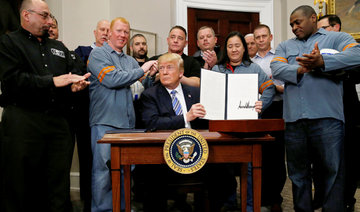
His administration is in the midst of negotiations to revamp the North American Free Trade Agreement (NAFTA) and last week announced the imposition of tariffs on steel and aluminum imports.
While the tariffs on steel and aluminum, announced last week by Trump, are viewed as relatively insignificant in terms of imports and exports, moves to target China directly risk a direct and harsh response from Beijing.
“If this is serious, the Chinese will retaliate. The key question is, does the US retaliate against that retaliation,” said Derek Scissors, a China trade expert at the American Enterprise Institute, a pro-business think tank.
That would spook stock markets, but Scissors said that the more serious the conflict became, the worse China’s position would become, due to the importance of its US trade surplus.
“Their incentive to negotiate is to head us off from a major trade conflict.


![]()
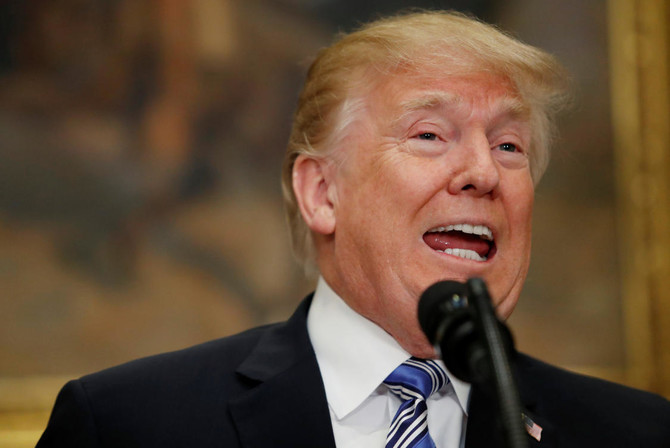
Trump eyes tariffs on up to $60 billion Chinese goods
Trump eyes tariffs on up to $60 billion Chinese goods


Latest updates



Recommended


© 2026 SAUDI RESEARCH & PUBLISHING COMPANY, All Rights Reserved And subject to Terms of Use Agreement.