ANKARA: Turkish attitudes toward the growing number of Syrian refugees living in the country have hardened, with many blaming the newcomers for job losses and a rise in terror incidents, a survey has shown.
The survey by Istanbul Bilgi University, released in Ankara on Monday, showed 71 percent of respondents blame Syrians for taking their jobs, while 58 percent believe the number of terrorist incidents in Turkey has increased because of the growing presence of Syrians.
Titled “Turkish attitudes toward Syrians in Turkey,” the study was conducted in November and December last year through face-to-face interviews with 2,004 people in four focus groups. Those surveyed were mostly supporters of the main political parties.
“In our own country now, we are second-class citizens,” a pro-Kurdish People’s Democratic Party supporter said during the survey. “They all came and settled here, they benefit from all (our) services.”
Turkey is home to 3.7 million registered refugees, most of them from Syria. Since the start of the Syrian civil war in 2011, Turkey has spent more than $30 billion on the welfare of Syrian refugees, including health, education and infrastructure. The Turkish Health Ministry also conducts vaccination campaigns and free medical checkups for those living outside the camps.
Some of these benefits given to Syrians have fueled animosity among Turkish people, with about 51 percent of those surveyed opposed to giving free medical treatment to refugees at hospitals funded by Turkish taxpayers.
The study, conducted with the support of the German Marshall Fund of the US, a think tank and grant provider, also found that 55.5 percent believe Syrians pose a health risk.
“After the Syrians arrived, the number of divorces increased,” said another respondent supporting the ruling Justice and Development Party.
However, experts say tensions will ease if more is done to integrate Syrians into Turkish society.
“We observe some increasing concerns, and distortion and displeasure among Turkish society due to the prolonged uncertainty about the stay of Syrians,” Ayselin Yildiz, UNESCO’s chair on international migration at Yasar University, told Arab News.
“But we should avoid interpreting it as rising xenophobia, which is not the case,” she said.
“I believe if the Syrians are properly integrated into the economy through a development approach, this will ease the possible tensions. Accordingly, we need a regional approach and we need local actors to be able to more actively engaged in employment strategies.”
Since 2015, the Turkish government has been working to make it easier for Syrians to obtain Turkish citizenship — a move that has sparked controversy among the Turkish public. Early last year, Syrians who were skilled white-collar professionals with a university education were given citizenship.
About 80 percent of those surveyed by the university said Syrians should not be allowed to obtain Turkish citizenship, while 86 percent said all Syrians should be sent back to their country when the war is over.
In contrast, a different survey released in November revealed that nearly 75 percent of Syrian refugees in Turkey hope to obtain citizenship, while 52 percent of Syrians want to continue living in the country.
However, according to the Bilgi University study, interactions between Turkish people and Syrian refugees have been limited. Although 69 percent meet Syrians in their neighborhoods, only 12 percent have a Syrian friend, and 5 percent visit their Syrian neighbors’ homes.
Of those surveyed, 87 percent were opposed to their daughters marrying a Syrian, while 80 percent say they cannot do business with a Syrian. Nearly three quarters, or 74 percent, refused to let their children make friends with their Syrian peers.
While some of the survey figures are worryingly high — such as negative attitudes toward giving rights to Syrians — intercommunal contact and empathy among the Turkish public are likely to overcome the apparent xenophobia, experts say.
“Living in the same neighborhood isn’t sufficient. Turks and Syrians should increase social interaction at the grassroots levels by shopping and visiting each other’s houses,” Dr. Emre Erdogan, founder and director of the Infakto Research Workshop in Istanbul, said.
For this to happen, Syrians need to obtain sufficient language skills in order to establish a dialogue with their Turkish peers, while social projects should focus on encouraging interaction, he said.


![]()
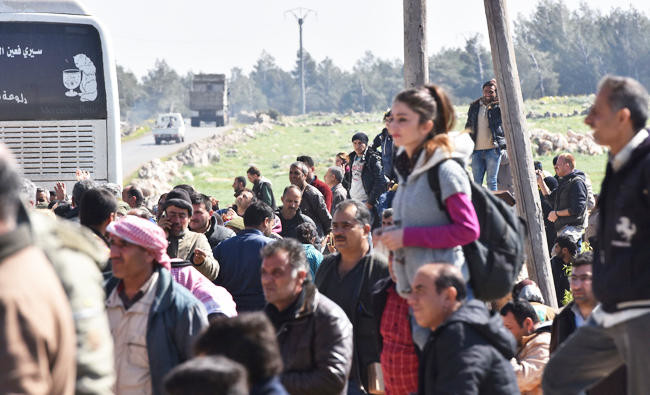
Turkish animosity toward Syrian refugees on the rise, survey warns
Turkish animosity toward Syrian refugees on the rise, survey warns



Latest updates




© 2026 SAUDI RESEARCH & PUBLISHING COMPANY, All Rights Reserved And subject to Terms of Use Agreement.