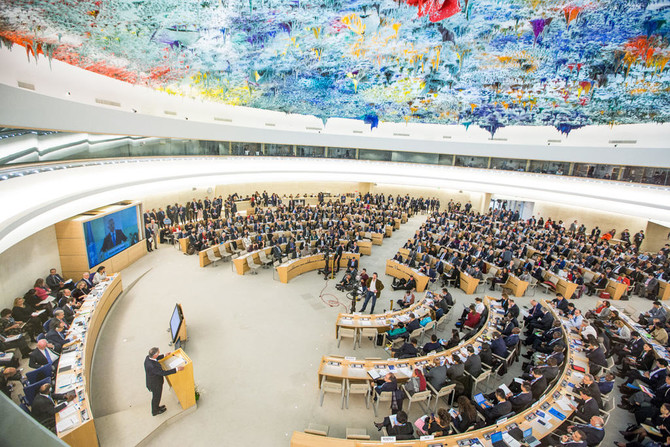
ISLAMABAD: All of Pakistan’s parliamentary parties have demanded the government to hold the country’s envoy at the Office of the UN Human Rights Council (UNHRC) for abstaining to vote on a resolution against killings of civilians and human rights violations in Syria.
“Pakistan has committed a blunder by not supporting the resolution and it must be investigated as to why our envoy at the UN Human Rights Council abstained from voting,” Sen. Taj Haider of Pakistan Peoples Party told Arab News.
He said the government should explain its position on the gaffe in Parliament as it is a matter of grave concern for the people. “By abstaining from vote, we indirectly sent a message to the international community that Pakistan stands with the oppressor in Syria instead of the innocent people,” he said.
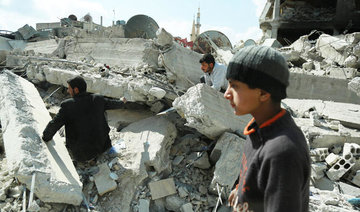
On March 5, a resolution was moved in the UNHHRC on the deteriorating situation of human rights in Eastern Ghouta and it was adopted by a vote of 29 in favor and four against. Fourteen countries including Pakistan abstained from the voting.
Speaking on floor of the National Assembly on Friday, Minister for Foreign Affairs Khawaja Muhammad Asif said: “It is a matter of shame as our envoy did not cast a vote against atrocities on Syrian people.”
He was responding to questions raised by Jamiat Ulema-e-Islam-Fazl (JUI-F) chief Maulana Fazlur Rehman, a coalition partner of the government, who informed the House that Pakistan abstained from voting on the resolution.
Talking to Arab News, JUI-F Member National Assembly Naeema Kishwar said her party has demanded the government to investigate the matter and present a detailed report of it in the Parliament.
“We want the Parliament to hold the envoy accountable for the blunder,” she said, “it is a matter of shame for us that we have not voted in favor of the resolution that condemned violence against Syrian people.”
Kishwar said Pakistani liberals criticized the government when it deployed troops in Saudi Arabia, but they are silent on atrocities being committed against innocents in Syria. “Our government needs to come up with a clear stance that Pakistanis condemn violence against Syrians,” she said, “we also want the Parliament to pass a consensus resolution condemning atrocities against innocent Syrians.”
Pakistan Tehreek-e-Insaf Member National Assembly Dr. Shireen Mazari told Arab News that Pakistan’s role at the UNHRC in the matter of Syrian resolutions reflects the poor foreign policy of the government.
“Syria has become a battlefield where different Muslim countries have different positions, but we should be very much clear in our stance that we condemn violence against innocent people in all its forms,” she said.
Talking to Arab News, Muttahida Qaumi Movement-Pakistan MNA Ali Raza Abidi also demanded the government investigate the matter thoroughly and brief the Parliament about it. “It should be investigated if the diplomat stayed back because of any pressure or arrangement,” he said.
Dr. Mohammad Faisal, spokesman for Ministry of Foreign Affairs, told Arab News that Pakistan supports a peaceful and political solution to end the crisis to ensure security and stability in the region, including respect for the territorial integrity of Syria.
“We are concerned at the humanitarian situation and urge all sides to enable provision of humanitarian and medical assistance to the innocent men, women and children and to take urgent measures for their safety and security,” he said.
Faisal refused to comment if the ministry will investigate against Pakistani diplomat at the OHCHR for abstaining from the voting.
However, the foreign minister assured the National Assembly on Friday: “I’ll let the House know on Monday as to why Pakistan did not vote on the resolution.”


![]()
Pakistan's foreign ministry in hot waters after envoy abstains from voting on Syria
Pakistan's foreign ministry in hot waters after envoy abstains from voting on Syria


Latest updates




© 2026 SAUDI RESEARCH & PUBLISHING COMPANY, All Rights Reserved And subject to Terms of Use Agreement.