ISLAMABAD: Pakistan on Friday reopened a key trade route with neighboring Afghanistan after a closure of almost four years.
Traders in both countries welcomed the move, and expressed hope that it will increase cross-border trade.
Pakistan closed the Ghulam Khan border crossing in June 2014 after its military launched a major offensive against Pakistani and foreign militants in North Waziristan. The area has been almost completely cleared of armed groups.
Ghulam Khan was reopened on Friday “for trial operations,” Pakistani official Kamran Afridi told Arab News. Four trucks carrying almost 240 tons of cement entered Afghanistan from Pakistan, he added.
“The decision to resume trade via Ghulam Khan was taken in the national interest,” he said. “It will help in the development of North Waziristan, and will provide new job opportunities.” Reviving trade will pave the way for better bilateral relations, Afridi added.
Pakistani and Afghan traders expressed hope that all other border crossings will reopen. “There should be no restrictions on cross-border trade,” Zubair Motiwala, chairman of the Pakistan-Afghanistan Joint Chamber of Commerce and Industry (PAJCCI), told Arab News.
He called for a liberal visa regime for Pakistani and Afghan traders, and said trade should be separated from security and political issues.
Khan Jan Alokozai, co-chairman of PAJCCI, told Arab News: “We welcome Pakistan’s decision to open a major trade route. It will not only boost trade activities, but also promote people-to-people contacts.”
He added: “I’m confident that the decision will also help reduce political tension, as Pakistan has conveyed a positive message to Afghan traders and people.”
Military, local administration and customs officials gathered at Ghulam Khan to welcome Pakistani traders and see them off at the crossing point, Afridi said. Afghan trucks “need a few days for preparation” before they arrive in Pakistan, he added.
Bilateral trade has decreased to nearly $1.2 billion from $2.6 billion in less than two years, Motiwala said earlier this month.


![]()
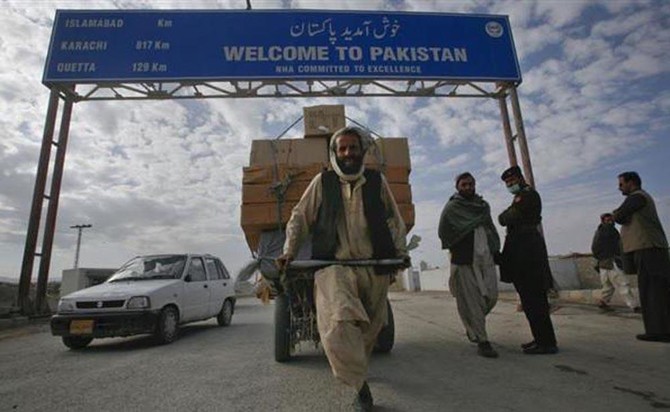
Pakistan reopens key trade route with Afghanistan
Pakistan reopens key trade route with Afghanistan
Latest updates


© 2026 SAUDI RESEARCH & PUBLISHING COMPANY, All Rights Reserved And subject to Terms of Use Agreement.